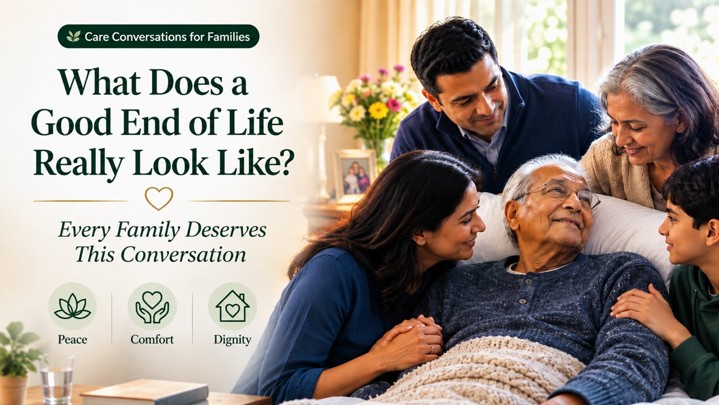
What Does a Good End of Life Really Look Like? The Question Families Deserve to Answer Together
Need Home Care?
Contact Us Today
We plan for almost everything.
We plan for births. We plan for weddings. We plan for retirement. We plan, with extraordinary attention and care, for the beginnings and middles of our lives.
And then we arrive at the end, and most of us have done almost nothing to shape what that looks like. Not because we do not care. Because the culture we live in has made the planning of death feel like an act of resignation, rather than what it actually is: an act of love.
This post is about what research and end-of-life care practitioners have learned about what a good death actually looks like. Not theoretically. In practice. In the homes and hospice facilities and hospital rooms where people have actually died, and where the families who were present have had the chance to reflect on what made those deaths bearable or meaningful or even, in certain moments, beautiful.
What seniors say they want
A good death is defined as a spiritual, peaceful, and natural death with control, comfort, a sense of empowerment, trust in caregivers, and a feeling of respect for values and beliefs.
Patients describe a good death as dying in one’s sleep, dying quietly and with dignity, being pain-free, and dying with family present. The IOM Committee on Care at the End of Life suggests that a good death is one that is free from avoidable distress and suffering, in accord with the patients’ and families’ wishes, and consistent with clinical, cultural, and ethical standards.
Families who experience these elements during a loved one’s dying process grieve differently afterward. The quality of the death shapes the quality of the bereavement. Survivors who witness a good death tend to process loss more adaptively, experience less complicated grief, and remember the dying period as meaningful rather than traumatic.
That is not a small thing. The way a person dies lives inside the family long after the death itself. Planning for a good death is not pessimistic. It is one of the most generous things a family can do for themselves and for each other.
The elements that appear most consistently
Across cultures, research, and end-of-life practice, certain elements appear again and again when people describe what a good death looked like.
Freedom from pain and distressing symptoms. This is the most fundamental element and the one families have the most power to advocate for. Pain at the end of life is not inevitable. It is manageable with appropriate care. Families who know to ask for adequate symptom management, and who are willing to prioritize comfort over alertness when the two come into conflict, give their loved one a profound gift.
Being in a familiar and chosen place. The preferred place to die for most seniors is home. In surveys of older adults, 61% prefer to die at home, followed by a hospice facility. Very few prefer a hospital. And yet a substantial proportion of Americans still die in hospitals, often undergoing interventions that prolong the dying process rather than the living of it.
Maintaining dignity. The dying person is treated as a full human being with a life story, not as a medical case to be managed. This requires families to advocate for their loved one to be addressed directly, included in conversations, and treated with the same respect they were shown throughout their life.
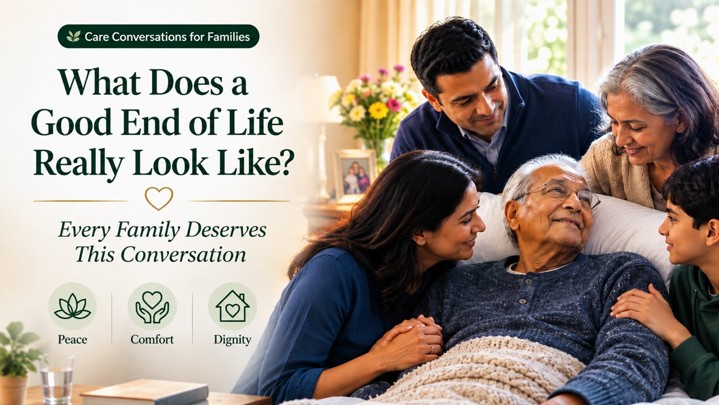
The presence of people who matter. Not necessarily many people. Not necessarily activity or conversation. Often just presence. The knowledge that someone who loves them is in the room.
Spiritual and personal meaning. For many people, the end of life involves a profound engagement with questions of meaning, legacy, and what comes after. This dimension is frequently underserved in medical settings and deeply important to the person dying. Allowing and supporting that engagement, through a chaplain, a faith community, or simply honest conversation, matters enormously.
Resolution and completion. The concept of completion speaks to resolving conflicts, saying goodbye, spending time with family and friends, and attending to issues of faith. People who have the chance to say what they need to say, to hear what they need to hear, and to feel that relationships are as settled as they can be, die differently than those who do not.
The infographic: what a good death includes
[INFOGRAPHIC — Six elements of a good death based on research and end-of-life practice, with the question families can ask to help each element become possible]
Six elements: Freedom from pain (ask for adequate symptom management), chosen place (ask what environment they want to be in), dignity (advocate for respect in medical settings), presence of loved ones (simply be there), spiritual meaning (invite and support that conversation), resolution and completion (make space for what needs to be said).
What families can actually do
Most of what shapes the quality of a death is not medical. It is relational. It is about what gets said, and what gets heard, and who is in the room.
One of the greatest gifts a family can give is saying where they want to be, what that looks like, taking care of financial matters and how they want to be celebrated. The planning itself is an act of love.
There are practical tools that support this. Advance directives document medical preferences. POLST forms, which stands for Physician Orders for Life-Sustaining Treatment, translate those preferences into medical orders that emergency responders must follow. Hospice, as covered in the last post, creates the infrastructure for a supported and comfortable death at home or in a facility designed for this work.
And then there are the less formal things. Sitting with your parent and asking what they want people to remember. Telling them what they have meant to you. Giving them permission, if they are afraid to let go, to do so.
These things cannot be prescribed. But they can be chosen.
One thing to do this week
Ask your parent, or ask yourself on their behalf: if the time came, what would matter most to you in those final days?
The answer to that question is the beginning of a plan. Not a medical plan. A human one.
And a human plan, made in advance by people who love each other, is the closest thing there is to a good death.
Next in the series: When Faith and Medicine Collide: The Conversation About Treatment Wishes. Publishing August 21.
What We Wish We’d Said Sooner is a series from Care Conversations for Families, exploring the conversations every family needs to have before a crisis makes them urgent.
The Most Comprehensive Care In The Industry
Physical Wellness
We make daily life easier as needs change, with support for personal care, mobility, medication reminders, and recovery after a hospital stay.
Learn More
Mental Well-Being
Staying active and connected matters. Our caregivers provide companionship and meaningful engagement to support emotional health and independence.
Learn More
Nutrition & Hydration
Healthy meals and proper hydration are essential. We help with planning, shopping, and preparation to support daily wellness and energy.
Learn More
Active Connections
Strong relationships bring comfort and purpose. We help seniors stay connected through social engagement, technology, and regular check-ins.
Learn More