Traumatic Brain Injury (TBI) Home Care
Need Home Care?
Contact Us Today
Practical, Patient Support After a Traumatic Brain Injury
Life after a traumatic brain injury can feel unfamiliar for the injured person and the entire family. Everyday activities may require more time, quiet, repetition, or supervision. Compassionate support begins with patience and an understanding that the person’s symptoms are consequences of the injury, not a lack of effort.
Understanding Traumatic Brain Injury
A traumatic brain injury, or TBI, occurs when a blow, jolt, or penetrating injury disrupts the brain’s normal function. Falls, motor-vehicle crashes, sports injuries, and assaults are common causes. A concussion is classified as a mild TBI, although its symptoms can still interfere significantly with daily life.
A TBI may affect movement, balance, speech, memory, concentration, judgment, mood, behavior, sleep, or sensitivity to light and noise. Symptoms can appear immediately or develop over the hours or days following the injury. Moderate and severe injuries may produce long-term or lifelong changes.
Recovery depends on the location and severity of the injury, the person’s age and health, previous brain injuries, and access to rehabilitation. Many people with mild TBI improve within days or weeks, while others have symptoms that last longer. Similar-looking injuries can lead to very different needs.
Recovery is often not a straight line. A person may do well one day and tire quickly the next. After a mild TBI, the CDC advises brief rest during the first few days, followed by a gradual return to light activity as directed by the healthcare provider. If an activity makes symptoms worse, the person should reduce that activity and contact the provider if symptoms are worsening or are not improving. Moderate and severe TBI require an individualized rehabilitation plan.
Transitioning Home From the Hospital or Rehabilitation
Before discharge, families should understand the diagnosis, current symptoms, medication plan, activity limits, equipment needs, therapy schedule, supervision needs, and warning signs. Ask for instructions in writing and identify the clinician to call with questions.
Home Helpers® provides non-medical support alongside the work of physicians, nurses, physical and occupational therapists, speech-language pathologists, neuropsychologists, and other rehabilitation professionals.
Ways a Caregiver Can Support Daily Recovery
- Personal care assistance with bathing, grooming, dressing, and toileting
- Support for a simple, consistent daily routine
- Medication reminders according to the written plan
- Meal preparation and hydration reminders consistent with clinical instructions
- Standby mobility and transfer assistance within therapist recommendations
- Transportation and accompaniment to follow-up and therapy appointments
- A calm home environment with fewer distractions when needed
- Light housekeeping and reduction of trip hazards
- Companionship and respite for family caregivers
Supporting Thinking, Mood, and Energy
After a TBI, too much noise, conversation, screen time, or activity can worsen fatigue or other symptoms. A caregiver can offer one step at a time, allow extra time for responses, use written reminders approved by the care team, and build quiet breaks into the day.
Irritability, anxiety, sadness, impulsivity, or sleep changes can occur after brain injury. These symptoms are medical, not character flaws. Significant or worsening emotional or behavioral changes should be discussed with the healthcare team. Call 988 for a mental health or suicide crisis in the United States, and call 911 for immediate danger.
Know the Emergency Warning Signs
After a recent head injury, call 911 or go to an emergency department for a worsening headache that does not go away, repeated vomiting, seizure, new weakness or numbness, slurred speech, unusual behavior, increasing confusion or agitation, one pupil larger than the other, loss of consciousness, or extreme drowsiness/inability to wake. Follow the discharge instructions even if they use a different or more specific threshold.
Preventing Another Injury
A second fall or blow to the head can interrupt recovery. Caregivers can keep paths clear, provide prescribed supervision, encourage use of recommended mobility equipment, assist with transportation, and help the person avoid activities restricted by the clinical team. Return to driving, work, exercise, and sports should be decided with the treating clinician.
Frequently Asked Questions
Is a concussion a TBI?
Yes. A concussion is a mild TBI. “Mild” describes the initial injury classification; symptoms can still be disruptive and deserve proper evaluation and follow-up.
How long does TBI recovery take?
There is no single timetable. Many people with mild TBI improve within days or weeks, while moderate or severe injuries may cause long-term needs. Recovery depends on the injury, age, health, prior brain injuries, and access to rehabilitation and support.
Can a home caregiver provide therapy?
A non-medical caregiver does not replace licensed therapy. The caregiver may help the client follow routines or carry out activities that the rehabilitation team has specifically approved and taught.
What areas do you serve?
We serve Garner, Fuquay-Varina, Raleigh, Cary, Apex, Holly Springs, Clayton, Willow Spring, and nearby communities. Contact us to confirm availability.
Talk With a Local Care Coordinator
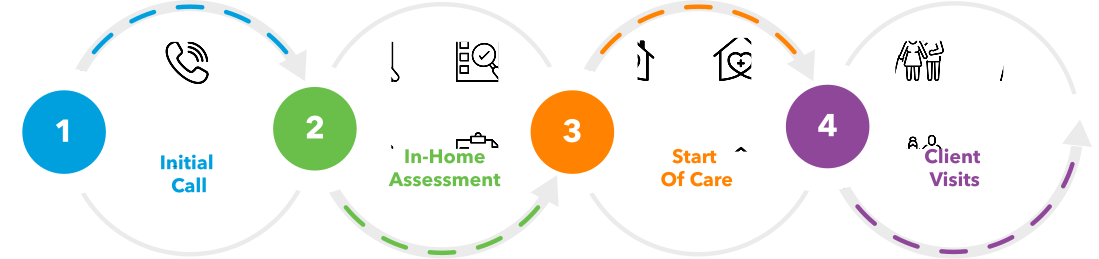
A good care plan begins with the person, the home environment, and the instructions from the healthcare team. Call (919) 582-7425 or schedule a free in-home care assessment to discuss a flexible plan for your family.
An Important Note About Our Role
Home Helpers® provides non-medical home care. Caregivers do not diagnose conditions, provide nursing care, change medications, perform wound care, or replace physicians, nurses, therapists, or emergency services. When skilled care is needed, families should work with an appropriately licensed healthcare professional. Services vary by care plan and applicable law.
Medical review sources
The following authoritative patient-education sources were reviewed for clinical accuracy. This source list may remain internal or be adapted for a short “References” section on the published page.
- Centers for Disease Control and Prevention: “Symptoms of Mild TBI and Concussion” (updated September 15, 2025): https://www.cdc.gov/traumatic-brain-injury/signs-symptoms/
- CDC: “What to Do After a Mild TBI or Concussion” (updated September 15, 2025): https://www.cdc.gov/traumatic-brain-injury/response/
- CDC: “Recovering from a Mild Traumatic Brain Injury or Concussion” patient discharge instructions: https://www.cdc.gov/traumatic-brain-injury/media/pdfs/2024/05/patient_discharge_instructions_ENG-508.pdf

Your Questions, Answered
Home Helpers Home Care offers a wide range of in-home care services, including personal care, companionship, nutrition support, wellness monitoring, and specialized care for chronic conditions, dementia, and recovery.
Our services are designed for seniors, individuals with disabilities, those recovering from illness or surgery, and anyone who needs extra support to live safely and comfortably at home.
Yes, every care plan is fully personalized based on each client’s unique needs, preferences, and schedule, whether they require a few hours of support or 24/7 care.
Yes, our caregivers are carefully screened, trained, and insured to provide compassionate, high-quality care you can trust.
Getting started is easy—simply contact your local Home Helpers location to schedule a free in-home assessment and create a care plan tailored to your needs.