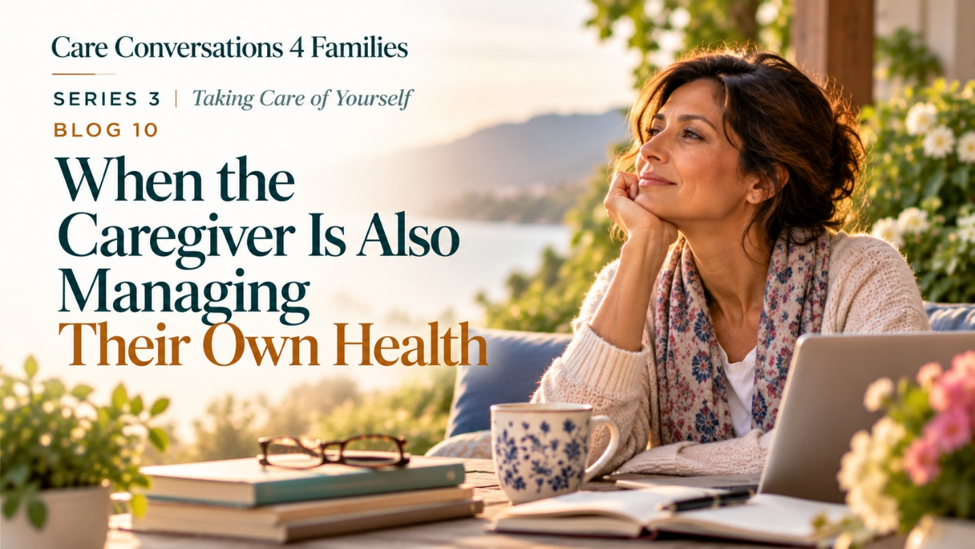
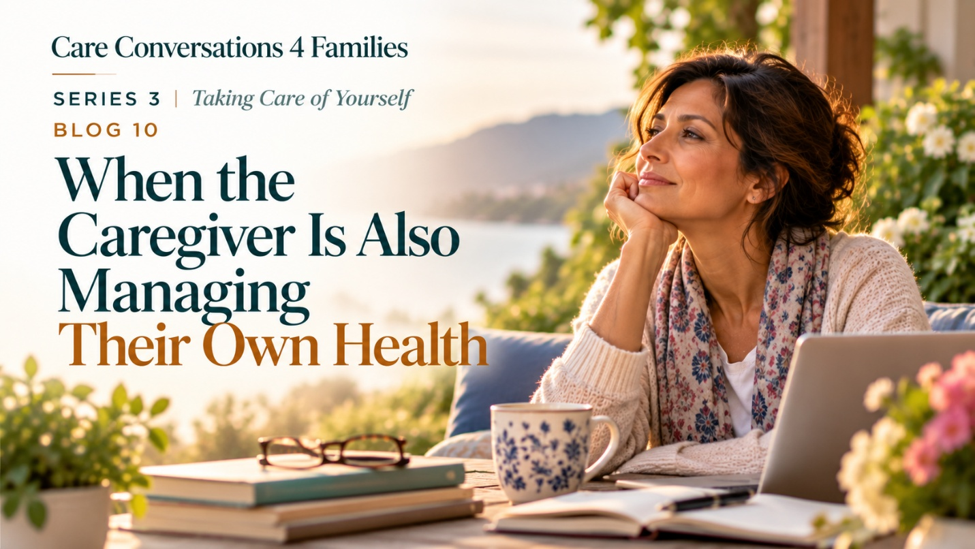
When the Caregiver Is Also Managing Their Own Health
Need Home Care?
Contact Us Today
There is a version of caregiving that receives very little attention.
The version where the person providing care is also managing a health condition of their own. A chronic illness that preceded the caregiving, or a diagnosis that arrived during it. Pain they manage quietly while managing someone else’s. A body that is aging alongside the body they care for.
When the caregiver is also a patient, the coordination demands double. The emotional weight increases. And the risk of neglecting one set of health needs in favor of the other is constant.
This is not a rare situation. It is the majority experience for caregivers over a certain age, and it is almost entirely absent from the public conversation about caregiving.
How common is it for caregivers to have their own health conditions?
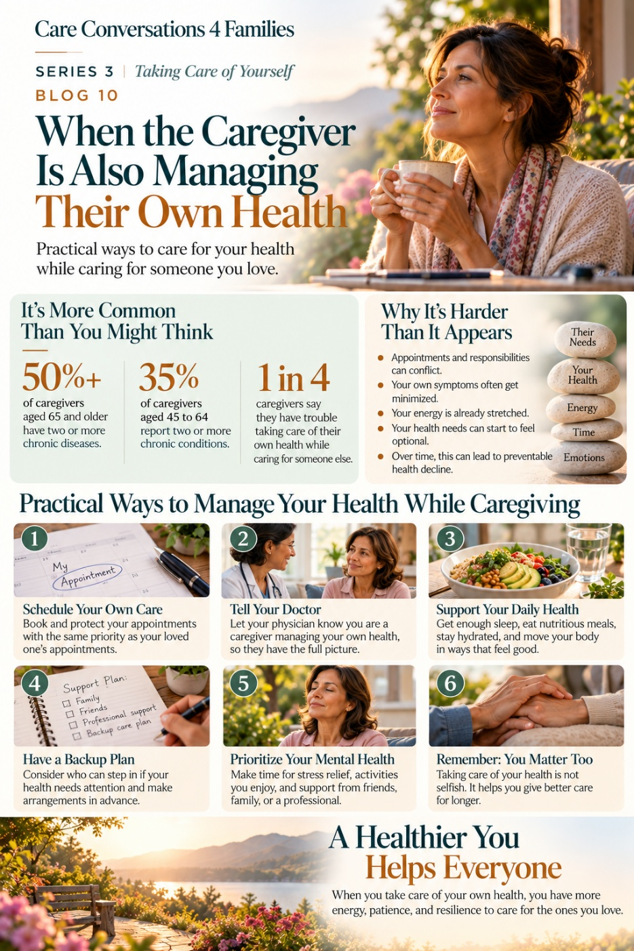
It is very common. More than half of caregivers aged 65 and older have two or more chronic diseases. Among caregivers aged 45 to 64, nearly 35 percent report two or more chronic conditions. Caregivers are at increased risk for having multiple chronic diseases in part because they may neglect their own personal health needs while providing care to someone else.
Nearly one in four caregivers in the 2025 AARP and National Alliance for Caregiving report said they have trouble taking care of their own health while caring for someone else. These rates hold fairly steady across gender and across different types of care recipients, which indicates the risk is tied to the caregiving role itself rather than to any one type of caregiver.
The population most likely to be providing care — adults in middle age and older — is also the population in which chronic conditions are accumulating. Caregiving and personal illness are not rare co-occurrences. They are a predictable overlap.
Why managing both is harder than it appears
When you are managing your own health alongside someone else’s, you face a specific set of competing demands that go beyond ordinary caregiving stress.
Your appointments conflict with theirs. Your medications require attention at the same time as theirs. Your symptoms, when they surface, get minimized because you are oriented toward someone else’s. Your energy budget — already stretched by the caregiving role — has to accommodate your own health management in whatever remains.
And there is an emotional layer underneath the practical one. When your loved one’s needs feel more urgent, more visible, and more legitimately pressing than your own, your health needs begin to feel optional in a way they are not. You tell yourself you will deal with it later. Later becomes a long time.
The result, accumulated over months, is a caregiver whose own health has deteriorated in ways that were preventable and that are, by the time they are recognized, harder to address than they would have been earlier.
How to manage your own health while caregiving
The most important reframe is treating your own health management as a parallel responsibility rather than a secondary one. Not subordinate to the caregiving. Running alongside it.
In practice, this means scheduling your own appointments with the same predictability that you schedule your loved one’s appointments. It means telling your physician explicitly that you are a caregiver managing your own health alongside someone else’s, so they have the full picture of your circumstances and stress load. It means asking directly whether care coordination support, a social worker, or caregiver-specific programs are available through your health system — in many systems they are, and many caregivers do not know to ask.
It also means having a contingency plan. If your own health were to decline significantly, who would step in to maintain care for your loved one? What arrangements would need to exist? The caregiver who thinks through this in advance is not being morbid. They are being responsible — both to themselves and to the person they care for.
What dual-burden caregivers are entitled to say
Many caregivers who are managing their own health alongside caregiving have not fully given themselves permission to take their own health seriously. They know intellectually that they should. But in the daily calculus of competing needs, their health repeatedly yields to the more immediate and visible needs of the care recipient.
This is understandable. It is also a form of self-neglect that is neither necessary nor sustainable. A caregiver who stays well gives better care for longer. A caregiver whose own health is deteriorating gives diminishing care on a shortening timeline. Taking your health seriously is not selfishness. It is the most responsible version of devotion available to you.
Frequently asked questions
Can caregiving cause new health problems in the caregiver?
Yes. Research consistently links caregiving to increased rates of depression, anxiety, cardiovascular disease, impaired immune function, and sleep disruption. These are documented outcomes of sustained caregiving stress combined with reduced attention to personal health maintenance.
What should a caregiver do if they are managing their own chronic condition?
A caregiver managing a chronic condition alongside caregiving responsibilities should inform their physician of their dual role explicitly, schedule and protect their own appointments as a non-negotiable priority, and ask what support resources are available through their health system. A contingency care plan for their loved one, in the event the caregiver’s own health requires attention, is also advisable.
How does caregiver self-neglect affect care quality?
A caregiver in declining health provides less attentive, less sustainable, and eventually less safe care. Research supports the view that caregiver health is not a secondary concern but a direct input into the quality of care the recipient receives.
One thing to do this week
If there is a health concern you have been deferring, make the call to schedule an appointment this week. Not next month. This week. Your health is not a secondary item. It is the foundation everything else is built on.
Next in the series: The Permission to Rest — Why Caregivers Resist Help and How to Accept It. Publishing October 23.
Nobody Told Me It Would Feel Like This is a series from Care Conversations for Families by Home Helpers Home Care, written by Dr. Gunjan Arya. Exploring the interior life of loving someone through illness.
The Most Comprehensive Care In The Industry

Physical Wellness
We make daily life easier as needs change, with support for personal care, mobility, medication reminders, and recovery after a hospital stay.
Learn More
Mental Well-Being
Staying active and connected matters. Our caregivers provide companionship and meaningful engagement to support emotional health and independence.
Learn More
Nutrition & Hydration
Healthy meals and proper hydration are essential. We help with planning, shopping, and preparation to support daily wellness and energy.
Learn More
Active Connections
Strong relationships bring comfort and purpose. We help seniors stay connected through social engagement, technology, and regular check-ins.
Learn More