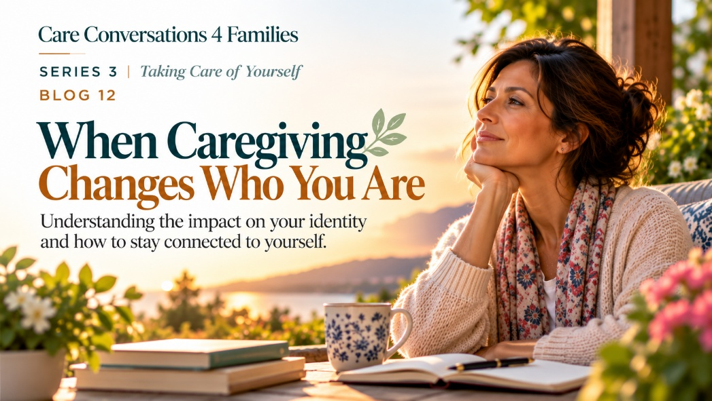
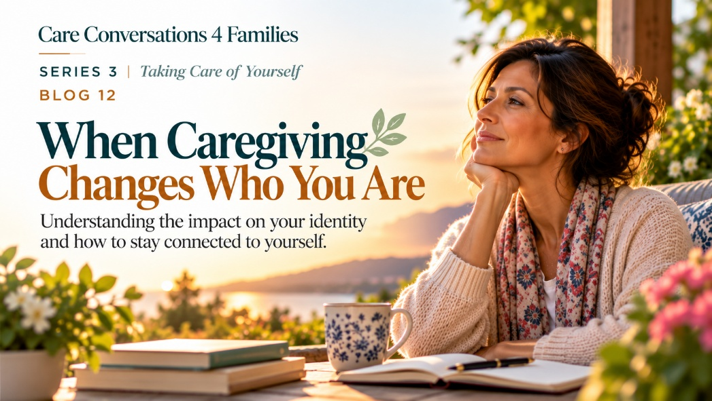
When Caregiving Changes Who You Are
Need Home Care?
Contact Us Today
Long-term caregiving changes the caregiver’s identity. This is not a metaphor. It is a documented psychological process, well established in the research literature, that affects the majority of people who provide sustained care for a loved one.
Most caregivers do not see it happening. The change is gradual. One deferred interest at a time, one narrowed relationship, one appointment that never got rescheduled, one version of themselves that quietly stopped being available because the caregiving required everything that used to belong to those parts of their life.
By the time many caregivers notice, they have been different for a long time.
How does caregiving change a person’s identity?
Caregiving changes identity through a psychological process researchers call role engulfment — the gradual expansion of the caregiver role until it displaces most other aspects of a person’s self-concept. It happens because caregiving is constant and urgent in a way that most other life roles are not, which means it consistently wins the competition for available time, attention, and energy.
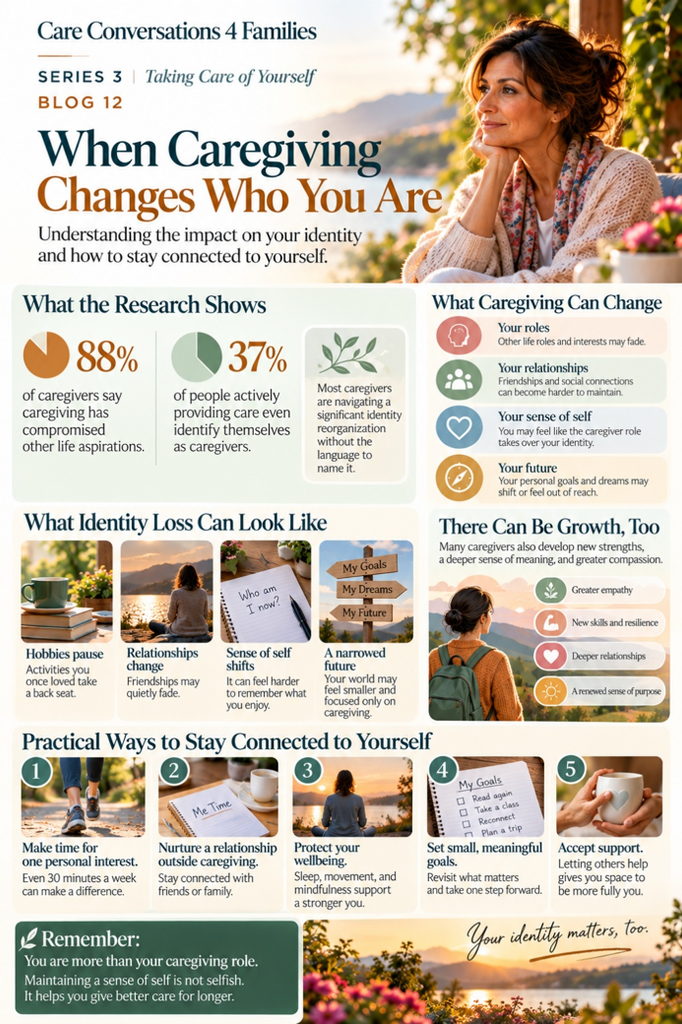
According to Care.com’s 2026 research, 88 percent of caregivers said caregiving had compromised other life aspirations — not temporarily interrupted them, but compromised them. Only 37 percent of people actively providing care even identify themselves as caregivers. Most are navigating a significant identity reorganization without the language to name what is happening.
What gets lost is not just the activity itself but the sense of self that was tied to it. The person who used to think of themselves as a runner, a reader, or a musician no longer has that anchor — and with it loses a piece of how they understood who they are.
What identity loss in caregiving actually looks and feels like
Identity loss in caregiving is distinct from burnout, though both often occur together. Burnout is a state of physical and emotional exhaustion caused by sustained stress. Identity loss is something more specific: the gradual erosion of the sense of yourself as a complete person with your own needs, interests, relationships, and future — a person who exists outside the caregiving role.
Most caregivers do not announce this experience to themselves. It surfaces in smaller recognitions. Looking up from a year of intensive caregiving and realizing that a hobby has been gone for months. Noticing that a friendship has quietly atrophied for want of attention. Feeling blank when asked what you like to do, because the honest answer no longer comes quickly. Finding that your sense of personal future has contracted to the near term, organized entirely around the caregiving.
Research on caregiver identity documents five interrelated experiences: disruption of familiar roles and relational structures, a deepened sense of duty as the caregiver identity is internalized, emotional and existential strain, the development of new capacities and adapted meaning-making, and meaning found in long-term bonds and shared history with the care recipient. Loss and growth coexist.
Why caregivers do not feel permitted to name this
Because caregiving is framed socially as noble and selfless, caregivers often do not feel permitted to mourn what they have given up. People say you are so strong. She is lucky to have you. You are doing such a good thing. These statements may all be true. They can also unintentionally silence the experience underneath: that something real was lost, that the person who lost it has changed, and that the change has not been fully reckoned with.
Wanting to care for someone and missing your old life can coexist. Being grateful and grieving can coexist. The social framing of caregiving as purely noble does not make room for this. The actual experience does.
How to maintain a sense of self while caregiving
Research on caregiver wellbeing consistently finds that caregivers who maintain some investment in their own identity outside the caregiving role — who preserve at least some thread of who they were before — carry their responsibilities with more resilience and less erosion over time.
This does not require large interventions. It requires small, consistent ones. One activity, maintained weekly, that belongs to the caregiver rather than the care recipient. One relationship tended deliberately outside the caregiving context. One way of thinking about themselves that is not organized entirely around what they provide for someone else.
The goal is not to diminish the caregiving identity. It is to ensure the caregiving identity does not become the only one.
Frequently asked questions
What is caregiver role engulfment?
Role engulfment is the psychological process by which the caregiver role gradually expands to displace most other aspects of a person’s identity. It is associated with higher rates of caregiver burden, depression, and burnout, and is more common in primary caregivers who are spouses, women, and younger adults.
Is it normal to lose your sense of self while caregiving?
Yes. Research documents identity loss as a common feature of long-term caregiving, affecting the majority of primary caregivers to some degree. It is not a sign of personal weakness. It is a predictable outcome of a role that is constant, urgent, and largely invisible in its demands.
How can a caregiver reclaim their identity?
Reclaiming identity does not require stepping back from the caregiving role. It requires small, consistent investments in interests, relationships, and self-definition that exist outside of it. Research finds that even modest maintenance of personal identity is meaningfully protective against the worst outcomes of role engulfment.
One thing to do this week
Name one thing that used to be part of who you are that caregiving has displaced. Then take one small step toward it this week. Not a full return. One small move in the direction of the person you were, and still are, beneath the role.
Next in the series: Caring for a Loved One With a Mental Illness. Publishing October 30.
Nobody Told Me It Would Feel Like This is a series from Care Conversations for Families by Home Helpers Home Care, written by Dr. Gunjan Arya. Exploring the interior life of loving someone through illness.
The Most Comprehensive Care In The Industry

Physical Wellness
We make daily life easier as needs change, with support for personal care, mobility, medication reminders, and recovery after a hospital stay.
Learn More
Mental Well-Being
Staying active and connected matters. Our caregivers provide companionship and meaningful engagement to support emotional health and independence.
Learn More
Nutrition & Hydration
Healthy meals and proper hydration are essential. We help with planning, shopping, and preparation to support daily wellness and energy.
Learn More
Active Connections
Strong relationships bring comfort and purpose. We help seniors stay connected through social engagement, technology, and regular check-ins.
Learn More