Falls at Home Are Not Random: 10 Simple Ways Families Can Reduce Senior Fall Risk
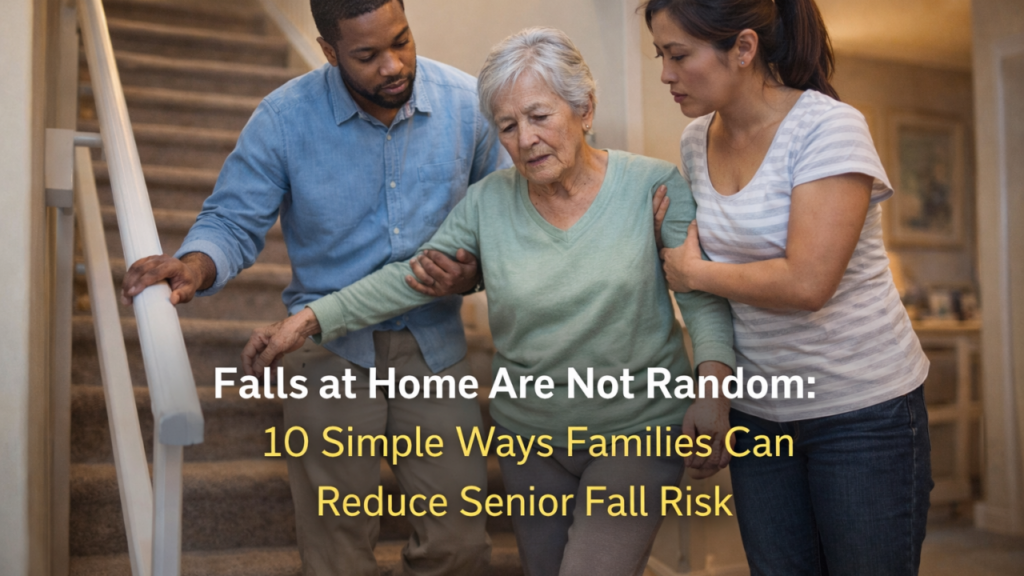
When an older adult falls at home, families often describe it as an accident.
But many falls are not truly random.
In many cases, they happen because of risks that have been building quietly over time. Poor lighting. Cluttered walkways. Medication side effects. Weakness. Rushing. Missed warning signs. Small changes in balance or mobility that no one fully noticed until a fall happened.
For older adults, one fall can change everything. It can lead to injury, fear, loss of confidence, reduced independence, and a greater need for support. It can also create stress and worry for the entire family.
The good news is that many fall risks can be reduced with a few thoughtful changes.
If you are caring for an aging parent, spouse, or loved one, here are 10 simple ways to help make home safer and reduce fall risk.
1. Clear the walking paths
Look around the home with fresh eyes. Are there loose rugs, cords, footstools, piles of shoes, baskets, or furniture that make it harder to move around safely?
Even small obstacles can become dangerous, especially for someone who is tired, unsteady, or using a cane or walker.
What to do: Keep pathways open and easy to navigate, especially in bedrooms, hallways, bathrooms, and near stairs.
2. Improve lighting throughout the home
Many falls happen simply because a person cannot see clearly where they are stepping.
Dim hallways, dark corners, poorly lit staircases, and nighttime trips to the bathroom can all increase risk.
What to do: Add brighter bulbs, night lights, and easy-to-reach lamps. Make sure stairs, bathrooms, and entryways are especially well lit.
3. Pay close attention to the bathroom
Bathrooms are one of the most common places for falls because of slippery floors, wet surfaces, and the need to sit, stand, and turn in tight spaces.
What to do: Consider grab bars near the toilet and shower, non-slip mats, a shower chair, and a handheld shower head if needed. Make sure towels and toiletries are easy to reach.
4. Watch for changes in balance or walking
Families sometimes adjust slowly to a loved one’s changing mobility without fully realizing how much has changed. Maybe they are holding onto furniture more often. Maybe they are moving more slowly, shuffling, or seeming less steady when standing up.
These are important signs.
What to do: Do not dismiss these changes as “just getting older.” Talk to a healthcare provider if balance, walking, or strength seems different.
5. Review medications regularly
Some medications can increase fall risk by causing dizziness, drowsiness, confusion, or low blood pressure. Sometimes it is not just one medication, but the combination of several.
What to do: Ask for a medication review with the doctor or pharmacist, especially if your loved one seems more tired, lightheaded, or unsteady than before.
6. Encourage proper footwear
Loose slippers, slick soles, backless shoes, and socks on smooth floors can all increase the chance of slipping or losing balance.
What to do: Choose supportive, well-fitting shoes with non-slip soles. Good footwear matters more than many families realize.
7. Make stairs safer
Stairs can become dangerous when someone is weak, distracted, carrying items, or struggling with vision or balance.
What to do: Make sure railings are secure on both sides if possible. Keep stairs clear, well lit, and free of clutter. Avoid leaving items on steps “just for now.”
8. Reduce rushing
Many falls happen when someone is trying to move too quickly. They may rush to answer the door, get to the bathroom, or stand up too fast after sitting or lying down.
What to do: Encourage your loved one to move slowly and pause before walking after standing up. Build in enough time so they do not feel pressured to hurry.
9. Support strength and movement
When older adults move less, they often become weaker. That weakness can then increase fall risk, which may cause them to become even more afraid of moving. It becomes a cycle.
What to do: Encourage safe movement and activity as appropriate. Even gentle walking, stretching, or provider-approved exercises can help maintain strength and confidence.
10. Know when extra support is needed
Sometimes the home is not unsafe because of one major issue. It is unsafe because too many small risks are piling up while the older adult and family caregiver are already stretched thin.
That is often when falls happen.
What to do: If your loved one needs help with mobility, bathing, getting dressed, meal preparation, or moving safely around the home, it may be time to explore added support.
Why families often miss the warning signs
Fall risk usually does not appear all at once. It builds gradually.
A loved one may seem mostly fine, but there are little clues:
- holding onto walls or furniture
- avoiding stairs
- moving more slowly
- becoming nervous in the shower
- needing help getting up from a chair
- seeming more tired or unsteady by the end of the day
Because these changes happen slowly, families often normalize them until there is a fall.
Small changes can make a big difference
The goal is not to create fear. The goal is to create awareness.
A safer home does not have to feel clinical or overwhelming. Often, the most effective changes are simple and practical. Better lighting. Fewer tripping hazards. More support in key moments. A more honest conversation about what is becoming harder.
These changes can protect not only physical safety, but also dignity, confidence, and independence.
When to have the conversation
The best time to talk about fall prevention is before a serious fall happens.
Do not wait for an emergency to start noticing the risks. If you are already seeing signs of unsteadiness, hesitation, weakness, or fear of falling, that is the right time to take action.
Final thought
Falls at home are not always random. Very often, they are the result of risks families can spot earlier and reduce with the right support.
If your loved one is showing signs of increasing fall risk, now is the time to look around, ask questions, and make small changes before a crisis happens.
Sometimes protecting independence starts with making home safer.
The Most Comprehensive Care In The Industry

Physical Wellness
We make daily life easier as needs change, with support for personal care, mobility, medication reminders, and recovery after a hospital stay.
Learn More
Mental Well-Being
Staying active and connected matters. Our caregivers provide companionship and meaningful engagement to support emotional health and independence.
Learn More
Nutrition & Hydration
Healthy meals and proper hydration are essential. We help with planning, shopping, and preparation to support daily wellness and energy.
Learn More
Active Connections
Strong relationships bring comfort and purpose. We help seniors stay connected through social engagement, technology, and regular check-ins.
Learn More