The Phone Numbers and Organizations Every Caregiving Family Should Have Saved
Need Home Care?
Contact Us Today
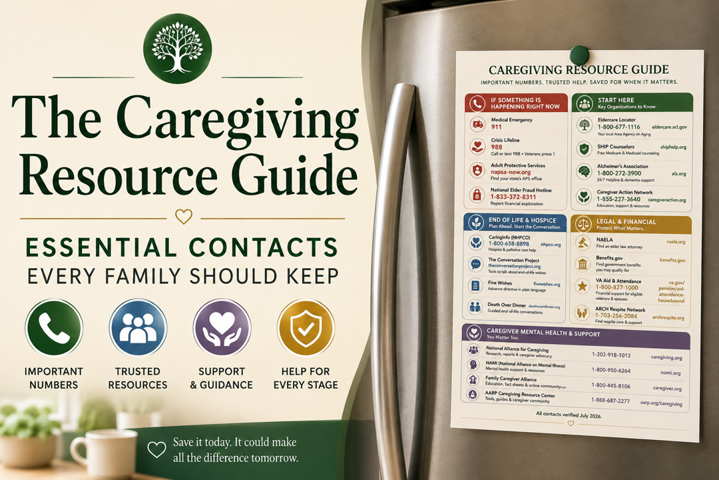
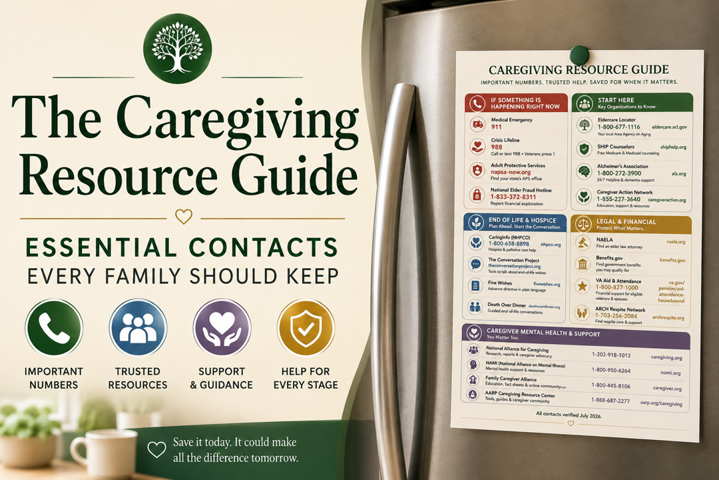
You will not need most of these on a typical Tuesday.
But on the Tuesday when something changes, having them already saved is the difference between acting quickly and spending the first hour of a crisis searching for information you did not know you needed.
Most families find these resources the hard way. A discharge planner mentions something in a hallway and the family scribbles it on a receipt. A neighbor passes along a number that changes everything. A Google search at midnight leads somewhere helpful, but only after four searches that did not.
This post exists so that does not happen to you.
Keep it. Save it. Share it. Come back to it when you need it. And share it with your siblings now, before anyone needs it urgently.
If something is happening right now
Before everything else, these are the numbers for situations that cannot wait.
Medical emergency: Call 911.
Emotional crisis, yours or theirs: Call or text 988. This is the Suicide and Crisis Lifeline, available 24 hours a day, seven days a week. Veterans: press 1. This line is not only for suicidal crisis. It is for anyone who is overwhelmed, frightened, or does not know where to turn.
Suspected elder abuse or neglect: Contact your state’s Adult Protective Services office. Find your state’s APS at napsa-now.org. Every state has one.
Elder financial fraud: Call the National Elder Fraud Hotline at 1-833-372-8311. Trained case managers help families report financial exploitation and begin the recovery process. Anyone 60 or older is eligible.
Start here: the four most important organizations
Eldercare Locator — your single most important starting point
This is the national entry point to your local Area Agency on Aging, and it is where almost every caregiving resource conversation should begin. A specialist can connect you with local home care options, Medicaid waiver programs, meal delivery, transportation assistance, legal aid, caregiver support groups, and much more. All at no cost to the family.
1-800-677-1116 | eldercare.acl.gov | Available Monday through Friday 9am to 8pm ET
SHIP: State Health Insurance Assistance Program
Free, unbiased Medicare and Medicaid counseling in every state. A SHIP counselor can review your parent’s coverage, identify gaps, check eligibility for Medicare Savings Programs that could reduce or eliminate the Part B premium, help with appeals, and answer detailed questions about Medicare Advantage plans. All at no cost. Every phone number on this page was verified in July 2026. Caregiver Action Network
Find your state’s SHIP at: shiphelp.org
Alzheimer’s Association
The leading national resource for families navigating Alzheimer’s and other forms of dementia. Their 24/7 helpline is staffed by specialists who can provide care consultations, local support group referrals, safety resources, and guidance through every stage of the disease.
1-800-272-3900 (24/7 helpline) | alz.org
Caregiver Action Network
The nation’s leading family caregiver organization, working to improve the quality of life for the more than 90 million Americans who care for loved ones with chronic conditions, disabilities, or disease. Free education, peer support, a caregiver help desk, tip sheets, and tools for caregivers across every diagnosis category. Garykozick
1-855-227-3640 | caregiveraction.org
End of life and hospice resources
National Hospice and Palliative Care Organization
Find a Medicare-certified hospice provider anywhere in the country, access family guides, and understand the full hospice benefit in plain language. Their CaringInfo helpline is specifically designed to help families who are not sure where to begin.
CaringInfo helpline: 1-800-658-8898 | nhpco.org
The Conversation Project
Free, accessible tools and guides for starting end-of-life conversations with your family. Their Starter Kit is one of the most practical resources available for families who know they need to have the conversation but do not know how to open it. Available in multiple languages.
theconversationproject.org
Five Wishes
A legally valid advance directive document available in most US states, written in plain language rather than legal jargon. It addresses medical wishes, personal wishes, emotional wishes, and spiritual wishes in one document. One of the most human and accessible planning tools available.
fivewishes.org
Death Over Dinner
A guided conversation toolkit designed to help families discuss end-of-life wishes together, over a meal, in a supported and intentional way. Useful for families who want a framework rather than a blank page.
deathoverdinner.org
Legal and financial resources
National Academy of Elder Law Attorneys (NAELA)
Find a qualified elder law attorney in your area. Essential for Medicaid planning, durable power of attorney, guardianship proceedings, estate planning, and long-term care cost planning. Most offer an initial consultation.
naela.org
Benefits.gov
A federal portal for identifying government benefit programs your parent may qualify for, including Medicaid, Medicare Savings Programs, veterans benefits, nutrition assistance, and housing support.
benefits.gov
Veterans Aid and Attendance Benefit
For eligible veterans and surviving spouses who need help with daily activities. This benefit provides meaningful monthly financial support that can be used to pay for in-home care, assisted living, or memory care. It is significantly underused, largely because families do not know it exists. If your parent served in the military during a wartime period, this conversation is worth having.
va.gov/pension/aid-attendance-housebound | 1-800-827-1000
ARCH National Respite Network
ARCH connects caregivers with respite services and offers training, advocacy, and research tools. Their national directory helps families locate local respite care options. Respite care, which provides temporary relief for primary caregivers, is one of the most underfunded and underused supports in family caregiving. ARCH can help families find it. Allseniors
archrespite.org | 1-703-256-2084
Caregiver mental health and support
National Alliance for Caregiving
This nonprofit conducts research and develops policy to support family caregivers. Their site includes reports, advocacy tools, and global caregiving initiatives. Their research on caregiver health and burnout is among the most evidence-based available and worth reading if you are trying to understand what you are carrying. Allseniors
caregiving.org
National Alliance on Mental Illness (NAMI)
Support for caregivers who are managing their own mental health alongside the demands of caregiving. Their helpline connects families with local resources, peer support groups, and trained volunteers.
1-800-950-6264 | nami.org
Family Caregiver Alliance
A national network addressing the needs of families and friends providing long-term care at home. Their website includes free publications, an online support community, and fact sheets on every major caregiving topic.
1-800-445-8106 | caregiver.org
The infographic: your caregiving resource guide
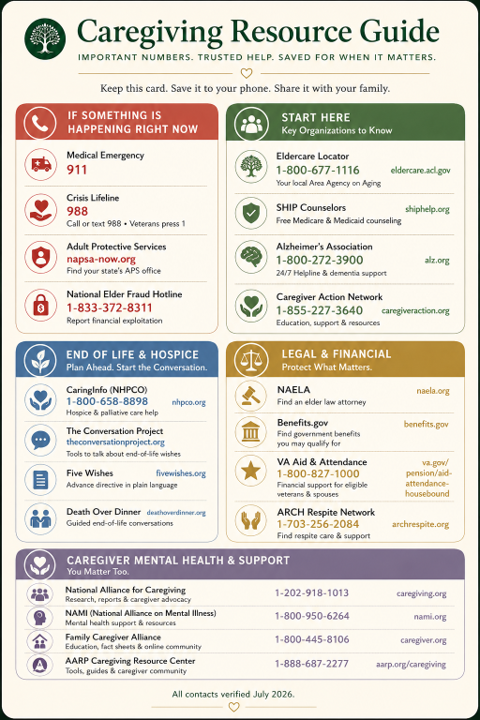
One thing to do right now
Do not wait until you need these. Right now, before you close this post, do two things.
First, save the Eldercare Locator number in your phone contacts: 1-800-677-1116. Label it “Senior Care Help.” Second, text this post to your siblings with one line: “Saving this in case we ever need it.”
That is it. You have just done something that could matter enormously on a very hard day.
Next in the series: The Conversation About the Will That Tears Families Apart. Publishing August 28.
What We Wish We’d Said Sooner is a series from Care Conversations for Families, exploring the conversations every family needs to have before a crisis makes them urgent.
The Most Comprehensive Care In The Industry

Physical Wellness
We make daily life easier as needs change, with support for personal care, mobility, medication reminders, and recovery after a hospital stay.
Learn More
Mental Well-Being
Staying active and connected matters. Our caregivers provide companionship and meaningful engagement to support emotional health and independence.
Learn More
Nutrition & Hydration
Healthy meals and proper hydration are essential. We help with planning, shopping, and preparation to support daily wellness and energy.
Learn More
Active Connections
Strong relationships bring comfort and purpose. We help seniors stay connected through social engagement, technology, and regular check-ins.
Learn More