
When a Few Hours of Help Can Change Everything
Need Home Care?
Contact Us Today

Small Signs a Loved One May Benefit from In-Home Support
Many families do not recognize the need for support right away.
At first, it looks manageable. A few extra errands. More reminders. A little help with meals. A daughter, son, or spouse steps in and keeps things moving.
But over time, the small things start adding up.
Daily routines take longer. Personal care becomes more tiring. Appointments are harder to coordinate. The older adult needs more supervision than before. The family caregiver is still trying to keep up with work, meals, laundry, errands, and everyone else’s needs too.
This is often where families get stuck.
They assume they have only two choices: keep managing everything alone or wait until something serious happens.
In reality, there is a better middle ground.
Sometimes, a few hours of the right in-home support can make life safer, calmer, and more sustainable for everyone involved.
The misconception that keeps families waiting
One of the biggest myths about home care is that it is only for a crisis.
Many families think help should begin only after a fall, hospitalization, major memory change, or severe decline.
That belief causes people to wait too long.
The truth is that early support is often the most effective support. It can ease strain before burnout sets in, reduce risk before an emergency happens, and help an older adult remain comfortable and independent at home for longer.
Home care does not have to be all-or-nothing. Sometimes it starts with just a few hours a week.
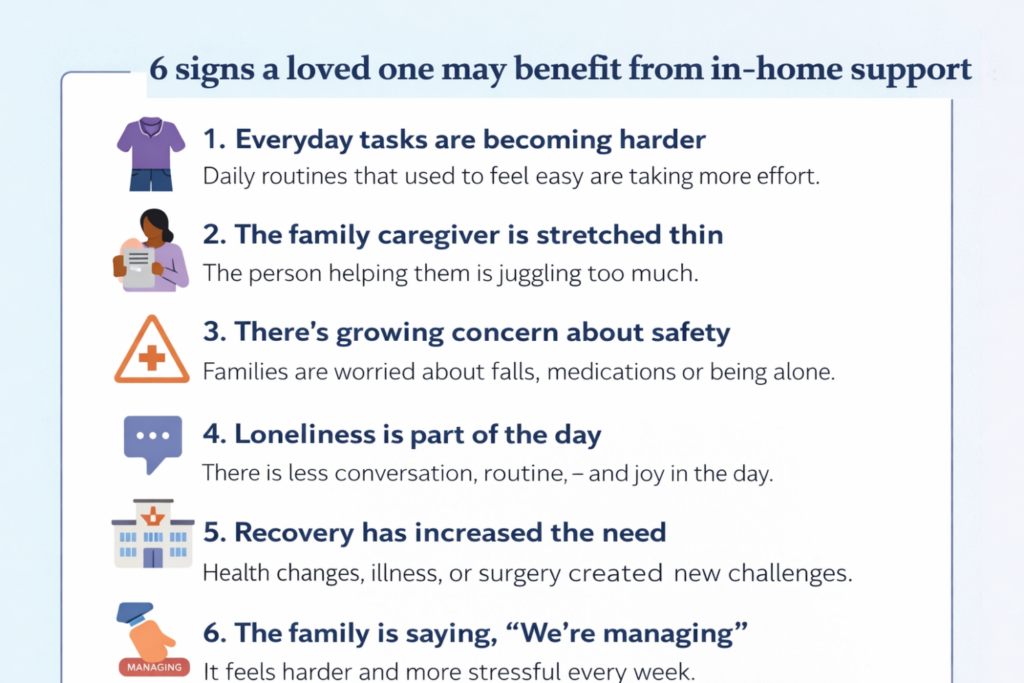
6 signs a loved one may benefit from in-home support
1. Daily tasks are becoming harder
A loved one may still be living at home, but everyday routines are taking more energy than before.
Bathing, dressing, meal preparation, laundry, light housekeeping, and getting ready for the day may no longer feel simple or safe.
Families often overlook this because the change is gradual.
But when basic routines start becoming harder, it is often an early sign that support could make life easier and safer.
2. The family caregiver is stretched thin
Sometimes the clearest sign is not only what is happening with the older adult. It is what is happening with the caregiver.
They may be coordinating appointments, checking medications, shopping, helping with meals, and providing emotional support, while still handling work, children, chores, and their own responsibilities.
They may not complain. They may simply keep going.
But quiet strain is still strain.
When a caregiver is running on empty, the entire care situation becomes harder to sustain.
3. There is growing concern about safety
There may not have been a major event yet, but something feels different.
Maybe walking looks less steady. Maybe showering seems riskier. Maybe standing up takes more effort. Maybe the family is starting to worry about falls, missed medications, or periods of being alone.
These moments matter.
Families do not have to wait for a crisis to take safety concerns seriously.
4. Loneliness is becoming part of the day
Many older adults do not only need help with tasks. They also need connection.
When outings become fewer, conversations become shorter, and the day starts to feel long and repetitive, emotional well-being can begin to decline.
Companionship is not just a nice extra. It can support mood, routine, confidence, and quality of life.
5. Recovery or health changes have increased the need
A hospital stay, illness, surgery, or general decline can quickly change what home life looks like.
A loved one may suddenly need help getting around, managing routines, remembering medications, or simply regaining confidence.
The need may be temporary or longer term, but either way, timely support can prevent unnecessary setbacks and reduce stress on the whole family.
6. The family keeps saying, “We’re managing,” but it feels harder every week
This is often the most honest sign of all.
Many families are managing. But they are doing so with rising stress, less rest, and a growing sense that everything depends on one or two people holding it all together.
The better question is not always, “Can we keep doing this?”
Sometimes it is, “Would a little help improve life for everyone?”
What a few hours of help can actually do
A few hours of in-home support can create relief far beyond the task list.
It can help with:
- personal care such as bathing, dressing, and grooming
- meal preparation and light housekeeping
- companionship and conversation
- medication reminders
- transportation to appointments or errands
- support after a hospital stay
- respite for the family caregiver
Often, those few hours help an older adult feel more supported and less alone.
Just as importantly, they give the family caregiver space to breathe.
Why early support protects independence
This is one of the most important messages families need to hear:
Bringing in help does not necessarily reduce independence. In many cases, it protects it.
When the right support is added early, older adults are often better able to stay in their homes, maintain routines, and avoid the kind of setbacks that can lead to bigger changes later.
Support is not about taking over.
It is about making daily life more manageable, safer, and more dignified.
What families should look for in a home care partner
Not all support feels the same.
Families should look for care that is:
- compassionate and respectful
- flexible as needs change
- focused on both the client and the family caregiver
- practical, reliable, and relationship-based
- centered on helping the older adult live well at home
The right care should feel like support, not disruption.
Final thought
Families often wait for one big reason to ask for help.
But more often, the need shows up in smaller ways first: daily routines getting harder, safety worries growing, loneliness increasing, or a caregiver quietly carrying too much.
Those signs matter.
Because sometimes the best time to bring in support is before life feels unmanageable.
If this topic resonates with you, please comment, share, and subscribe to Care Conversations 4 Families for more insights on senior care, family caregiving, and aging at home.
The Most Comprehensive Care In The Industry

Physical Wellness
We make daily life easier as needs change, with support for personal care, mobility, medication reminders, and recovery after a hospital stay.
Learn More
Mental Well-Being
Staying active and connected matters. Our caregivers provide companionship and meaningful engagement to support emotional health and independence.
Learn More
Nutrition & Hydration
Healthy meals and proper hydration are essential. We help with planning, shopping, and preparation to support daily wellness and energy.
Learn More
Active Connections
Strong relationships bring comfort and purpose. We help seniors stay connected through social engagement, technology, and regular check-ins.
Learn More