
Hospitals Discharge Patients Fast. Families Aren’t Always Ready.
Need Home Care?
Contact Us Today

A hospital discharge can feel like good news.
A loved one is finally coming home. The hospital stay is over. Everyone wants to believe recovery will now feel easier.
But for many families, the hardest part begins after discharge.
The home may not be ready. The older adult may still be weak. Medications may have changed. Follow-up instructions may be confusing. The family caregiver may be trying to manage all of this while still keeping up with work, meals, errands, and the rest of life.
Coming home is not the same as being ready to recover safely at home.
Where families get caught off guard
The gap usually appears in the first few days:
- weakness is worse than expected
- the bathroom setup is not ideal
- medication changes are unclear
- eating and drinking are poor
- follow-up appointments are hard to coordinate
- the caregiver feels anxious and overwhelmed
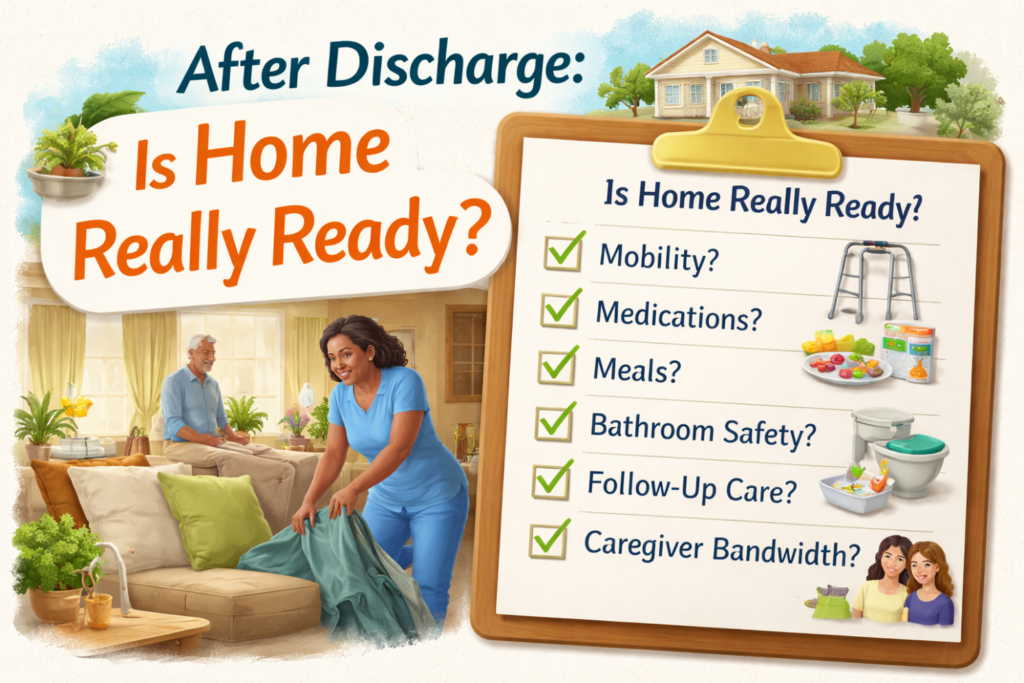
6 signs the home may not be ready yet
1. Mobility is clearly reduced Walking, transfers, or toileting feel less safe.
2. Personal care now requires hands-on help Bathing, dressing, and grooming are harder than before.
3. Medication instructions feel rushed or unclear There is uncertainty around what changed and what matters most.
4. The caregiver is already exhausted The recovery plan depends heavily on one person who is already stretched.
5. The environment has not been adjusted Poor lighting, stairs, clutter, or bathroom risks remain unchanged.
6. Everyone is improvising There is no calm, workable routine yet.
Final thought
Discharge is not the end of care. It is a transition.
The families who do best are not the ones who assume everything will work itself out. They are the ones who recognize that recovery at home often needs support, structure, and realistic planning.
If this topic resonates with you, please comment, share, and subscribe to Care Conversations 4 Families for more insights on senior care, family caregiving, and aging at home.
The Most Comprehensive Care In The Industry

Physical Wellness
We make daily life easier as needs change, with support for personal care, mobility, medication reminders, and recovery after a hospital stay.
Learn More
Mental Well-Being
Staying active and connected matters. Our caregivers provide companionship and meaningful engagement to support emotional health and independence.
Learn More
Nutrition & Hydration
Healthy meals and proper hydration are essential. We help with planning, shopping, and preparation to support daily wellness and energy.
Learn More
Active Connections
Strong relationships bring comfort and purpose. We help seniors stay connected through social engagement, technology, and regular check-ins.
Learn More