How to Find Trustworthy Home Care: What to Ask and What to Watch For
Need Home Care?
Contact Us Today
If you are searching for home care for a loved one, there is a good chance you have not slept particularly well lately.
You are probably holding a lot right now. The worry. The guilt. The relief that help might finally be on the way. And underneath all of it, the fear of making the wrong call.
There is something deeply personal about allowing someone into the home of a person you love. That home is their territory, their comfort, and often one of the last places they feel truly in control. Inviting a stranger into that space, especially when the person you love may already feel like they are losing independence, carries a weight that a simple service comparison cannot capture.
And yet most families approach finding home care the same way they approach finding any service. They search online, read a few reviews, make some calls, and go with whoever seems reasonable and available.
The stakes are not the same.
A caregiver who is not the right match, or who is not properly screened, or who works for an agency with poor oversight, can cause harm that is much harder to undo. Getting this decision right matters enormously. And most families do not know enough about what to look for to get it right the first time.
This post is here to change that.
The first question to settle: agency or independent caregiver
Before comparing specific providers, it helps to understand the structural difference between hiring through an agency and hiring an independent caregiver directly.
To choose a home care agency with confidence, look for one that is licensed, bonded, and insured in your state, employs caregivers as W-2 employees rather than independent contractors, conducts thorough background checks, and provides a written care plan that is reviewed regularly. Senior Safety Advice
Agency-employed caregivers typically come with more structured oversight. The agency handles payroll taxes, workers’ compensation insurance, background checks, and training standards. When a caregiver calls in sick, the agency arranges backup. When something goes wrong, there is a chain of accountability.
Independent caregivers hired directly can offer more flexibility and sometimes lower costs. But the responsibility for screening, insurance, taxes, and backup coverage shifts entirely to the family. For families who are already managing significant caregiving demands, that additional responsibility is worth understanding before making a choice.
Neither option is universally better. Both can work well. The key is knowing what you are taking on with each and asking the right questions regardless of which path you choose.
The questions that reveal whether an agency can be trusted
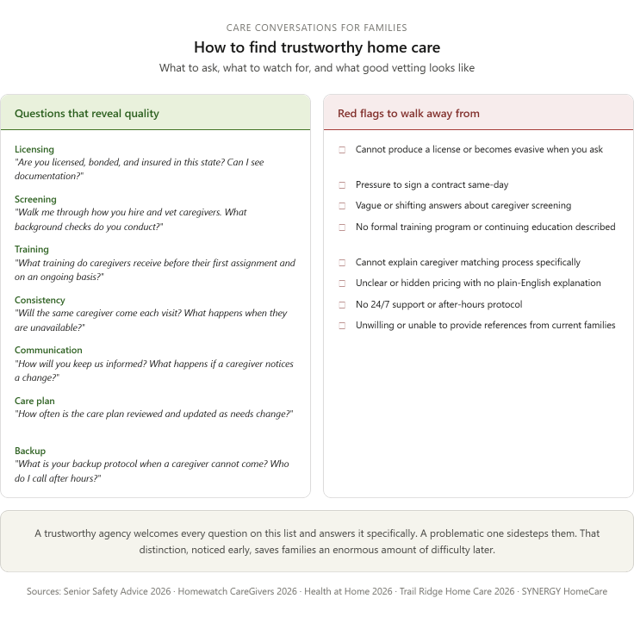
The most important thing you can do before signing any agreement is to ask direct questions and pay close attention to how the agency responds. A trustworthy agency welcomes your questions. A problematic one sidesteps them. Senior Safety Advice
The sales call is the best behavior you will ever see from an agency. If they are evasive, vague, or pressure you during that first conversation, that is important information. Here are the questions worth asking every agency you consider.
Are you licensed, bonded, and insured in this state?
Licensing requirements vary by state but most states require home care agencies to be licensed. Ask to see documentation. A legitimate agency will provide it without hesitation. Request a copy of the agency’s insurance declaration page as proof of coverage. SYNERGY HomeCare
How do you screen and hire caregivers?
A strong home care agency will walk you through their hiring process in detail. Background checks, reference verification, and ongoing evaluations should be standard. But the matching process matters just as much. The right fit is not purely clinical. Shared language, temperament, communication style, and even a sense of humor can meaningfully affect how comfortable your loved one feels at home. Health At Home
What training do caregivers receive?
Industry expectations for continuing education have grown as caregivers increasingly assist with chronic diseases like hypertension, diabetes, COPD, and Alzheimer’s. About 60% of home health visits relate to these chronic conditions. Homewatch CareGivers Ask what training caregivers receive before their first assignment and what ongoing education is provided. Ask specifically about dementia care training if that is relevant to your loved one’s situation.
How do you handle caregiver consistency?
Consistency is one of the most important factors in quality home care. Ask whether the same caregiver will come each visit and what happens when they are sick or unavailable. An agency that cannot answer this specifically is an agency that cannot commit to the thing that matters most.
How will you keep us informed?
Ask how the agency communicates observations about your loved one to the family. What is the process if a caregiver notices a change in condition between scheduled family visits? You should feel informed without having to chase the information. If the agency cannot describe a clear communication process, that gap will show up in the care.
What does the care plan look like and how often is it updated?
A care plan written at intake and never revisited is a plan that does not reflect the current situation. Ask how often plans are reviewed and who initiates updates when needs change.
What is your backup protocol?
Vague answers about backup coverage, supervision, or training become chaos in week three. Allheartcare Ask specifically what happens when a caregiver cannot come. Is there a list of available substitutes? How much notice does the family receive? What is the after-hours contact process?
Can you provide references from families with similar needs?
Ask for references and actually call them. Ask those families what they wish they had known before they started and whether anything surprised them. Real families with real experience are more useful than any sales pitch.
The match matters as much as the qualifications
Qualifications get a caregiver through the door. The match determines whether the arrangement actually works.
An in-home caregiver becomes part of daily life. They see routines, vulnerabilities, and private moments. Being qualified is not enough. They need to be trustworthy and genuinely compatible with your loved one’s personality and needs.
Ask the agency how they match caregivers to clients. What information do they use? Do they consider personality, communication style, shared language, or cultural background? Can you meet the caregiver before the first scheduled visit?
When the match is right, something shifts. Your loved one begins to look forward to the visits. They mention the caregiver by name. They seem more settled. You feel a weight lift from your shoulders that you did not realize you had been carrying.
Those signals, quiet and easy to miss, are the real indicators of whether good care is actually happening. They are worth watching for. And if they are absent after a reasonable period of time, that is a signal worth acting on.
Before you sign anything
Verify the agency’s license with your state’s health department. Most states maintain searchable databases where you can confirm licensing status and check for complaints or violations. This takes ten minutes and is worth doing before any agreement is signed.
Ask about pricing clearly and in writing before you commit. A trustworthy agency is upfront and transparent about costs. Ask for a plain-English explanation of pricing, billing, and what happens if hours need to increase. You should never feel pressured or left in the dark about what you are being charged and why.
Ask what the contract cancellation terms are. Life changes. Care needs change. An agency that makes it difficult to adjust or exit an arrangement is an agency that is protecting itself, not your loved one.
And trust what the initial conversation told you. The sales call is the best behavior you will ever see from an agency. If they were evasive, dismissive, or pressured you there, they will be more so once you have signed.
One thing to do this week
If you are in the process of evaluating home care providers, print or screenshot the questions from this post and bring them to your next conversation with an agency. Write down the answers. Compare them across agencies side by side.
If you are not yet at that stage but expect to be, save this post now. The quality of the questions you bring to that first conversation will significantly shape the quality of care your loved one receives.
Next in the series: Where Do You Want to Live When You Cannot Live Alone? Publishing September 11.
What We Wish We’d Said Sooner is a series from Care Conversations for Families, exploring the conversations every family needs to have before a crisis makes them urgent.
The Most Comprehensive Care In The Industry

Physical Wellness
We make daily life easier as needs change, with support for personal care, mobility, medication reminders, and recovery after a hospital stay.
Learn More
Mental Well-Being
Staying active and connected matters. Our caregivers provide companionship and meaningful engagement to support emotional health and independence.
Learn More
Nutrition & Hydration
Healthy meals and proper hydration are essential. We help with planning, shopping, and preparation to support daily wellness and energy.
Learn More
Active Connections
Strong relationships bring comfort and purpose. We help seniors stay connected through social engagement, technology, and regular check-ins.
Learn More