The 26-Hour Week: What Family Caregiving Really Looks Like
Need Home Care?
Contact Us Today
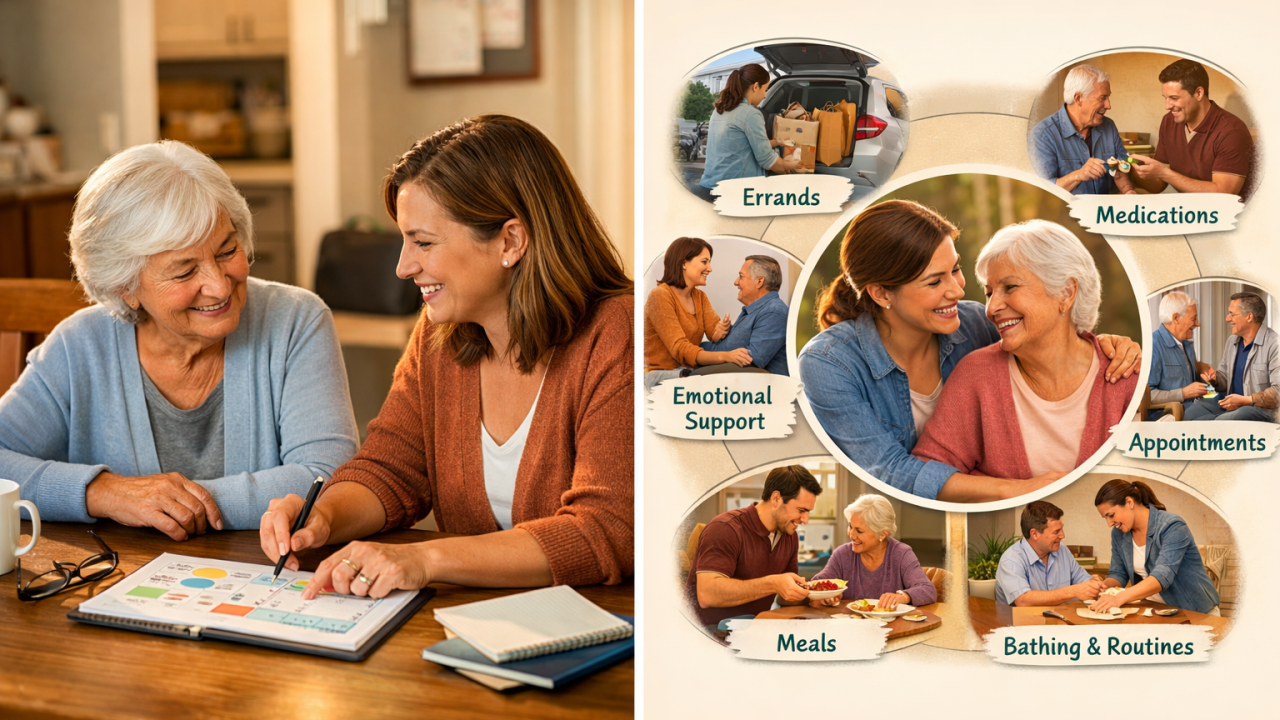
Many people still think of family caregiving as “helping out.”
A ride to an appointment. Picking up groceries. Checking in more often.
But for many families, caregiving is not occasional help. It is a part-time job layered on top of everything else.
AARP’s recent caregiving research continues to show the scale of this reality, with millions of Americans providing care and many spending substantial time each week doing it.
What makes caregiving so exhausting is not just the hours. It is the interruption.
Care is woven into mornings, lunch breaks, evenings, weekends, work calls, school pickups, and the mental load in between.
What 26 hours can include
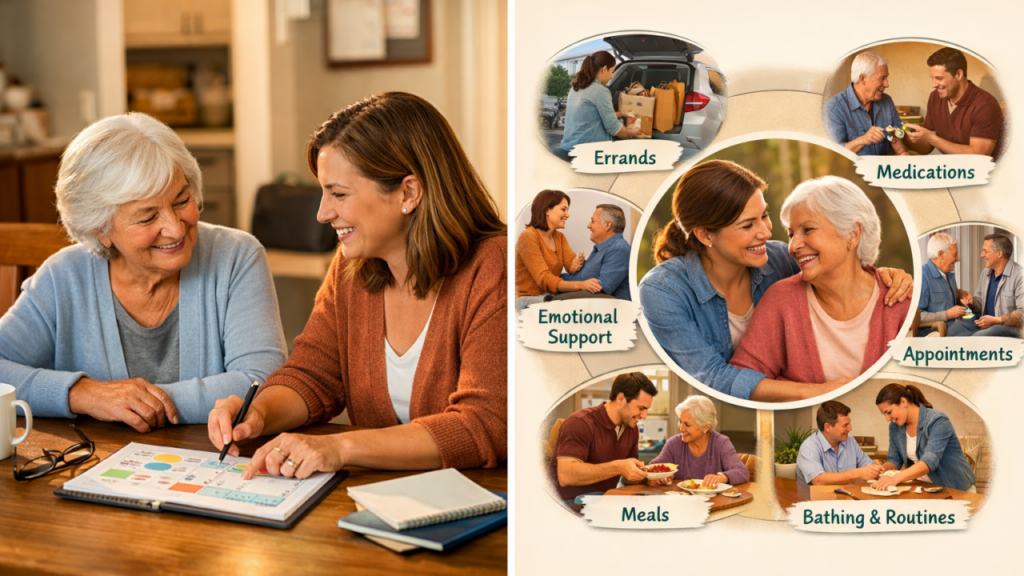
A “caregiving week” may include:
- medication reminders
- transportation
- meal prep
- supervising routines
- laundry and cleanup
- managing appointments
- emotional reassurance
- troubleshooting every new issue
The hours add up. So does the strain.
Why this matters
When caregiving becomes normalized, families may stop noticing how much one person is carrying.
They say:
- “It’s only a few things”
- “I’m just doing what needs to be done”
- “We’re getting by”
But behind closed doors, that “getting by” may be costing energy, sleep, focus, career time, and emotional resilience.
Final thought
Caregiving is often invisible labor.
The more honestly families name its weight, the easier it becomes to recognize when support is no longer optional, but necessary.
If this topic resonates with you, please comment, share, and subscribe to Care Conversations 4 Families for more insights on senior care, family caregiving, and aging at home.
The Most Comprehensive Care In The Industry

Physical Wellness
We make daily life easier as needs change, with support for personal care, mobility, medication reminders, and recovery after a hospital stay.
Learn More
Mental Well-Being
Staying active and connected matters. Our caregivers provide companionship and meaningful engagement to support emotional health and independence.
Learn More
Nutrition & Hydration
Healthy meals and proper hydration are essential. We help with planning, shopping, and preparation to support daily wellness and energy.
Learn More
Active Connections
Strong relationships bring comfort and purpose. We help seniors stay connected through social engagement, technology, and regular check-ins.
Learn More