Why Staying In Is the Real Risk: How Getting Out Protects Your Brain, Your Heart, and Your Happiness in West LA
Need Home Care?
Contact Us Today

Most families think keeping an aging parent safe means keeping them inside.
That instinct comes from a good place. But the research says it’s backwards.
Staying in, day after day, with limited social contact and minimal physical activity, is not safe. It’s one of the most significant health risks a senior can take. And it’s happening quietly in living rooms all over the Westside right now.
What the Numbers Actually Say
The CDC reports that nearly 1 in 4 older adults experiences social isolation.[1] The Surgeon General’s Advisory confirmed that chronic loneliness increases the risk of premature death by nearly 30%.[2] Research published in Nature Human Behaviour links social isolation directly to chronic disease and mortality through measurable changes in the blood.[3]
Staying home alone, day after day, is a documented path toward earlier death. Not a risk factor. A path.
What Happens to the Brain When You Stop Going Out
When seniors stop going out, they lose access to the most powerful form of cognitive protection available to them. Novel environments. New faces. Unscripted conversations. JAMA Psychiatry research confirms that social interaction is as powerful as physical exercise in slowing cognitive decline.[4] A senior who gets out three times a week is exercising their brain with every outing, whether they think of it that way or not.
Why a Sunset Walk at Venice Beach Is Literally Medicine
Cortisol is the body’s primary stress hormone. In isolated seniors it tends to run chronically elevated, which accelerates cardiovascular disease, disrupts sleep, and weakens immune function. Research from Carnegie Mellon University found that people with strong social ties recover from illness faster and get sick less often.[5] And exposure to natural environments, specifically water, green space, and sunlight, reduces cortisol levels measurably within minutes.
So a sunset walk at Venice Beach is doing several things simultaneously. Reducing cortisol. Generating vitamin D, which is critical for bone density and immune function in adults over 65. Providing low intensity cardiovascular activity. And if there’s a Co-Pilot along for the walk, delivering the social connection that the Harvard research says extends life.
That’s not an outing. That’s a health intervention with a good view.
The Farmers Market Is a Multi-Layer Health Event
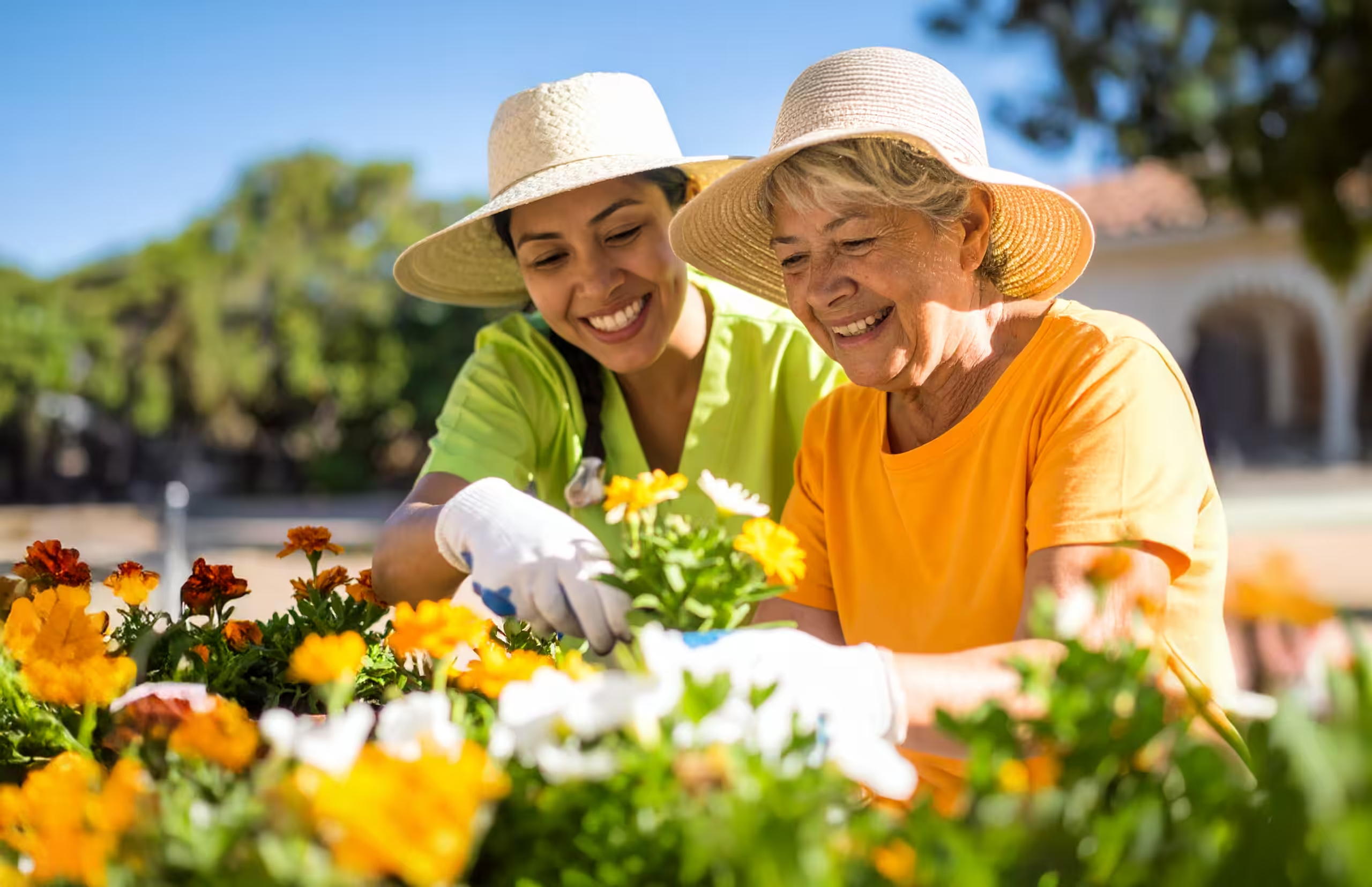
A trip to the Santa Monica Farmers Market on a Wednesday morning is doing more work than most people realize. The walking is cardiovascular exercise. The fresh produce improves nutrition for the rest of the week. The social atmosphere, the vendors, the other shoppers, the live music, provides genuine human engagement that research links to heart health and longevity. A standing weekly outing to the farmers market, with a Co-Pilot handling the drive and carrying the bags, is one of the simplest and most effective health habits a Westside senior can build.
The Vitamin D Problem Nobody Talks About Enough
Vitamin D deficiency is widespread among seniors who spend most of their time indoors. Low vitamin D is associated with increased risk of falls and fractures, weakened immune function, depression, and cognitive decline. The Pacific Coast of Los Angeles is one of the best natural vitamin D environments in North America.[6] Getting outside, even for 20 or 30 minutes, even just to sit on a bench in Palisades Park, changes that equation entirely.
How a Co-Pilot Removes Every Barrier to Getting Out
The reasons seniors stop going out are almost never about desire. They want to go. The barriers are practical. Transportation. Mobility support. Someone to help with the logistics so an outing doesn’t feel like an ordeal.
A Co-Pilot removes all of those barriers in one conversation. We handle the driving through West LA traffic, the parking, the physical support, the planning, and the company. We turn “I should really get out more” into actually getting out.
I’m Phil Mason, owner of Home Helpers Santa Monica. When I build a care plan with a new family, getting out is always part of it. Not as a bonus but as a core health strategy. Because the research is clear and the Westside makes it genuinely easy. There’s no better place in the country to be an active aging senior. You just need the right Co-Pilot to make it happen.
Don’t let caution keep your parent indoors. Call Home Helpers Santa Monica and let’s talk about what getting out regularly could look like for your family. (310) 691-5637
SOURCES & ANNOTATIONS
[1] Nearly 1 in 4 older adults experiences social isolation. Source: CDC Still Going Strong. https://www.cdc.gov/still-going-strong/hcp/info/index.html
[2] Chronic loneliness increases the risk of premature death by nearly 30%. Source: U.S. Surgeon General Advisory 2023. https://livemorescreenless.org/blog/resource/our-epidemic-of-loneliness-and-isolation-2023-surgeon-generals-report/
[3] Social isolation linked to chronic disease and mortality via measurable changes in blood proteins. Source: Nature Human Behaviour / TruCare Home Care. https://www.trucarehomecare.com/10-signs-your-elderly-parent-needs-help/
[4] Social interaction is as powerful as physical exercise in slowing cognitive decline. Source: PubMed / Rush University 2025. https://pubmed.ncbi.nlm.nih.gov/40575494/
[5] Carnegie Mellon University: people with strong social ties recover from illness faster. Source: GenCare Lifestyle / Carnegie Mellon. https://www.gencarelifestyle.com/blog-posts/the-power-of-social-belonging-why-connection-is-the-most-overlooked-longevity-superpower
[6] Vitamin D from sunlight is critical for bone density, immune function, and mood in adults over 65. Source: National Institute on Aging. https://www.nia.nih.gov/health/brain-health/cognitive-health-and-older-adults
The Most Comprehensive Care In The Industry
Physical Wellness
We make daily life easier as needs change, with support for personal care, mobility, medication reminders, and recovery after a hospital stay.
Learn More
Mental Well-Being
Staying active and connected matters. Our caregivers provide companionship and meaningful engagement to support emotional health and independence.
Learn More
Nutrition & Hydration
Healthy meals and proper hydration are essential. We help with planning, shopping, and preparation to support daily wellness and energy.
Learn More
Active Connections
Strong relationships bring comfort and purpose. We help seniors stay connected through social engagement, technology, and regular check-ins.
Learn More