The Mental Health Benefits of Having a Caregiver: Less Anxiety, More Joy for Venice and Santa Monica Seniors
Need Home Care?
Contact Us Today
You can have perfect medication adherence and a nutritious diet and still be miserable.
And miserable, it turns out, is genuinely bad for your health in ways that show up in the data. The mental health dimension of senior care is the part that doesn’t get talked about nearly enough. So let’s talk about it.
The Mental Health Crisis Nobody Is Talking About
Depression and anxiety are significantly underdiagnosed among seniors. The symptoms look different in older adults than in younger people. Less crying, more withdrawal. Less panic, more quiet resignation. Families often mistake depression for normal aging. It isn’t. Research from Harvard’s Graduate School of Education found that 81% of lonely adults also suffer from anxiety or depression.[1] And one in three adults aged 50 to 80 reports feeling isolated at least some of the time.[2]
What Regular Conversation Does to the Brain
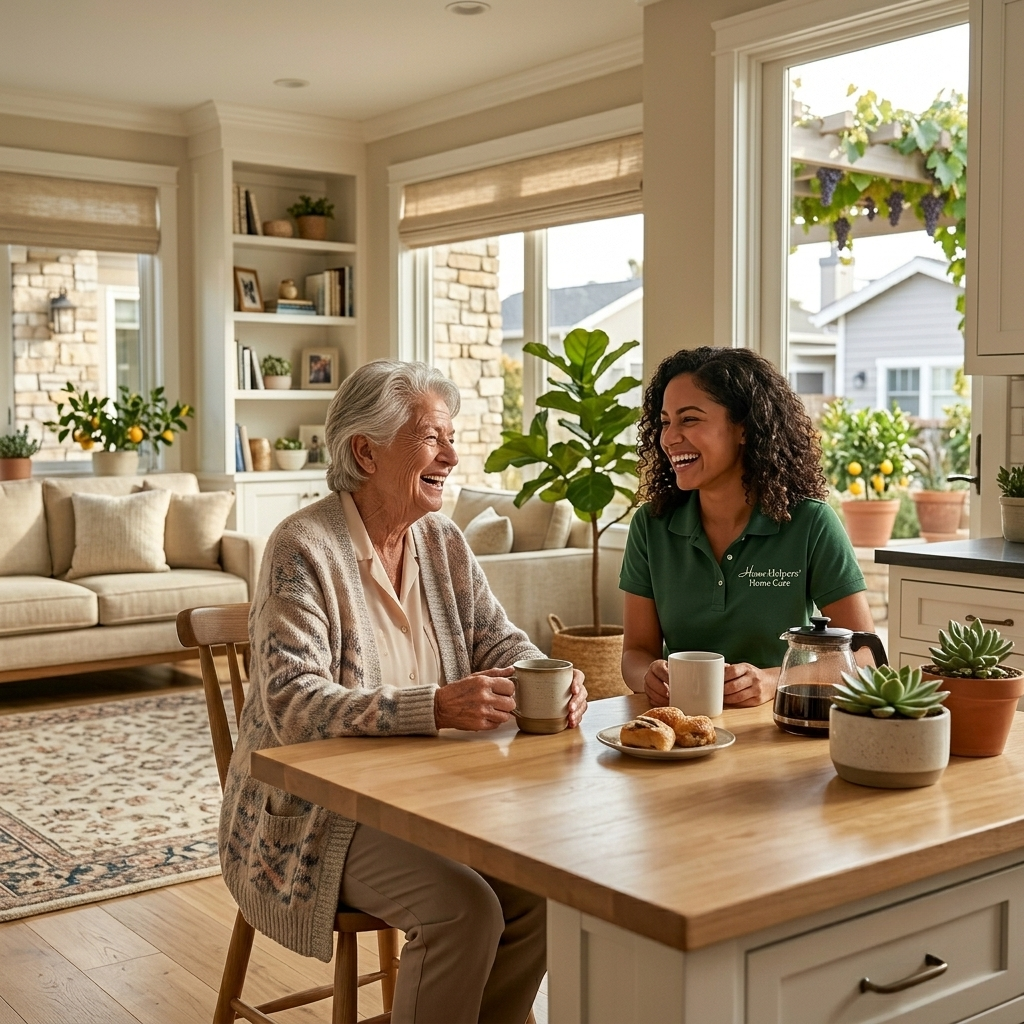
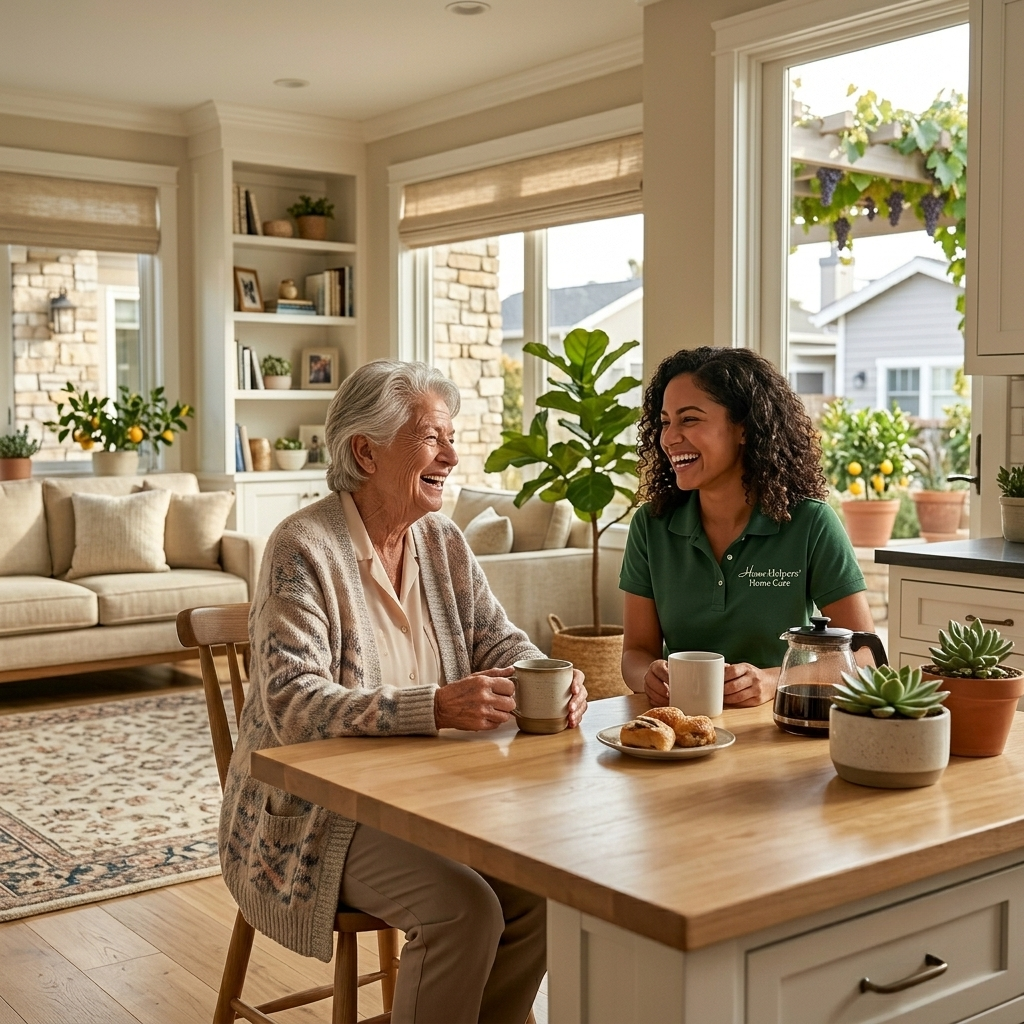
Regular warm reciprocal conversation with someone you genuinely like increases oxytocin, reduces cortisol, and activates the brain’s reward pathways in ways that measurably improve mood and cognitive function. Research from Carnegie Mellon University found that strong social ties lead to faster illness recovery and better immune response.[3] A Co-Pilot who shows up every morning and has a real conversation about something your parent actually cares about is delivering a neurochemical intervention. That sounds clinical. What it actually looks like is two people talking over coffee about last night’s Dodgers game or a book one of them just finished.
That’s the thing that changes someone’s day. And days add up to a life.
What the Research Says About Companionship and Cognitive Health
JAMA Psychiatry research confirms that social interaction is as powerful as physical exercise in slowing cognitive decline.[4] A 2025 study from Rush University involving more than 10,000 participants found that social engagement slows cognitive decline by 12 to 17% per unit increase in engagement.[5] Those are not small numbers. That’s the difference between a senior who stays cognitively sharp into their late 80s and one who doesn’t.
The Purpose Question
Seniors who feel needed, who feel like they matter to someone, who have a reason to get up and be present in the world, live longer and live better. Loneliness is a documented risk factor for Alzheimer’s and dementia.[6] The antidote to loneliness is not just proximity. It’s genuine connection. A Co-Pilot who actually knows their client, who remembers what they said last Tuesday, who asks follow up questions, who laughs at the right moments, is providing something no medication can replicate.
What This Looks Like in Real Life on the Westside
A Venice senior who hasn’t felt like herself since her husband passed. A Santa Monica widower who’s been eating dinner alone in front of the television for two years. A Mar Vista parent whose kids call every Sunday but live in another time zone the rest of the week.
These are not medical situations. They are human situations. And they respond to human solutions. A Co-Pilot who shows up four mornings a week, who takes that Venice senior to her yoga class at WISE and to the farmers market on Wednesday, who sits with that widower over a meal he actually looks forward to, changes the mental health picture in ways that are real and measurable.
Local Mental Health Resources Worth Knowing
- WISE & Healthy Aging Peer Counseling: free, trained peer counselors specifically for Westside seniors, one of the most underutilized and best resources on the Westside
- WISE Support Groups: caregiver support and senior social connection groups throughout the year
- Santa Monica YMCA: exercise programs with a strong social dimension that research links to reduced depression
- Didi Hirsch Mental Health Services: LA’s most comprehensive community mental health resource network
I’m Phil Mason, owner of Home Helpers Santa Monica. Mental health is part of every Cared-4 plan we build, not as a clinical program but as a natural outcome of consistent, warm, genuinely engaged care. When a Co-Pilot is the right fit for a client, you see the difference in a few weeks. The client is brighter. More talkative. Looking forward to things again. That’s connection doing what connection does.
Mental health is health. Call Home Helpers Santa Monica and let’s talk about what consistent engaged care could do for your parent’s wellbeing. (310) 691-5637
SOURCES & ANNOTATIONS
[1] 81% of lonely adults also suffer from anxiety or depression. Source: Harvard Graduate School of Education / MCC Project. https://www.gse.harvard.edu/ideas/usable-knowledge/24/10/what-causing-our-epidemic-loneliness-and-how-can-we-fix-it
[2] 1 in 3 adults aged 50 to 80 reports feeling isolated at least some of the time. Source: Premier Home Care Statistics 2026. https://www.premierhcinc.com/blog/home-care-statistics/
[3] Carnegie Mellon University: strong social ties lead to faster illness recovery and better immune response. Source: GenCare Lifestyle / Carnegie Mellon reference. https://www.gencarelifestyle.com/blog-posts/the-power-of-social-belonging-why-connection-is-the-most-overlooked-longevity-superpower
[4] Social interaction is as powerful as physical exercise in slowing cognitive decline. Source: PubMed / Rush University 2025. https://pubmed.ncbi.nlm.nih.gov/40575494/
[5] Social engagement slows cognitive decline 12 to 17% per unit increase. Chicago Health and Aging Project, Rush University 2025. Source: PMC. https://pmc.ncbi.nlm.nih.gov/articles/PMC12199416/
[6] Loneliness is a documented risk factor for Alzheimer’s and dementia. Source: Northwell Health / Surgeon General Advisory. https://www.northwell.edu/news/the-latest/loneliness-in-america-consequences
The Most Comprehensive Care In The Industry
Physical Wellness
We make daily life easier as needs change, with support for personal care, mobility, medication reminders, and recovery after a hospital stay.
Learn More
Mental Well-Being
Staying active and connected matters. Our caregivers provide companionship and meaningful engagement to support emotional health and independence.
Learn More
Nutrition & Hydration
Healthy meals and proper hydration are essential. We help with planning, shopping, and preparation to support daily wellness and energy.
Learn More
Active Connections
Strong relationships bring comfort and purpose. We help seniors stay connected through social engagement, technology, and regular check-ins.
Learn More