Brain Health After 70: How Regular Engagement and a Co-Pilot Slow Cognitive Decline in West LA
Need Home Care?
Contact Us Today
Cognitive decline is not inevitable.
It is not simply what happens when you get older. The rate at which your brain ages is shaped by choices, habits, and circumstances that are far more within your control than most people realize. That’s not wishful thinking. That’s what decades of research are telling us. And it changes the conversation about what home care is actually for in a pretty significant way.
The Slope, Not the Cliff
Cognitive aging is not a cliff you fall off. It’s a slope. And the angle of that slope is not fixed. High social engagement is linked to better cognitive health across thousands of seniors 65 and over studied in the Health and Retirement Study.[1] Greater social engagement has been shown to reduce the risk of cognitive decline over three year, six year, and twelve year study periods.[2] These are not short term effects. They are sustained, compounding, long term benefits from doing something that sounds almost too simple: staying connected to other people.
Why Boredom and Isolation Are the Brain’s Worst Enemies
Loneliness is a documented risk factor for Alzheimer’s and dementia.[3] The mechanism is neuroplasticity. The brain’s ability to form new connections requires stimulation to function. Conversation. Problem solving. Novel environments. Isolated seniors who are not having real conversations, not encountering new environments, not solving novel problems, are not providing their brains with the inputs needed to stay resilient.
A senior who is engaged, who is out in the world, who is talking to people they like and going places they enjoy, is doing something profoundly protective for their brain every single day. Even when it doesn’t feel like brain training. Especially because it doesn’t feel like brain training.
The 5 Types of Mental Engagement That Actually Protect the Brain
Not all cognitive stimulation is equal. Here are the five types that research consistently identifies as genuinely protective:
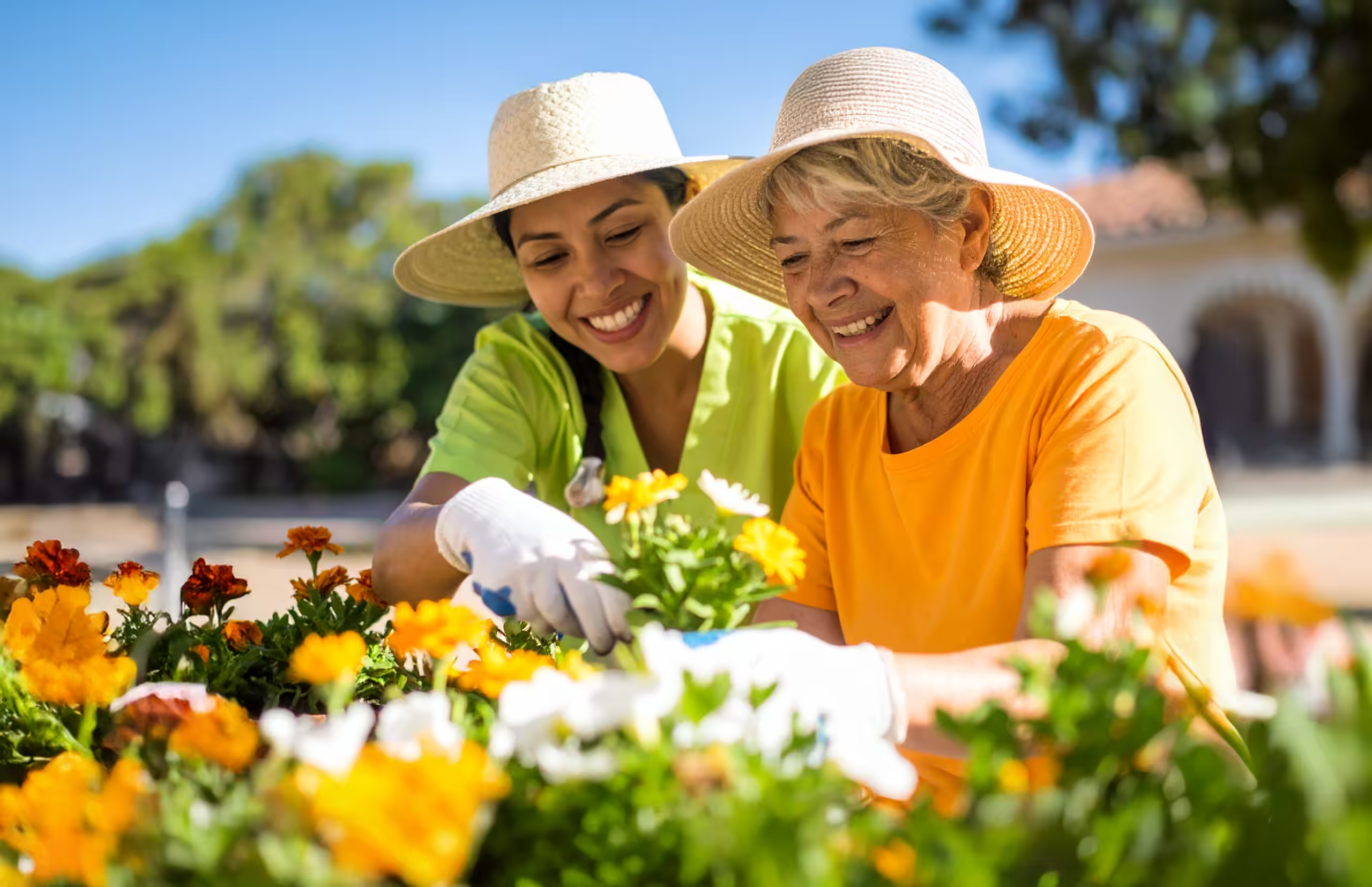
- Social engagement: reciprocal conversation, shared activities, community connection. The research on this is more consistent and robust than almost any other finding in the field
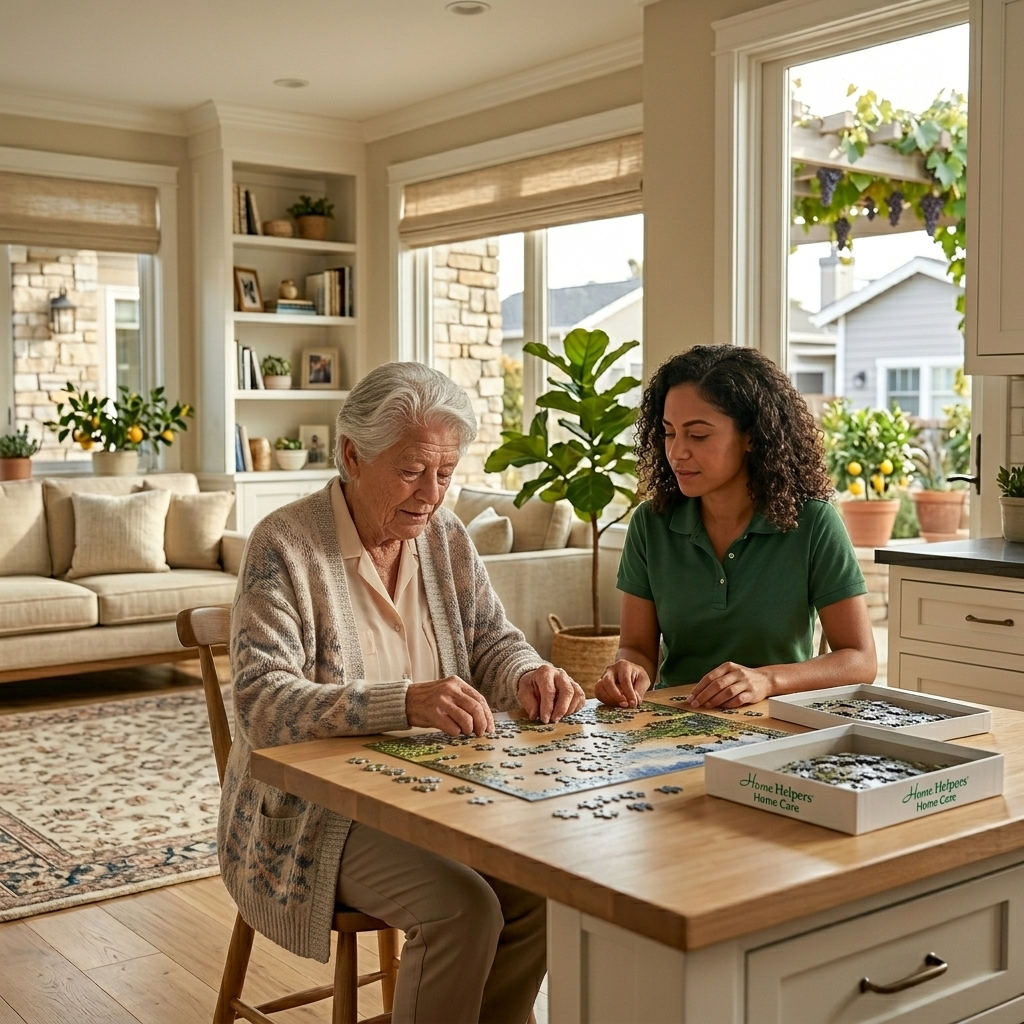
- Cognitive novelty: new environments, new learning, new experiences. The brain responds to novelty with increased neural activity. A new restaurant, an unfamiliar neighborhood, a class at WISE counts
- Physical activity: exercise improves cerebral blood flow and directly supports neuroplasticity. A walk on the Venice Boardwalk is a brain health intervention as much as a physical one
- Creative expression: art, music, storytelling, cooking. Activities that engage multiple brain networks simultaneously are particularly valuable
- Purposeful planning: having something to look forward to. The mental activity of anticipating a future event is cognitively protective in ways that are easy to underestimate
What Daily Co-Pilot Conversations Actually Do to the Brain
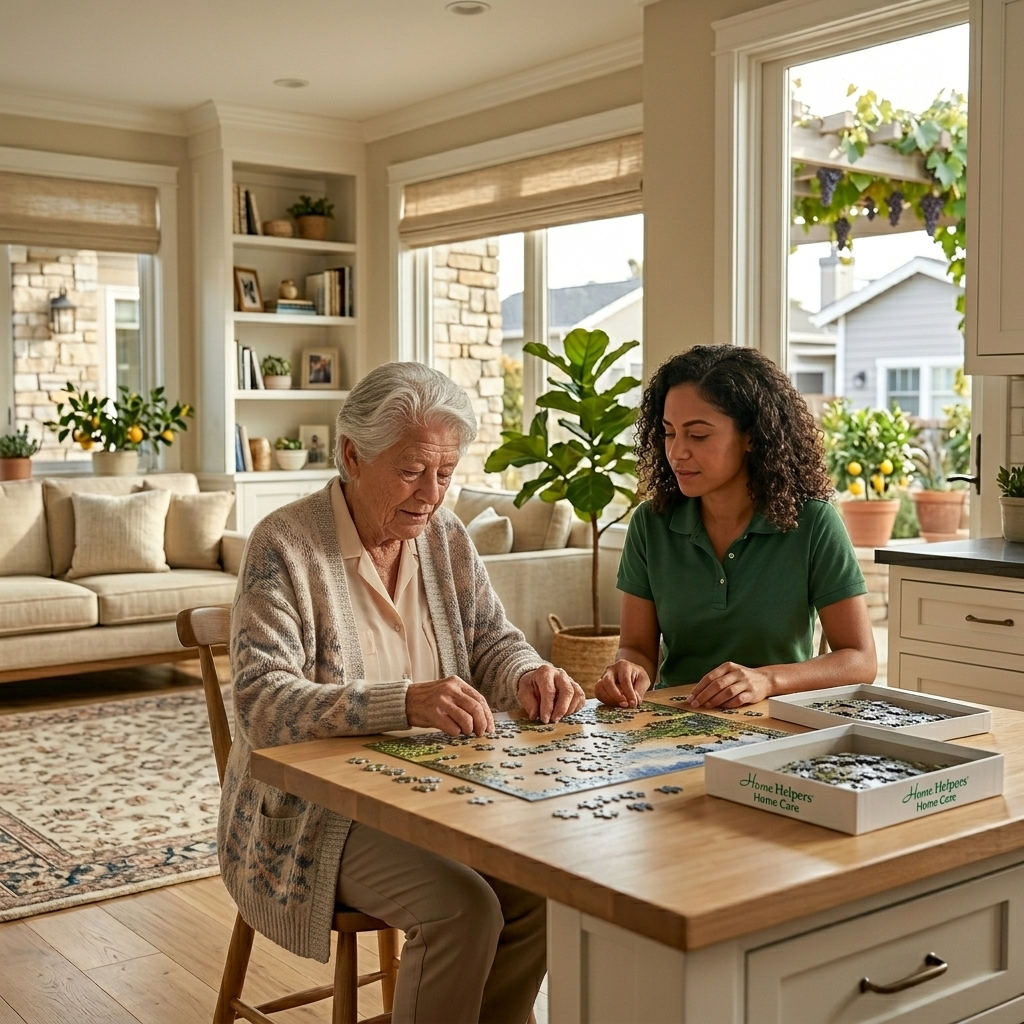
A 2025 study from Rush University involving more than 10,000 participants found that social engagement slows cognitive decline by 12 to 17% per unit increase in engagement.[4] A Co-Pilot who arrives each morning and has a real conversation, who plans the day’s outing, who engages genuinely with the person in front of them, is delivering that cognitive benefit with every visit. Not as a clinical intervention but as a natural byproduct of showing up and being present.
The WISE Partnership: Structured Cognitive Programming on the Westside
WISE & Healthy Aging operates the only state-designated Alzheimer’s Day Care Resource Center on the LA Westside. For seniors experiencing cognitive challenges, the WISE Adult Day Center provides structured therapeutic programming including cognitive exercises, creative arts, and supervised social activities in a genuinely warm and professional environment. Home Helpers Co-Pilots can provide transportation to and from WISE programs.
Why That Walk Along the Venice Canals Matters More Than You Think
The I-CONECT clinical trial found that regular video calls reduced cognitive decline risk and social isolation in adults 75 and over.[5] If a video call does that, think about what an actual outing does. Trips to new restaurants, unfamiliar neighborhoods, or cultural events literally stimulate hippocampal activity, the brain region central to memory formation. A walk along the Venice Canals. A visit to Bergamot Station. A Sunday morning at the Mar Vista Farmers Market. These are not leisure activities. They are brain health activities that happen to be enjoyable. Which is exactly how it should be.
I’m Phil Mason, owner of Home Helpers Santa Monica. Protecting cognitive health is one of the things I think about most when I’m building a care plan with a new family. Most of what protects the brain isn’t medical. It’s social. It’s engagement. It’s having a Co-Pilot who shows up and makes things happen. That’s what we do.
Protecting your parent’s brain starts with keeping them engaged. Call Home Helpers Santa Monica and let’s talk about what a cognitively rich care plan looks like for your family. (310) 691-5637
SOURCES & ANNOTATIONS
[1] High social engagement linked to better cognitive health across thousands of seniors 65+ in the Health and Retirement Study. Source: National Institute on Aging. https://www.nia.nih.gov/health/brain-health/cognitive-health-and-older-adults
[2] Greater social engagement reduces risk of cognitive decline over 3, 6, and 12 year study periods. Source: NIH / National Academies. https://www.ncbi.nlm.nih.gov/books/NBK83766/
[3] Loneliness is a documented risk factor for Alzheimer’s and dementia. Source: Northwell Health. https://www.northwell.edu/news/the-latest/loneliness-in-america-consequences
[4] Social engagement slows cognitive decline 12 to 17% per unit increase. Rush University 2025, 10,000+ participants. Source: PMC. https://pmc.ncbi.nlm.nih.gov/articles/PMC12199416/
[5] I-CONECT clinical trial: regular video calls reduced cognitive decline risk in adults 75 and over. Source: National Institute on Aging. https://www.nia.nih.gov/health/brain-health/cognitive-health-and-older-adults
The Most Comprehensive Care In The Industry
Physical Wellness
We make daily life easier as needs change, with support for personal care, mobility, medication reminders, and recovery after a hospital stay.
Learn More
Mental Well-Being
Staying active and connected matters. Our caregivers provide companionship and meaningful engagement to support emotional health and independence.
Learn More
Nutrition & Hydration
Healthy meals and proper hydration are essential. We help with planning, shopping, and preparation to support daily wellness and energy.
Learn More
Active Connections
Strong relationships bring comfort and purpose. We help seniors stay connected through social engagement, technology, and regular check-ins.
Learn More