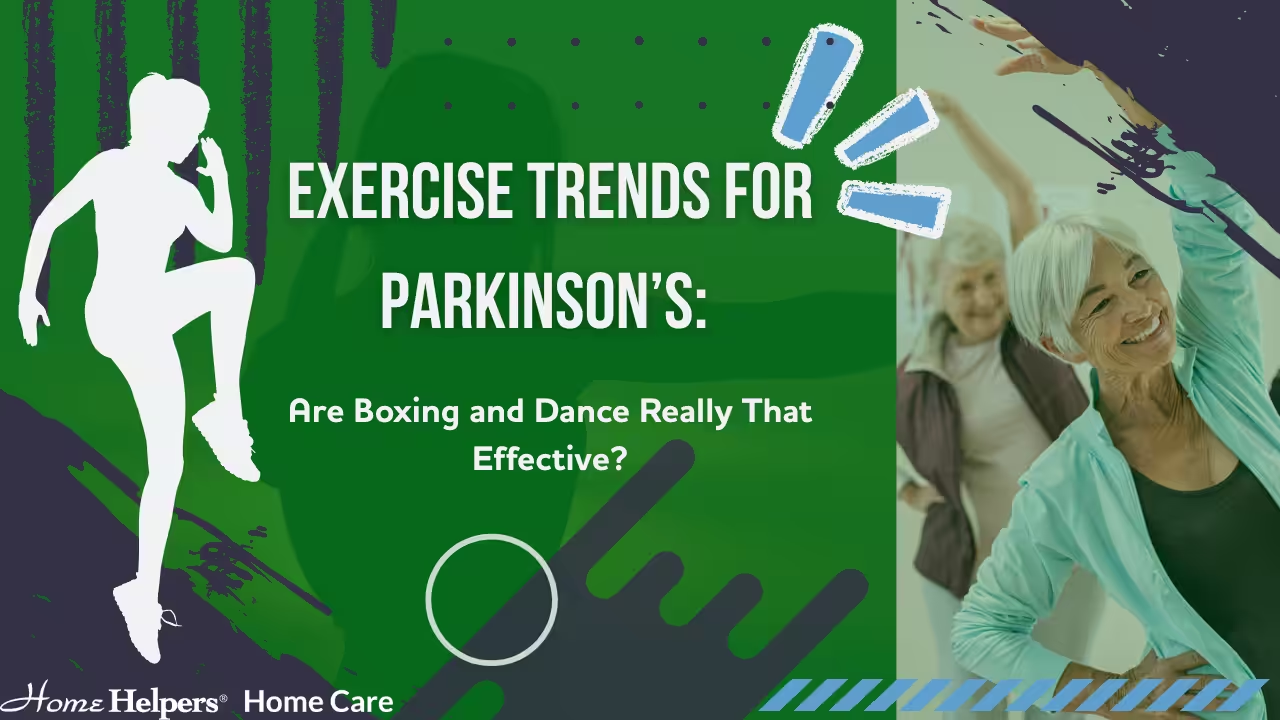
Exercise Trends for Parkinson’s: Are Boxing and Dance Really That Effective?
For families in the Northern Shenandoah Valley—whether in Winchester, Front Royal, Stephens City, or the surrounding rural areas—Parkinson’s disease often requires a thoughtful approach that blends medical treatment with lifestyle support. Increasingly, neurologists and movement specialists point to one powerful tool that significantly improves long-term outcomes: exercise. Specifically, structured movement programs such as non-contact boxing and Parkinson’s-focused dance therapy have gained national recognition for their ability to support mobility, balance, cognitive function, and emotional wellbeing (Parkinson’s Foundation, 2022).
Even though boxing and dance may seem unconventional at first, research consistently shows that both forms of movement offer meaningful, measurable benefits for people living with Parkinson’s—and families throughout the Shenandoah Valley are seeing these improvements firsthand.
Why Exercise Is Essential for Parkinson’s Care
A robust body of research shows that regular exercise is one of the most effective non-medication strategies for slowing the progression of Parkinson’s symptoms (Goodwin et al., 2008). Consistent physical activity supports:
- Better balance and postural control
- Increased flexibility and muscle strength
- Reduced rigidity and tremors
- Improved gait and reduced fall risk
- Enhanced memory, processing, and executive function (Bloem et al., 2015)
- Elevated mood, confidence, and emotional resilience
These benefits occur because exercise helps the brain use dopamine more efficiently—critical for anyone living with Parkinson’s (NINDS, 2023).
Trend #1: Boxing for Parkinson’s — Strength, Stability, and Cognitive Engagement
Non-contact boxing programs designed specifically for Parkinson’s have grown in popularity across the U.S., and versions of these classes are increasingly accessible to residents of the Shenandoah Valley. These workouts focus on functional movement patterns, footwork, and brain–body coordination—elements research shows can significantly improve mobility, endurance, and reaction time (Schenkman et al., 2012).
Key Benefits of Boxing for Parkinson’s
1. Improved Balance and Core Strength
Boxing drills activate stabilizer muscles and the core, supporting safer standing and walking (Bloem et al., 2015).
2. Enhanced Gait and Fluid Mobility
Footwork patterns encourage stride length, weight shifting, and agility—areas that commonly decline with Parkinson’s.
3. Cognitive Stimulation Through Sequencing
Punch combinations require timing, coordination, and memory, all of which stimulate neural pathways involved in executive function (Rock Steady Boxing, n.d.).
4. Increased Endurance and Physical Strength
Regular participation builds cardiovascular fitness and functional strength, helping individuals remain independent longer.
5. A Sense of Empowerment and Motivation
Many participants describe boxing as uplifting, energizing, and emotionally restorative (Parkinson’s Foundation, 2022).
Trend #2: Dance-Based Therapy — Rhythm, Expression, and Joy
Dance programs—especially those modeled after Dance for PD®—blend music, choreography, stretching, and expressive movement. These classes support mobility while offering meaningful emotional and social benefits.
Key Benefits of Dance for Parkinson’s
1. Improved Balance and Flexibility
Dance encourages upright posture, fluid transitions, and increased range of motion, counteracting stiffness and rigidity (Earhart, 2009).
2. Rhythm-Based Coordination Training
Music stimulates neural pathways responsible for timing, sequencing, and movement planning (Hackney & Earhart, 2009).
3. Increased Mobility and Fluidity
Dance promotes larger, expressive movement patterns that help minimize shuffling and stiffness.
4. Social Interaction and Emotional Support
Group settings reduce isolation and strengthen community connections—an essential component of wellbeing for individuals with chronic conditions (Dance for PD®, n.d.).
5. Creative Expression and Mood Support
Dance provides an artistic outlet that supports emotional health and contributes to overall quality of life.
Why Both Approaches Work — And Why Many People Combine Them
Although boxing and dance differ in intensity and style, they share therapeutic qualities backed by neuroscience and motor control research:
- Both reinforce new movement patterns
- Both challenge balance, timing, and coordination
- Both build strength and functional mobility
- Both engage the brain through dual-task challenges (Bloem et al., 2015)
- Both promote joy, confidence, and emotional resilience
Individuals throughout the Shenandoah Valley often find one activity that resonates strongly, while others benefit most from combining both approaches throughout the week.
What the Research Shows
Multiple studies consistently demonstrate that:
- High-intensity exercise—like boxing—can slow the progression of motor symptoms (Schenkman et al., 2012).
- Rhythmic, expressive movement—like dance—improves balance, gait, and coordination (Hackney & Earhart, 2009).
- Regular exercise supports mood stabilization and reduces fall risk (Goodwin et al., 2008).
- Cognitive benefits occur when movement incorporates rhythm, sequencing, memory, and problem-solving (Bloem et al., 2015).
Families across Winchester, Front Royal, and the broader NSV region frequently report these same improvements when loved ones participate in structured movement programs.
How Home Helpers Home Care of the Northern Shenandoah Valley Supports Parkinson’s Exercise Routines
Starting—and sticking with—an exercise routine can be difficult, especially as symptoms change. At Home Helpers Home Care of the Northern Shenandoah Valley, our Caregivers are trained to support safe, consistent physical activity tailored to each individual’s needs.
We can assist with:
- Transportation to local boxing or dance programs throughout Winchester, Stephens City, and Front Royal
- Fall prevention and mobility support during transitions and movement
- In-home stretching, warm-up assistance, and guided movement
- Routine reminders and structured daily schedules
- Coordination with neurologists, physical therapists, and community class providers
Our goal is simple: help your loved one stay active, confident, and connected to the life they love here in the Valley.
Final Thoughts
Boxing and dance are more than exercise—they are evidence-based, therapeutic approaches that support mobility, balance, confidence, and wellbeing for individuals living with Parkinson’s. For families in the Northern Shenandoah Valley, incorporating these structured movement programs can be an empowering step toward maintaining independence and improving quality of life.
Ready to explore a personalized Parkinson’s care plan?
Home Helpers Home Care of the Northern Shenandoah Valley is here to support your loved one every step of the way.
Call 540-771-2555 to schedule a free In-Home Care Assessment and learn how we can help support safer mobility, healthier routines, and greater independence at home.
References
Bloem, B. R., de Vries, N. M., & Ebersbach, G. (2015). Nonpharmacological treatments for patients with Parkinson’s disease. Movement Disorders, 30(11), 1504–1520. https://doi.org/10.1002/mds.26363
Dance for PD®. (n.d.). Research highlights. Mark Morris Dance Group. https://danceforparkinsons.org
Earhart, G. M. (2009). Dance as therapy for individuals with Parkinson disease. European Journal of Physical and Rehabilitation Medicine, 45(2), 231–238.
Goodwin, V. A., Richards, S. H., Taylor, R. S., Taylor, A. H., & Campbell, J. L. (2008). The effectiveness of exercise interventions for people with Parkinson’s disease: A systematic review and meta-analysis. Movement Disorders, 23(5), 631–640. https://doi.org/10.1002/mds.21922
Hackney, M. E., & Earhart, G. M. (2009). Effects of dance on movement control in Parkinson’s disease: A comparison of Argentine tango and American ballroom. Journal of Rehabilitation Medicine, 41(6), 475–481.
National Institute of Neurological Disorders and Stroke. (2023). Parkinson’s disease: Exercise and physical activity. https://www.ninds.nih.gov
Parkinson’s Foundation. (2022). Exercise guidelines for Parkinson’s disease. https://parkinson.org
Rock Steady Boxing. (n.d.). Medical research. https://rocksteadyboxing.org
Schenkman, M., Hall, D. A., Barón, A. E., Schwartz, R. S., Mettler, P., & Kohrt, W. M. (2012). Exercise for people in early- or mid-stage Parkinson disease: A 16-month randomized controlled trial. Physical Therapy, 92(11), 1395–1410. https://doi.org/10.2522/ptj.20110472
The Most Comprehensive Care In The Industry
Physical Wellness
We make daily life easier as needs change, with support for personal care, mobility, medication reminders, and recovery after a hospital stay.
Learn More
Mental Well-Being
Staying active and connected matters. Our caregivers provide companionship and meaningful engagement to support emotional health and independence.
Learn More
Nutrition & Hydration
Healthy meals and proper hydration are essential. We help with planning, shopping, and preparation to support daily wellness and energy.
Learn More
Active Connections
Strong relationships bring comfort and purpose. We help seniors stay connected through social engagement, technology, and regular check-ins.
Learn More