
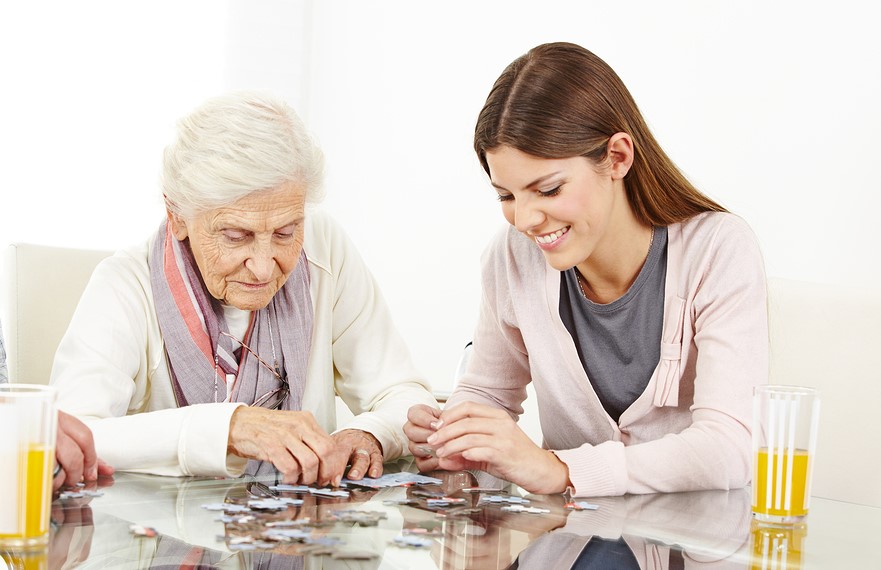
Puzzling Out a Brain Workout

Just like our bodies need to constantly be moving and exercising to stay in shape, the same is true about the brain, which is simply another muscle in the body. As our brains and body get older, they can also begin to fall into disrepair if we don’t get them exercised, so help your elderly parent keep her brain in top shape by either introducing some of the following puzzle exercises to her or join her for one of two of them.

Jigsaw Puzzles

Jigsaw puzzles are a great form of exercise for the brain for spatial and short-term memory. Your parent will have to remember what colors she is seeking or what puzzle piece shape. Puzzles are also a great source of “dopamine hits.” For many, each time a piece is locked into its proper place, the brain reacts with a hit of dopamine. Dopamine has been shown to help concentration. If puzzles are your parent’s thing, help her set up a well-lit area with comfortable seating for her to enjoy her puzzles. Your senior care provider can easily help with this task. If your parent is willing, either you or her senior care provider can join in the fun as well.

Crossword Puzzles

Studies have shown a strong link between doing crossword puzzles and the delay of dementia in elderly individuals. They can help the brain practice accessing facts and trivia that has been stored for decades. Help your parent find different styles or brands of crossword puzzles so that the brain continues to get new stimulation from different questions.

Sudoku Puzzles

These nine-square puzzles are a great workout for your parent’s brain. Found in newspapers for ages, you can also purchase books of multiple puzzles for your parent to do wherever she is at – waiting for a doctor appointment or taking a long car ride. Because your parent’s brain is mentally rearranging numbers and having to remember which numbers she’s thinking of putting in which square, sudoku puzzles work on memory part of the brain.

Rebus Puzzles

Rebus puzzles contain images, pictures, letters, and numbers to try to creatively create a word or phrase such as listing the words “trouble trouble” to mean “double trouble.” These puzzles require your parent to think out of the box and be a bit more creative with seeking answers to the clues.

Cryptic Puzzles

These types of puzzles usually require the player(s) to solve several clues before an answer can be found. Think of board games like Clue or the now popular “Escape Rooms” that entertain guests by locking them in a room with the only hope of escape is puzzling out an answer to the room’s question. Murder mystery games are also cryptic puzzles. Cryptic puzzles are often best done with friends or family, so have while going out right now is limited for Escape Rooms, your parent could set up a game of Clue to play with you, her senior care provider or anyone else that is safely able to visit.

Why not have a little fun while working out the brain? The best kind of work out is the one you don’t even know is happening, so by helping your parent work on some of these puzzles, she’ll be both entertained and get a great brain work out.

Source: https://www.mentalfloss.com/article/64418/11-unforgettable-games-improve-your-memory

If you or an aging loved one is considering hiring senior care in Mountain View, CA, please contact the caring staff at Home Helpers today (408) 317-4969.

Categories

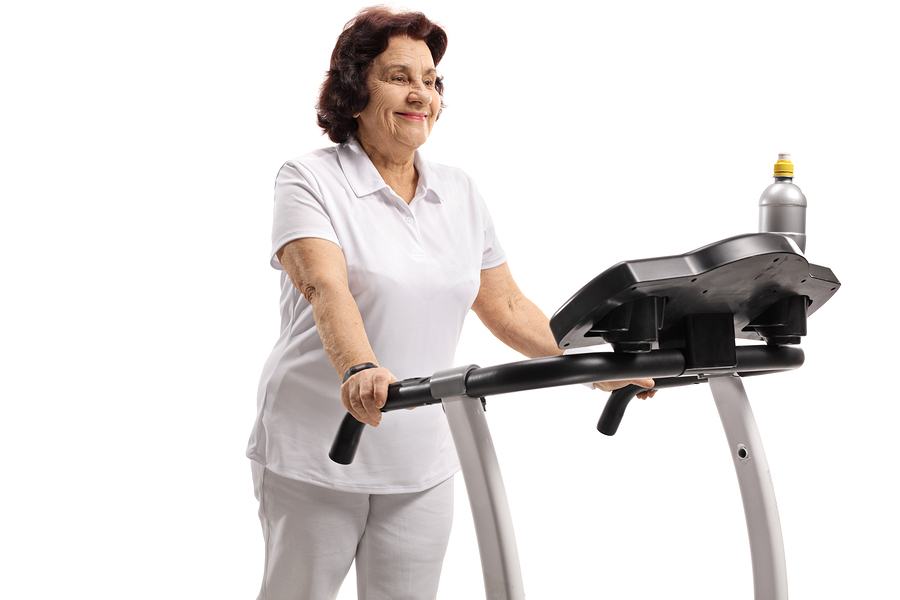
Five Ways for Your Senior to Stay Motivated to Exercise

Motivation is something that almost everyone struggles with when it comes to exercise. For your senior, motivation might have been the one thing she felt like she has been consistently lacking. This might help.

Encourage Her to Find Exercise She Loves

If your senior is doing exercises that she loves to do, it’s not going to be a hardship to find motivation. She’ll be motivated by the fact that she enjoys the activity. This is why it’s a good idea for your senior to experiment a bit and to look for a variety of different activities to try at first. When she finds something she really loves, that’s fantastic.

Fit Exercise into Every Day

Moving a little bit every day is the key to consistent good health. Part of that involves loving what she’s doing, but another part involves being consistent. When exercising and moving more is convenient for your aging family member and built into her daily schedule, that means it almost takes more effort for her to not exercise at all.

Help Her to Find an Exercise Buddy

Social exercising can be powerfully motivating, too. If your elderly family member has a friend she can exercise with, that’s a great way to keep her moving. Sometimes friends and family members aren’t available for exercising, though, which might be where home care providers come in. They can help to make sure your elderly family member is moving safely when she exercises.

Keep Track of Her Progress

Setting goals is important, but sometimes it’s tough to see the progress. Find ways to help your elderly family member to see progress. That might mean using a fitness tracker to literally see the numbers increase. Or it might mean taking before and after pictures, especially if your elderly family member wants to lose weight or become more fit. She might see differences in the picture that she can’t always see in the mirror.

Breaks Happen

Something else to remember is that breaks in even the best routines happen sometimes. It’s more important that your senior doesn’t give up entirely. All she needs to do is to start back up again slowly and give herself a chance to get back up to speed with being active again.

Regular exercise has such huge benefits for your elderly family member. Make sure that her doctor clears her to exercise before she gets started for best results.

If you or an aging loved one is considering hiring home care in Los Altos, CA, please contact the caring staff at Home Helpers today (408) 317-4969.

Categories

Understanding Your Senior’s High Blood Pressure

High blood pressure in people over 65 is a serious condition. Fortunately, it can be treated in a number of different ways. Eating smarter and getting more exercise can lower BP into normal range. But many people will also have to take blood pressure medications to get the results they need.

High blood pressure, also called hypertension, is tricky, because it rarely comes with pain, except for a few people who get headaches from very high BP. The painlessness leads many people to ignore their blood pressure. But doing so is dangerous.

According to the National institutes of Health, blood pressure is the most common health condition experienced by people over 65. And untreated high blood pressure leads to heart disease, heart attacks, loss of vision, loss of kidney function, and stroke, to name the most prevalent outcomes.

Systolic and diastolic pressures

Every blood pressure reading comes with two measurements. Typically the first number is higher and it is called “systolic” pressure. Systolic numbers indicate the pressure in the arteries when the heart beats. A normal systolic pressure will be under 130 in people over 65. And it needs to be lower in younger folk. High systolic pressures are a matter of concern for people over 65 because they indicate an increased risk for mortality.

The diastolic number indicates the pressure in the arteries between heart beats, when the heart is resting. A normal diastolic pressure is under 80.

Low blood pressure is a rarer problem, but there is such a thing as too low. Any blood pressure lower than 90/60 may need to be treated.

Home blood pressure monitors

If your senior’s blood pressure is too high, caregivers do not need to wait for the next doctor’s visit to measure it again. You can easily take your parent’s blood pressure, using a home blood pressure monitor. A home care professional can also take a parent’s blood pressure several times a week and keep your family abreast of changes.

Some blood pressure monitors plug in and others are battery operated. The New York Times recommends the Beurer BM55 blood pressure monitor. It is easy to read and to use, retains records for two home users, and detects irregular heart beats. Its cost is $55-60, and its armband fits most arms.

To take your senior’s blood pressure, plug in the device if it is not battery operated, place the cuff around your senior’s upper arm. It should fit snugly. Press the on button and, as needed, the button to measure pressure. The cuff tightens, and it may be a little uncomfortable for a few seconds, but the cuff relaxes as soon as the blood pressure has been logged. The pressure then appears on the screen.

In conclusion, blood pressure is sometimes called the “silent killer” because it doesn’t really warn the patient of trouble ahead. That’s why it is so important for caregivers to listen to their seniors’ doctors. If a doctor recommends a course of treatment to lower blood pressure, encourage your senior to follow it.

Sources

https://www.ncbi.nlm.nih.gov/pmc/articles/PMC5732407/

https://www.nia.nih.gov/health/high-blood-pressure

https://www.health.harvard.edu/blog/blood-pressure-goals-may-need-to-change-with-age-201207205034

https://www.cdc.gov/bloodpressure/about.htm#:~:text=Blood%20pressure%20is%20measured%20using,your%20heart%20rests%20between%20beats.

https://www.nytimes.com/wirecutter/reviews/best-blood-pressure-monitors-for-home-use/

If you or an aging loved one is considering hiring caregivers in Cupertino, CA, please contact the caring staff at Home Helpers today (408) 317-4969.
Categories

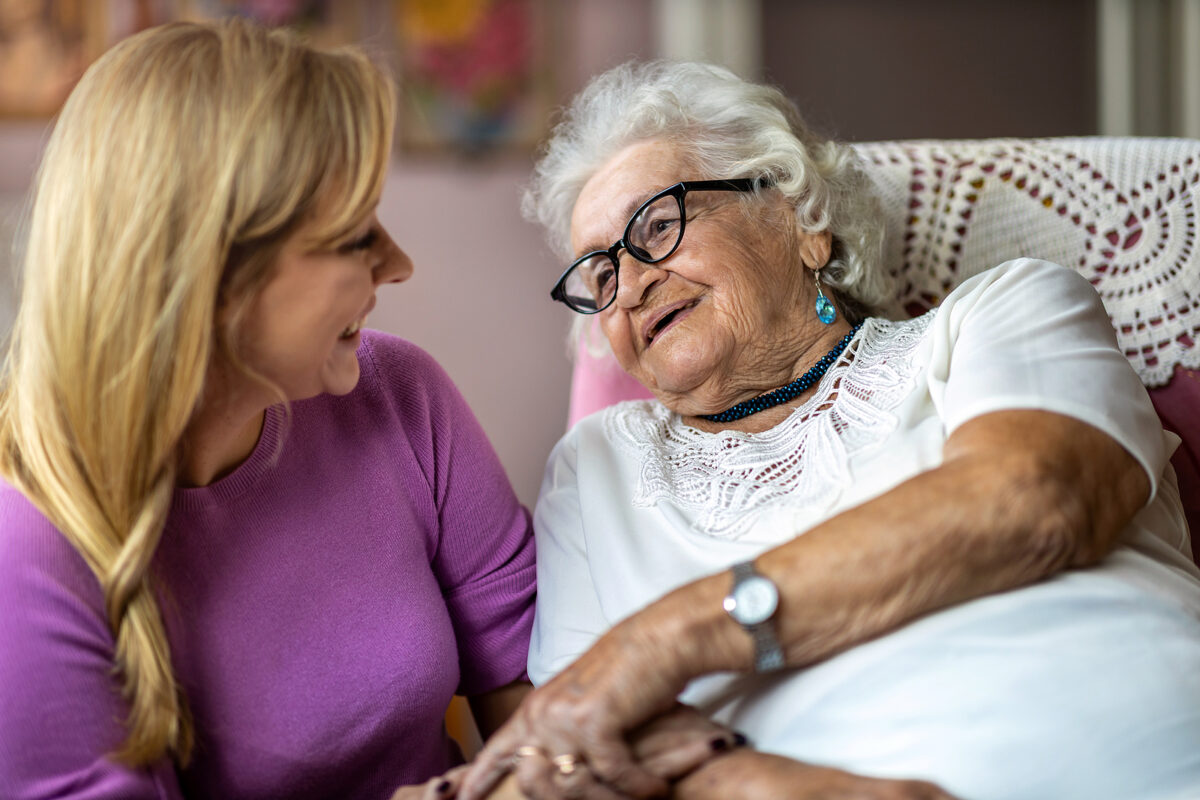
What Are Your Parents’ Goals This Year?

The start of a new year leads many to make New Year’s Resolutions. Have your parents made any? Even if they don’t complete all of their goals, it can help them get focused and try to make things happen by coming up with a list of goals for the year. These are some of the most common New Years Resolutions for older adults.

De-Clutter the Home

A cluttered home is not only frustrating, but it can make it harder to clean. With items stacked on tables, floors, and counters, it’s hard to properly sanitize the surfaces. Unless things get moved, any area close to the items isn’t getting cleaned.

The other problem with clutter is that things get lost easily. If your parents haven’t taken the time to put back a birth certificate that was needed for something, what happens the next time it’s needed? Is it going to be easy to find or is it lost in the clutter?

Improve the Diet

A new, healthier diet should be everyone’s goal. Your parents should be eating seafood at least twice a week. They should eat lots of vegetables and fruit. They also want to cut out extra sugar, saturated fat, and processed foods.

Sit down and come up with new menus that focus on fish, poultry breast, legumes, dried beans, whole grains, and every color for produce. They need to make sure they’re eating green, orange, yellow, red, purple, and white vegetables every day to get the majority of the antioxidants that help them improve their health.

Finish Estate Planning

If your parents haven’t drawn up a will, what happens to their estate if they pass away unexpectedly? Usually, the state they live in decides. It usually puts the spouse first, followed by children, etc. If your mom or dad wanted their close family friend or a helpful neighbor to get something, the state may not agree. A will ensures assets go to the people your parents want.

Powers of attorney are other plans your parents need to consider. These documents cover financial and medical decisions. If your parents cannot make their wishes known due to some form of incapacity, they need someone they trust to speak on their behalf and make sure doctors follow their wishes.

Many of your parents’ goals are achievable with some help. One of the ways to ensure they have the help they need is by arranging elder care services. Caregivers can help them cook meals for their new dietary goals. They can join your parents on walks to make sure they get daily exercise. They can help your parents learn a new hobby.

Caregivers help in a variety of ways both at home and on the road if your parents have appointments and need rides and help walking into the office or business. Call an elder care agency to arrange services.

Categories

Changes to Make When Caring for an Elderly Loved One with Dementia

Are you caring for your elderly loved one now? If so, do they have a dementia diagnosis? When you first heard they had this diagnosis, it was probably tough. You may have had a range of emotions from denial to acceptance to anger to concern. These feelings are all normal. However, now that you are looking more into what to do for your elderly loved one, there are some changes that you can make when caring for your elderly loved one. These changes can help in so many ways.

Avoiding Falls

One of the issues for many people who have dementia is that they fall more often than those who don’t have dementia. This might be caused by medications, visual impairments, balance issues, cognitive impairments, and other issues. These falls can lead to serious injuries. With this being said, there are some ways that you can help to reduce falls for your elderly loved one. You can remove clutter, keep cords out of the way, keep floors dry, and install ramps outside of their home.

Pay Attention to Lighting

If your elderly loved one has dementia, you should also pay attention to the lighting in their home. Dementia can lead to visual damage and other visual issues. With this being the case, your elderly loved one may have a tough time seeing, especially if the lighting in their home isn’t very good. You can do many things to help with this. You can put nightlights in their room and in the halls. You can add better lighting in their bathroom and kitchen. The home care providers can let you know if they believe lights need to be changed in your elderly loved one’s home.

Other Changes

Your elderly loved one might need other changes made to their home to keep them safe, as well. For instance, many people with dementia will wander. If this is the case for your elderly loved one, they might need alarms or other safety devices on their doors. This way, you or the home care providers know if they are trying to leave. Your elderly loved one might also need help taking a bath or cooking. As the dementia progresses, the home care providers can let you know if they think more changes need to be made.

Conclusion

These are some changes that you might want to make when caring for your elderly loved one if they have dementia. With these changes, you can provide the best care when it comes to your elderly loved one.

Sources

https://www.nia.nih.gov/health/alzheimers/caregiving

If you or an aging loved one is considering hiring home care in San Jose, CA, please contact the caring staff at Home Helpers today (408) 317-4969.
Categories

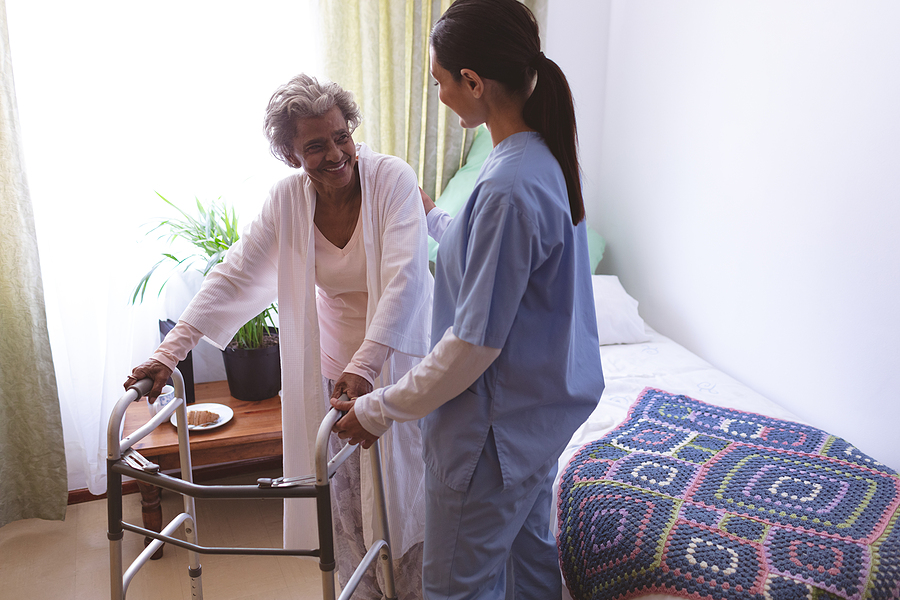
What Does Elderly Care Offer Your Family?

If you’ve never worked with elderly care services before, the idea might take some getting used to. One of the best ways to find out whether it’s for you or not is to look at what the service does for you and your senior.

Help with Aging in Place

Your senior may have decided already that she wants to age in place. That’s something that many people want, rather than having to move. The problem is that eventually your elderly family member is going to need additional help. Aging in place is only possible with at least some other assistance along the way. Elderly care providers can be that help.

Less Pressure on You as a Family Caregiver

With assistance on hand, there’s a lot less pressure on you as the family caregiver to do all the things. Part of the stress of being a family caregiver is that there are so very many demands on your time, attention, and more. Elderly care providers help you to be able to focus on your other obligations as well as the ones involved in being a caregiver.

Peace of Mind

Whether you live close to your senior or across the country, there’s a lot of worry involved. When elderly care providers are able to be there with your senior and check on her for you, that’s a huge weight off your shoulders. You’re able to experience greater peace of mind because someone is there with your senior.

You Can Regain Precious Time

Everyone has the same 24 hours in every day. There’s a certain amount of time that you need in order to rest, and there are demands on your time from a variety of angles. Often what happens is that family caregivers keep themselves low on the priority list and never have time for themselves. Working with elderly care providers turns that around.

Assistance that Levels up as You Need It

Your senior’s needs are going to increase, but if you’re not ready for that things get complicated quickly. Home care services can evolve as you need them to do so. that ensures that you’ve always got the amount of help you need, when you need it.

There’s nothing wrong with needing a little bit of help. Everyone needs help now and again to make life easier. And you definitely don’t have to do everything involved with caregiving completely on your own.

If you or an aging loved one is considering hiring caregivers in Saratoga, CA, please contact the caring staff at Home Helpers today (408) 317-4969.
Categories

How Home Care Can Help Seniors Maintain Their Mental Health

When you think about mental health, you might think about teenagers who are depressed. You might even think about your own bout with mental health issues at some point in your life. However, it might not cross your mind that your elderly loved one may need some help with their mental health. However, it is important to keep in mind that there are millions of senior citizens that have mental health conditions. The good news is there are numerous mental health tips you can share with your loved one.

Aging in Place

One of the things that could help your elderly loved one is if they can age in place. Many elderly people develop stress, anxiety, and depression when thinking about having to move out of their home. Caregivers could potentially help your elderly loved one from having to move. The caregivers can help your loved one to take care of tasks they aren’t able to do. They can help your elderly loved one manage any mental health issues they experience.

Daily Task Assistance

If your elderly loved one needs help in order to stay living on their own, caregivers can assist with this. The caregivers can cook your loved one dinner. They can do light housekeeping and help your elderly loved one with hygiene and grooming tasks, as well. If your elderly loved one has trouble with these daily tasks, it could cause them to experience depression and high stress levels. However, when your loved one gets the help that is needed with daily tasks, they can start feeling better.

Companions

Another reason why many elderly people experience mental health issues is that they are lonely. This could be a result of losing their spouse, losing friends, or just because they don’t spend as much time with family anymore. Either way, your elderly loved one might need more companions to help them feel better. If this is the case, it is important to know that caregivers can be companions for your elderly loved one. They can have conversations with your loved one. They can spend time doing activities and hobbies that your elderly loved one enjoys.

Conclusion

There are many reasons why elderly people experience mental health issues. However, there are also many ways that caregivers can help your elderly loved one to feel better. Whether your elderly loved one is experiencing stress, anxiety, depression, or any other mental health condition, caregivers can help out quite a bit. If your elderly loved one is needing more help with their mental health, be sure you have them see their doctor. Sometimes, lifestyle changes are needed. Other times, medication might be needed.

Sources

https://www.nimh.nih.gov/health/topics/older-adults-and-mental-health/index.shtml

If you or an aging loved one is considering hiring caregivers in San Jose, CA, please contact the caring staff at Home Helpers today (408) 317-4969.

Categories

Five Symptoms Your Senior Is Likely to Have After a Heart Attack

When someone has a heart attack, their heart isn’t able to keep blood flowing. The heart itself might be damaged, which can create bigger problems. Recovering from a heart attack can take a while, and these might be some of the situations your elderly family member faces after even a mild heart attack.

Swelling in Her Legs

Edema, or swelling in the extremities, is very common for people who have had a heart attack. Your elderly family member might find that she’s not moving as much as she did before her heart attack, which can exacerbate swelling. Elevating her feet and legs can help a lot, as can some medications that her doctor might prescribe.

General Weakness and Exhaustion

It might surprise your senior to realize that she is extremely tired and might even feel weak after a heart attack. Her body has experienced a lot, even with a mild heart attack, so it stands to reason that it’s going to want to rest. Your senior should follow her doctor’s orders regarding rest and that should help her to make sure that she doesn’t overdo it.

Difficulty Breathing

The pulmonary system and the circulatory system work very closely together. So, when your elderly family member’s heart has been through a heart attack, her lungs might experience some difficulty, too. Her lungs rely on her heart to pump blood, containing oxygen, through them to exchange carbon dioxide for fresh oxygen. Being short of breath is very common while she’s healing.

Trouble Sleeping

It might also be tough for your senior to sleep well, even if she’s feeling extra tired. Pain can contribute to this, but there may be other issues, too. Stress and other factors are definitely something to consider. Talk to your senior’s doctor about options if she’s having trouble getting much sleep.

Emotional Difficulties

Having a heart attack is a scary situation and it can bring up a lot of issues for your elderly family member. She might become depressed about things she’s no longer able to do. She might also be anxious about the possibility of having another heart attack. These are all valid, but they need to be dealt with properly. Talk therapy can help.

As your senior recovers from a heart attack, it may be very helpful to have home care providers available. They can assist with all sorts of tasks and watch for signs of trouble, too.

If you or an aging loved one is considering hiring home care in Los Gatos, CA, please contact the caring staff at Home Helpers today (408) 317-4969.

Categories

Symptoms of Congestive Heart Failure

Congestive heart failure happens to an individual when the heart muscle is no longer pumping blood as well it should. The heart may have become weak due to conditions such clogged arteries or high blood pressure. Perhaps either yourself or your aging parent’s elderly care provider have started to notice some symptoms your parent is exhibiting and are beginning to wonder if he is struggling with congestive heart failure.

Always visit your parent’s family physician when new symptoms present or previous symptoms get worse. Here are the most commons symptoms of congestive heart failure. If you or your elderly care provider are noticing several of these symptoms now affecting your parent’s quality of life, place a call or schedule a visit to your family physician sooner than later.

  1. Swelling (edema) in his legs, ankles and feet
    Edema is swelling caused by excess fluid trapped in the body’s tissues. Although congestive heart failure can cause edema in any part of your parent’s body, you may notice it more in his hands, arms, feet, ankles and legs. If you have noticed that your parent is having trouble putting shoes on if his fingers look puffy, he might have edema. If the edema is also happening in other parts of the body, you may notice a very rapid weight gain due to the fluid retention.
  2. Shortness of breath when your parent exerts himself or when he lies down
    If your parent is complaining on not being able to catch his breath or you see him struggling to breath after physical activity, it could be a symptom of several simple things (such as being out of shape) or it could be more serious. If combined with other symptoms, make a note of it.
  3. Rapid or irregular heartbeat
    Ask your parent to let you (or his elderly care provider) know if he’s been feeling his heartbeat irregularly or very rapidly.
  4. Fatigue and weakness
    With the heart not being able to pump his blood as quickly as before, your aging parent may find he is getting much more tired out than he used to. He may also find it difficult to complete tasks that require muscle strength, such as getting up from squatting down or carrying up the laundry from the basement.
  5. Difficulty concentrating or decreased alertness
    If you or your parent’s elderly care provider has noticed your parent is having a hard time with holding a conversation or even staying awake for one, congestive heart failure could be the cause.
  6. Persistent cough or wheezing with white or pink blood-tinged phlegm
    Like many symptoms, this can be a symptom for numerous health issues. If your parent is struggling with a persistent cough, always get it checked out right away.
  7. Increased need to urinate at night
    Many older individuals notice a need to urinate more often at night, but if he’s noticing this change along with others, have him share this symptom with his doctor as well when you visit.
  8. Chest pain if his heart failure is caused by a heart attack
    Of course, an immediate trip to the Emergency room is warranted if a heart attack is suspected.

There are medications and treatments your parent can employ to help treat his congestive heart failure. The sooner you get him in and get it diagnosed, the more quickly it can be treated, and the symptoms can be managed.

Source: https://www.mayoclinic.org/diseases-conditions/heart-failure/symptoms-causes/syc-20373142

If you or an aging loved one is considering hiring elderly care in Saratoga, CA, please contact the caring staff at Home Helpers today (408) 317-4969.

Categories

What is Compound Caregiving?

As a family caregiver, how many people do you care for? Compound caregiving is defined as a situation where you have multiple family members you’re caring for. For some, it could mean caring for a disabled adult child and two elderly parents at the same time. Others may be caring for grandparents, parents, and an ill spouse every day.

Studies find that compound caregivers often work at least 12 extra hours a week. If a family caregiver is already spending 50 hours a week helping a parent, adding in care for a spouse who is diagnosed with cancer can make it seem impossible to have time alone to decompress.

Problems With Compound Caregiving

When you’re caring for multiple people at once, the amount of time you have for yourself is minimal. If you’re also trying to earn a living, you also have your job to fit into your daily schedule. Eventually, you’ll start reducing the amount of time you sleep to get the extra hours you need.

Decreased sleep impacts your physical health. It also increases the likelihood that you’ll become overly stressed, which increases the risk of anxiety disorder and depression. It also makes you more likely to make mistakes when providing care. Driving when you’re sleepy is also dangerous and best avoided.

The Needs of a Compound Caregiver

If you think about caregiving, you have to think about how much you can take. Imagine you have a job you enjoy, but your boss suddenly asks you to work a double shift every day. It’s not going to take long before you’re burned out.

The same is true of caregiving. You may want to help and feel it’s important, but you cannot lose track of your own needs. You need to be able to go out and have dinner or drinks with your friends. You need to go out on date nights with your significant other. You need time to spend with your kids. You need time alone.

You may be able to get your siblings to help out with your parents, but what about with your spouse? You must build a strong support team. Support groups, whether they’re online or held in a local community center, church, etc., allow you to spend time with people who know what it’s like.

The other part of a support team is a senior care aide. Respite care services are important. Focus on your health while a senior care aide takes over caring for some of the people on your list. Call to learn more.

If you or an aging loved one is considering hiring senior care in Los Altos, CA, please contact the caring staff at Home Helpers today (408) 317-4969.

Categories

© Copyright 2026 H. H. Franchising Systems, Inc, All Rights Reserved.