Fire Safety 101
Need Home Care?
Contact Us Today
Fire Safety 101
FIRE SAFETY 101: KEEP LOVED ONES SAFE WITH FIRE PREVENTION TIPS
In recognition of Fire Safety Month (October) and Family Caregiving Month (November), we have dedicated this edition of Compassionate Care to sharing important fire safety information you and your loved ones.
For many people, Smokey the Bear is a familiar face from our childhood who taught us that, “Only YOU can prevent wildfires!”
Though Smokey may not make as many public appearances as he used to, fire safety remains an important topic, especially for children, the elderly and individuals with special needs. Whether in a forest or a house, a fire can destroy everything in its path and devastate the people and communities it affects.
Preplanning and precautionary measures can drastically reduce the risk of fire, injury and death.
WHY IS FIRE SAFETY IMPORTANT?
- Every year, more than 1,000 senior citizens die in fires, according to the Federal Emergency Management Agency (FEMA).
- People age 65 and older are more than 3½ times more likely than younger people to die in a fire, and that number jumps to nearly 6 times for people 85 and older.
- The risk of injury and serious burns from fire is also a major concern.
PEOPLE, PLACES AND THINGS
Children, seniors and people with special needs become increasingly vulnerable in the event of an emergency. When planning precautionary measures, consider factors in each of the following three categories:
PEOPLE FACTORS
- Functional Ability – Consider how cognitive impairment and diminished hearing, vision and smell may affect someone’s response to noticing smoke, hearing a smoke alarm, or being able to get out of a building safely.
- Mobility & Special Needs – Consider how disability and limitations due to illness or injury may affect someone’s ability to quickly and safely exit their homes.
- Impaired Judgment & Ability – Consider how medications may cause impairment or otherwise make responding to an emergency difficult.
- Safe Behaviors – Make sure your loved ones are of sound mind and body in terms practicing safe behaviors, including: – Not smoking in bed. – Not using the kitchen oven to heat the house – Not overloading extension cords – Not starting a fire or burning themselves while cooking – Not engaging in drugs or excessive use of alcohol that could impair judgment
PLACE FACTORS
- Prevention – Does the home have working smoke and carbon monoxide detectors throughout? Are the batteries changed and the detectors tested each spring and fall? Is a fire extinguisher accessible? Is your loved one able to operate a fire extinguisher?
- Escape Routes – Are exits accessible? Are the pathways to the exits free from clutter and belongings that could become dangerous obstacles? Is there an evacuation plan in place? Has it been rehearsed? Have you notified your local fire department that your loved one may/will need assistance in the event of an emergency? Are there pets that might need to be rescued?
THINGS FACTORS
- Treasures – Consider keeping valuables, special keepsakes and heirlooms (e.g., jewelry, photos, collectibles) in a fire proof safe or off site in a safe deposit box.
- Hoarding – Consider how excess accumulation might make it difficult for people to leave their home/possessions and how items (e.g., old newspapers, magazines, papers) might help fuel the fire.
With winter approaching, the risk of fire increases for people of all ages. In addition to everyday risks, the use of space heaters, kerosene heaters, fireplaces and candles pose additional dangers. Take the time to implement plans to minimize risks. Fire safety measures are equally important for caregivers who have responsibility for the care and rescue of their loved ones.
Tragically, fire often highlights vulnerabilities and exposes often overlooked precautionary measures. Be proactive! Don’t risk becoming a statistic! For more information about Fire Safety, call or stop by your local Fire Department. You might also find the following fire safety resources from the U.S. Fire
Administration to be helpful:
- Fire Safety Checklist for Older Adults (2010) – http://permanent.access.gpo.gov/gpo16825/fa-221.pdf.
- Older Adult and their Caregivers – http://www.usfa.fema.gov/citizens/older/caregivers.shtm

Your Questions, Answered
Home Helpers Home Care offers a wide range of in-home care services, including personal care, companionship, nutrition support, wellness monitoring, and specialized care for chronic conditions, dementia, and recovery.
Our services are designed for seniors, individuals with disabilities, those recovering from illness or surgery, and anyone who needs extra support to live safely and comfortably at home.
Yes, every care plan is fully personalized based on each client’s unique needs, preferences, and schedule, whether they require a few hours of support or 24/7 care.
Yes, our caregivers are carefully screened, trained, and insured to provide compassionate, high-quality care you can trust.
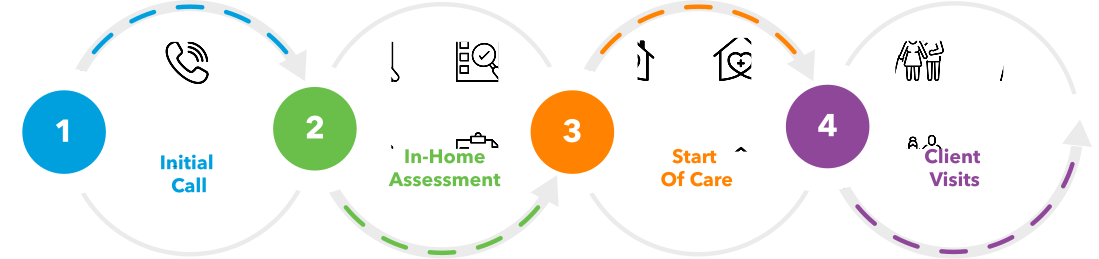
Getting started is easy—simply contact your local Home Helpers location to schedule a free in-home assessment and create a care plan tailored to your needs.