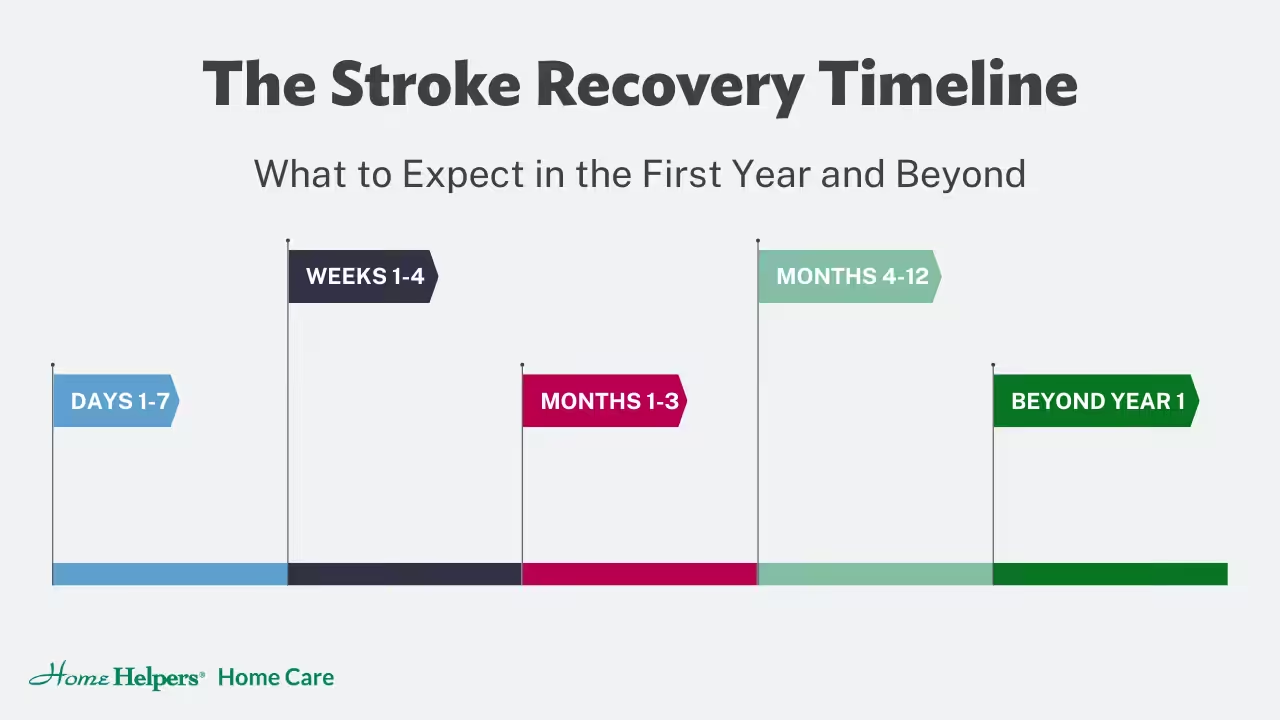
The Stroke Recovery Timeline: What to Expect in the First Year and Beyond
Recovering from a stroke is a journey filled with highs, lows, and many unknowns. For families in Hagerstown, Frederick, and surrounding Maryland communities, understanding what to expect in the first year post-stroke can be invaluable. With the right support, planning, and compassionate care, stroke survivors can regain independence and quality of life—even in the face of ongoing challenges.
The First Few Weeks: Stabilization and Acute Rehab
Right after a stroke, most patients are hospitalized for immediate stabilization and assessment. Some may transition to inpatient rehab or skilled nursing care, where the priority is restoring essential functions and preventing complications.
During this time, families may observe:
- Early signs of recovery, like limb movement or speech return
- Personalized therapy plans from neurologists and rehabilitation teams
- Discharge planning that highlights home safety and care needs
Home Helpers Home Care of Hagerstown & Frederick can support families during discharge by helping set up home care services, medication routines, and caregiver education.
Months 1–3: Early Home Recovery
Returning home is a critical milestone—but it can also bring unexpected emotional and logistical stress. The survivor’s ability to resume daily tasks will depend on stroke severity and available support.
In this early phase, stroke survivors may:
- Work daily with physical, speech, or occupational therapists
- Need help with bathing, toileting, dressing, and transfers
- Experience post-stroke fatigue, confusion, or mood changes
- Rely heavily on family or in-home caregivers for basic needs
Home Helpers caregivers offer professional assistance with personal care, nutrition, housekeeping, and companionship to lighten the load on family caregivers.
Months 4–6: Adjusting and Adapting
By now, some improvements may plateau, but that doesn’t mean progress is over. This stage focuses on reinforcing independence and building resilience—physically and emotionally.
What this often includes:
- Building endurance and regaining strength
- Redefining what independence looks like with mobility aids or routines
- Addressing emotional challenges, including anxiety and depression
- Ensuring medication schedules and therapy plans are consistently followed
Families in Washington and Frederick counties often find that having professional care—even just a few hours a day—can be the key to long-term success.
Months 7–12: Redefining Normal
As the first year progresses, families begin to create a new routine that supports the survivor’s current abilities while preparing for the future.
This stage may involve:
- Assessing long-term care goals and needs
- Participating in stroke survivor groups or mental health therapy
- Installing home modifications for safety and ease
- Providing caregiver respite to prevent burnout
If you’re unsure how to move forward or if you’ve noticed new challenges, this is an ideal time to revisit the care plan with help from our team.
Beyond the First Year: Lifelong Recovery
Stroke recovery doesn’t stop after 12 months. With continued encouragement, therapy, and a strong support system, many survivors see improvements even years later.
Key focus areas:
- Maintaining cognitive and physical activity
- Ensuring consistent medical and emotional care
- Adjusting to evolving needs with flexibility
- Continuing in-home care to preserve routine and safety
Your Local Partner in Stroke Recovery
Stroke recovery is not linear—but it doesn’t have to be overwhelming. Home Helpers Home Care of Hagerstown & Frederick is here to help you navigate each stage with tailored support and trained caregivers.
Call us today at 240-452-4650 or visit homehelpershomecare.com/hagerstown-frederick to schedule a no-cost assessment.
References
American Stroke Association. (2024). What to Expect After a Stroke. Retrieved from https://www.stroke.org/en/about-stroke/effects-of-stroke/what-to-expect-after-a-stroke
Centers for Disease Control and Prevention. (2023). Stroke Survivors. Retrieved from https://www.cdc.gov/stroke/survivors/index.htm
Johns Hopkins Medicine. (2023). Life After Stroke. Retrieved from https://www.hopkinsmedicine.org/health/conditions-and-diseases/stroke/life-after-stroke
Mayo Clinic. (2023). Stroke Recovery: Steps You Can Take. Retrieved from https://www.mayoclinic.org/diseases-conditions/stroke/in-depth/stroke-recovery/art-20045172National Institute of Neurological Disorders and Stroke. (2023). Stroke Rehabilitation. Retrieved from https://www.ninds.nih.gov/health-information/disorders/stroke/stroke-rehabilitation
The Most Comprehensive Care In The Industry
Physical Wellness
We make daily life easier as needs change, with support for personal care, mobility, medication reminders, and recovery after a hospital stay.
Learn More
Mental Well-Being
Staying active and connected matters. Our caregivers provide companionship and meaningful engagement to support emotional health and independence.
Learn More
Nutrition & Hydration
Healthy meals and proper hydration are essential. We help with planning, shopping, and preparation to support daily wellness and energy.
Learn More
Active Connections
Strong relationships bring comfort and purpose. We help seniors stay connected through social engagement, technology, and regular check-ins.
Learn More