Simple Meal Support That Helps Seniors Stay Nourished
Learn how simple meal support helps seniors stay nourished, maintain independence, and enjoy healthier daily routines while aging safely at home.

Healthy meals are essential for maintaining strength, energy, and overall wellness as people age. Families searching for home care services in Raleigh, NC can benefit from compassionate meal support that helps older adults enjoy balanced nutrition while continuing to live safely and comfortably at home.
Preparing meals every day may seem simple, but for many older adults it becomes increasingly difficult over time. Mobility limitations, arthritis, vision changes, or recovering from an illness can turn grocery shopping and cooking into exhausting tasks. Having dependable home care services that include meal support helps seniors continue eating nutritious foods without sacrificing their independence or dignity.
Why Is Proper Nutrition So Important for Seniors?
A balanced diet helps older adults maintain muscle strength, support their immune system, improve energy levels, and promote better overall health. Eating nutritious meals consistently also contributes to healthy aging by supporting cognitive function, heart health, and bone strength.
As nutritional needs change with age, seniors often require foods rich in protein, fiber, vitamins, and minerals while limiting excess sodium and processed ingredients. Proper hydration is equally important, as older adults may not always recognize when they are becoming dehydrated.
Simple daily habits such as preparing fresh meals, drinking enough water, and enjoying regular mealtimes can have a meaningful impact on long-term wellness.
Common Challenges Seniors Face During Meal Preparation
Many older adults want to remain independent but experience obstacles that make cooking more difficult than it once was.
These challenges may include:
- Difficulty standing for long periods
- Limited hand strength from arthritis
- Trouble reading food labels
- Fatigue while cooking
- Transportation challenges for grocery shopping
- Forgetting meals or ingredients
- Cooking for only one person
How Does Meal Support Improve Everyday Living?
Meal support goes beyond preparing food. It creates routines that encourage healthier eating habits while reducing physical strain and stress. Caregivers can assist with planning meals, organizing grocery lists, preparing nutritious dishes, and encouraging hydration throughout the day.
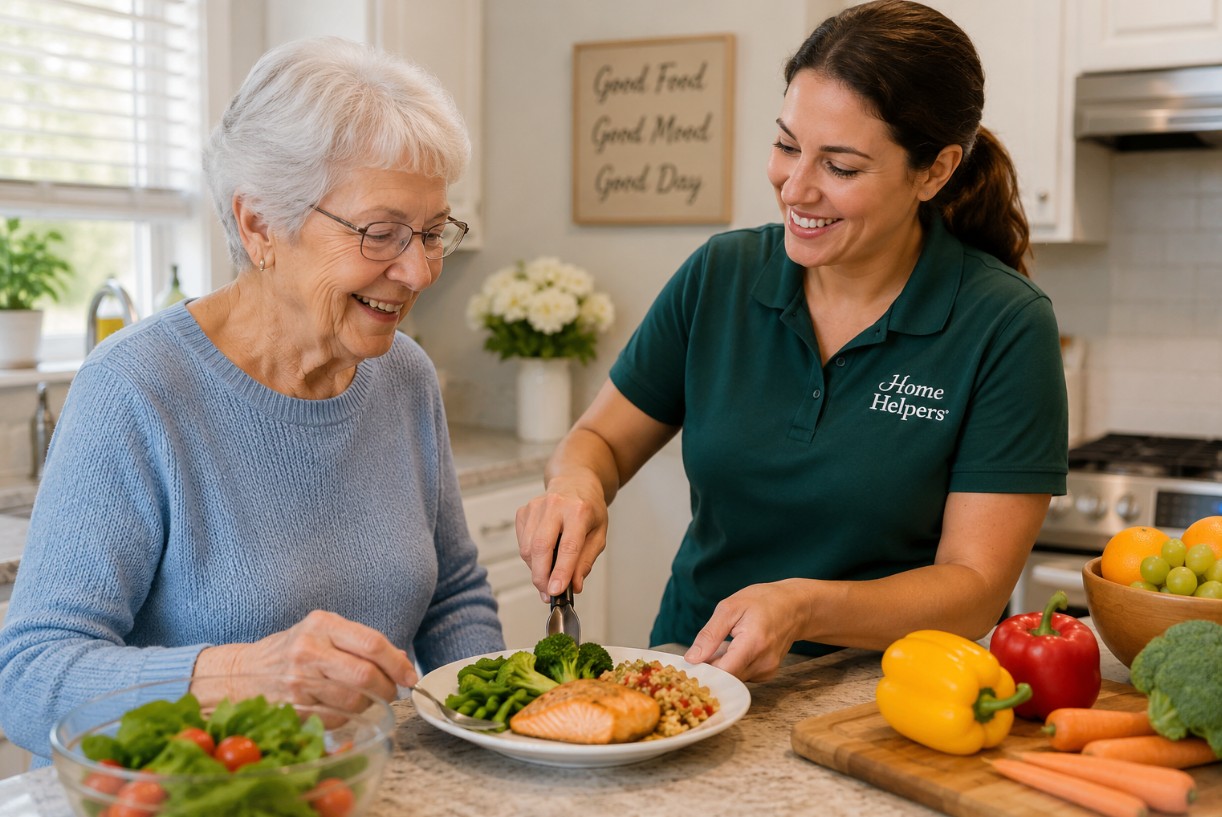
Families often appreciate the additional guidance provided through daily nutrition and hydration support, where caregivers help older adults enjoy meals that match their dietary needs, personal preferences, and overall wellness goals.
Rather than taking over completely, caregivers work alongside seniors, encouraging as much independence as possible while offering assistance whenever needed.
Meal Preparation Without Support vs. With Home Care
| Daily Activity | Without Assistance | With Meal Support | ||
|---|---|---|---|---|
| Grocery Shopping | Can become physically demanding | Help planning meals and shopping | ||
| Cooking | May feel tiring or unsafe | Safe assistance with meal preparation | ||
| Nutrition | Meals may become repetitive | More balanced meal planning | ||
| Hydration | Often overlooked | Regular hydration reminders | ||
| Kitchen Cleanup | Can be difficult | Light cleanup after meals | ||
What Makes Simple Meals More Nutritious?
Healthy meals do not need to be complicated. Small improvements throughout the day often produce lasting health benefits.
A well-balanced plate typically includes:
Lean Protein
Chicken, fish, eggs, beans, and yogurt help maintain muscle mass while supporting recovery and overall strength.
Fruits and Vegetables
Colorful fruits and vegetables provide essential vitamins, antioxidants, and fiber that promote healthy digestion and immune function.
Whole Grains
Foods like oatmeal, brown rice, and whole-grain bread provide lasting energy while supporting digestive health.
Healthy Fluids
Water remains the best option for hydration, although soups, milk, and herbal teas can also help seniors meet their daily fluid needs.

How Can Meal Support Reduce Stress for Families?
Knowing a loved one is eating balanced meals provides reassurance for family members who cannot always be present throughout the day. Meal assistance reduces the pressure of daily meal planning while helping seniors remain safely in their own homes.
In addition to meal preparation, families often benefit from homemaker services that support everyday household tasks, including light housekeeping, kitchen organization, and maintaining a clean, comfortable living environment. These services complement meal support by creating a safer, healthier home without disrupting established routines.
Caregivers also notice changes in appetite or eating habits that families may not immediately recognize, allowing concerns to be addressed sooner.
When Should Families Consider Meal Assistance?
Meal support may be beneficial when older adults begin skipping meals, losing weight unintentionally, relying heavily on processed foods, or struggling to prepare meals safely.
Other signs include:
- Food spoiling in the refrigerator
- Difficulty lifting cookware
- Limited grocery trips
- Low energy levels
- Forgetting to eat regularly
- Poor hydration habits
Receiving assistance early often helps seniors remain independent longer while improving their overall quality of life.
Explore Compassionate Meal Support at Home
Nutritious meals are an important part of healthy aging, but preparing them every day is not always easy. Thoughtful meal support helps seniors maintain their independence while ensuring they continue enjoying balanced nutrition, proper hydration, and meaningful daily routines.
If your family is exploring home care services in Raleigh, NC, learn more about the compassionate home care approach that sets apart and discover how personalized support can help your loved one remain comfortable and independent at home. Call (919) 582-7425 to schedule a free in-home assessment.
The Most Comprehensive Care In The Industry

Physical Wellness
We make daily life easier as needs change, with support for personal care, mobility, medication reminders, and recovery after a hospital stay.
Learn More
Mental Well-Being
Staying active and connected matters. Our caregivers provide companionship and meaningful engagement to support emotional health and independence.
Learn More
Nutrition & Hydration
Healthy meals and proper hydration are essential. We help with planning, shopping, and preparation to support daily wellness and energy.
Learn More
Active Connections
Strong relationships bring comfort and purpose. We help seniors stay connected through social engagement, technology, and regular check-ins.
Learn More