
What Is Non-Medical Home Care? A Complete Guide for Families
When a parent or loved one starts to need help at home, one of the first things families discover is just how confusing senior care terminology can be. Home health care, home care, non-medical home care, personal care, companion care, custodial care. The terms sound similar, but they describe very different types of support, and mixing them up can lead to frustration, wasted time, and missed opportunities to get the right kind of help.
If you’re researching care options for a family member, this guide will walk you through everything you need to know about non-medical home care: what it is, what services it includes, who it’s designed for, and how it differs from other types of care. We’ll also cover cost considerations and payment options so you can make a well-informed decision for your family.
Non-Medical Home Care, Defined
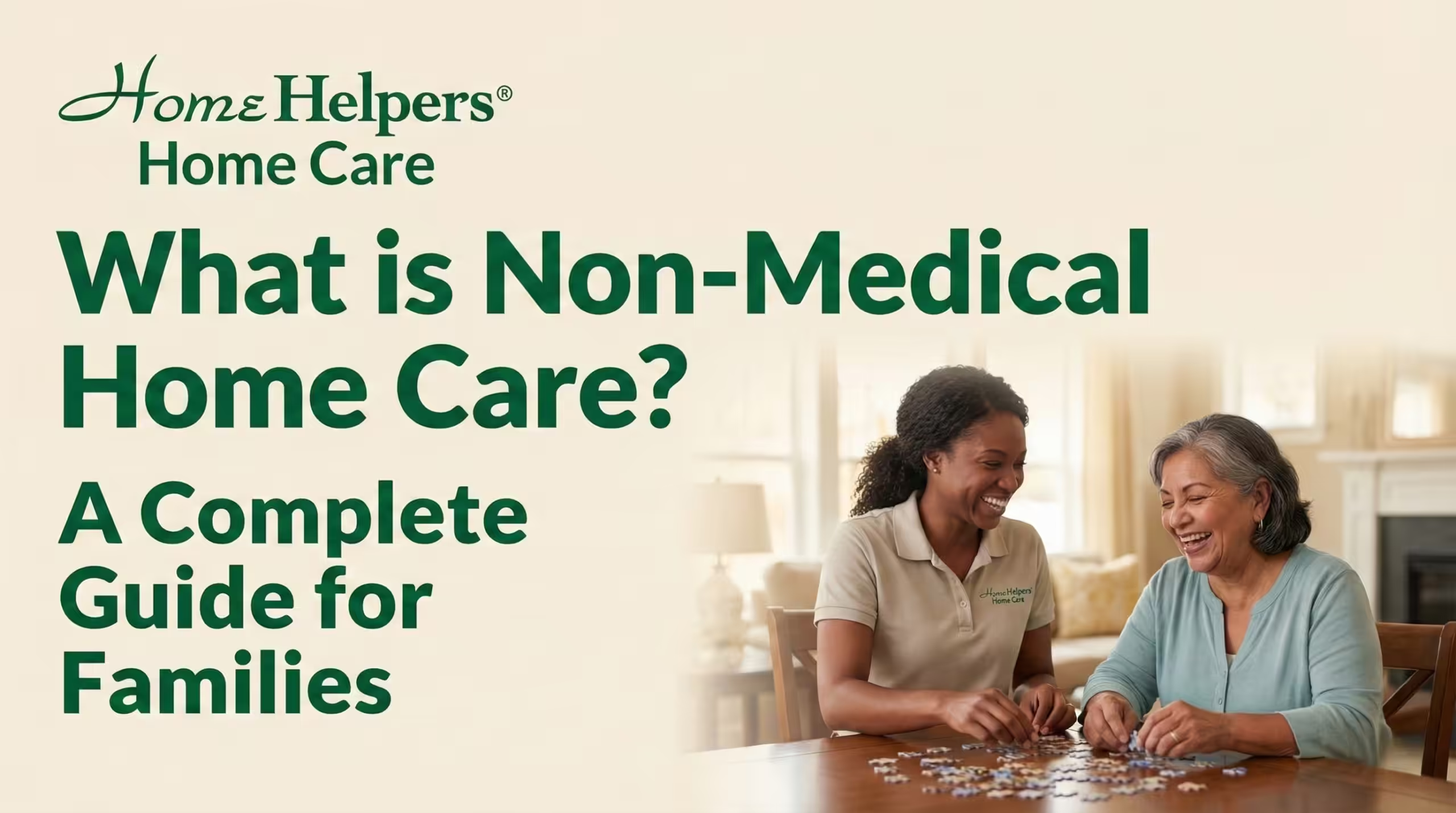
Non-medical home care is professional, in-home assistance with everyday tasks that become difficult as a person ages, recovers from surgery, or lives with a disability. Unlike home health care, which involves clinical services delivered by licensed medical professionals such as nurses and physical therapists, non-medical home care focuses on the practical and personal side of daily life.
As Emory University School of Medicine explains, non-medical in-home care focuses on assisting with daily activities to maintain and sustain quality of life at home. The caregivers who provide these services are trained professionals, often home health aides (HHAs) or certified nursing assistants (CNAs), but they do not perform medical procedures like administering injections, changing wound dressings, or managing IV lines.
In other words, non-medical home care is about helping your loved one live comfortably, safely, and with dignity in their own home, every single day.
What Services Does Non-Medical Home Care Include?
Non-medical home care can be tailored to fit a wide range of needs. Services typically fall into a few core categories:
Personal Care
This includes hands-on assistance with activities of daily living (ADLs), the fundamental tasks that many of us take for granted. Personal care services may include help with bathing and grooming, dressing, toileting, mobility and transferring (for example, moving safely from a bed to a chair), and eating or feeding assistance.
Companion Care
Loneliness and isolation are significant health risks for older adults. Companion care addresses these needs through conversation and social engagement, playing games or reading together, accompanying your loved one on walks or outings, and simply being a friendly, consistent presence in their day. Research from the National Academies of Sciences, Engineering, and Medicine has linked social isolation in older adults to increased risk of dementia, heart disease, and premature death, making companionship far more than a luxury.
Homemaker Services
These are the household tasks that keep a home safe and functional: light housekeeping and tidying, laundry and changing bed linens, meal planning and preparation, grocery shopping and running errands, and organizing mail and helping manage household routines.
Transportation
Getting to doctor’s appointments, the pharmacy, the grocery store, or social activities can become increasingly difficult for seniors who no longer drive. A home care aide can provide safe, reliable transportation and accompaniment to appointments, ensuring your loved one stays connected to their healthcare providers and community.
Medication Reminders
While non-medical caregivers cannot administer medications, they can provide important reminders to help your loved one take the right medications at the right times. For seniors managing multiple prescriptions, this simple support can prevent dangerous missed doses or accidental double doses.
How Non-Medical Home Care Differs from Home Health Care
This is one of the most common points of confusion for families, and the distinction matters because it affects what kind of provider you need, what insurance will cover, and what to expect from the care experience.
Home health care is clinical, medical care provided in the home by licensed professionals such as registered nurses, physical therapists, occupational therapists, and speech-language pathologists. It is typically prescribed by a physician following a hospitalization, surgery, or acute health event. Home health care is short-term and goal-oriented (for example, wound care after surgery or rehabilitation exercises after a stroke), and it is often covered by Medicare or private health insurance.
Non-medical home care is supportive, non-clinical care provided by trained caregivers. It does not require a doctor’s prescription. It can be arranged for as few or as many hours as needed, and it can continue for weeks, months, or years. Non-medical home care is typically paid for through private pay, long-term care insurance, or certain Medicaid waiver programs.
Here’s a helpful way to think about the difference: a home health nurse might visit twice a week to change a surgical dressing, while a non-medical home care aide is the person who helps your parent shower safely every morning, prepares lunch, drives them to a follow-up appointment, and makes sure they take their afternoon medications on time.
Many families use both types of care together, especially during recovery periods. The medical professional handles the clinical needs, while the home care aide provides the ongoing daily support that keeps everything running smoothly.
Who Benefits from Non-Medical Home Care?
Non-medical home care serves a broader population than many people realize. While it is most commonly associated with older adults, it is equally valuable for several other groups:
- Aging seniors who want to remain in their own homes but need help with daily tasks like cooking, cleaning, bathing, or getting around safely. According to AARP, the vast majority of older adults prefer to age in place, and non-medical home care is often the service that makes that possible.
- Adults recovering from surgery or illness who need temporary support during the weeks following a procedure. After a hip replacement, knee surgery, or cardiac procedure, even basic tasks like preparing meals or getting dressed can be challenging. Non-medical home care fills this gap while the body heals.
- Individuals with intellectual or developmental disabilities who benefit from consistent, compassionate assistance with daily routines, personal care, community engagement, and maintaining independence at home.
- Family caregivers who need relief. The 2025 Caregiving in the U.S. report from the National Alliance for Caregiving and AARP found that nearly one in four Americans is now a family caregiver, with 64 percent reporting high emotional stress. Non-medical home care can provide essential respite, giving family members time to rest, work, and take care of their own health.
What to Expect When You Start Non-Medical Home Care
If you’ve never arranged home care before, the process may feel unfamiliar. Here’s what a typical experience looks like when working with a reputable home care provider:
- Initial consultation. A care coordinator will meet with you and your loved one (often in the home) to assess needs, discuss preferences, and understand daily routines. This is also a good time to ask questions and share any concerns.
- Personalized care plan. Based on the consultation, the provider will develop a care plan tailored to your loved one’s specific needs. This plan outlines the types of services to be provided, the schedule, and any special considerations.
- Caregiver matching. Good providers take the time to match caregivers with clients based on personality, skills, and compatibility. This relationship is central to the quality of care, so it’s important that your loved one feels comfortable and at ease.
- Flexible scheduling. Non-medical home care can be arranged for just a few hours a day or around the clock, depending on what your family needs. Many families start with a modest schedule and adjust as circumstances change.
- Ongoing communication. A quality provider will check in regularly, update the care plan as needs evolve, and keep family members informed about how their loved one is doing.
Non-Medical Home Care vs. Assisted Living: Which Is Right?
This is another common question, and the answer depends on your loved one’s needs, preferences, and circumstances. Both options have real advantages.
Assisted living communities provide a structured environment with meals, social activities, and staff available around the clock. They work well for seniors who benefit from a built-in social community, who need a higher level of supervision, or who live alone and face safety concerns that can’t be adequately addressed at home.
Non-medical home care, on the other hand, allows your loved one to remain in their own home, surrounded by familiar people, places, and routines. It offers one-on-one attention from a dedicated caregiver, flexible scheduling, and the ability to maintain a level of independence that can be harder to preserve in a facility setting. For many families, especially when care needs are moderate, home care provides the right balance of support and autonomy.
The National Institute on Aging encourages families to explore multiple options and, whenever possible, involve the older adult in the decision. The best care arrangement is one that respects your loved one’s wishes while keeping them safe and well supported.
Non-Medical Home Care in Bethesda and Montgomery County
For families in Bethesda, Chevy Chase, Kensington, Silver Spring, and the surrounding communities, finding the right home care provider means finding someone who understands the local landscape. Montgomery County is home to excellent healthcare systems, senior centers, and community resources, and a good home care partner will know how to connect your family with the support that’s available.
At Home Helpers of Bethesda, we provide personalized, non-medical home care for seniors, post-surgery patients, and individuals with intellectual disabilities throughout Montgomery County. Our services include personal care, companionship, meal preparation, light housekeeping, medication reminders, and transportation. Every care plan is built around your loved one’s unique needs, routines, and preferences.
Let’s Start the Conversation
If you’re exploring home care options for a loved one, we’re here to help you understand what’s available and what might work best for your family. At Home Helpers of Bethesda, we offer free in-home consultations with no obligation. It’s simply a chance to talk through your situation, ask questions, and learn more about how non-medical home care works.
Call us today at 301-517-9557 or visit our website to schedule a consultation. You’ve already taken the first step by learning about your options. We’re here for whatever comes next.
Sources
- Emory University School of Medicine — “Home Health Care vs. Non-Medical In-Home Care” — https://med.emory.edu/departments/neurology/programs_centers/emory_als_center/patient_resources/home_care.html
- National Academies of Sciences, Engineering, and Medicine — “Social Isolation and Loneliness in Older Adults” — https://nap.nationalacademies.org/catalog/25663/
- National Alliance for Caregiving and AARP — “Caregiving in the U.S. 2025” — https://www.caregiving.org/caregiving-in-the-us-2025/
- National Institute on Aging — “Services for Older Adults Living at Home” — https://www.nia.nih.gov/health/caregiving/services-older-adults-living-home
- Administration for Community Living — “How Much Care Will You Need?” — https://acl.gov/ltc/basic-needs/how-much-care-will-you-need
The Most Comprehensive Care In The Industry

Physical Wellness
We make daily life easier as needs change, with support for personal care, mobility, medication reminders, and recovery after a hospital stay.
Learn More
Mental Well-Being
Staying active and connected matters. Our caregivers provide companionship and meaningful engagement to support emotional health and independence.
Learn More
Nutrition & Hydration
Healthy meals and proper hydration are essential. We help with planning, shopping, and preparation to support daily wellness and energy.
Learn More
Active Connections
Strong relationships bring comfort and purpose. We help seniors stay connected through social engagement, technology, and regular check-ins.
Learn More