#3: Signs an Aging Parent May Need Help at Home
THE COMPLETE GUIDE TO AGING IN PLACE IN ST. LOUIS
Helping St. Louis families plan with confidence, dignity, and peace of mind
By Lauren Teschendorf, Chief Growth Officer & CFO | Home Helpers Home Care of St. Louis

The Small Changes That Matter Most
Recognizing the Quiet Signs Before They Become Loud Crises
Most life-changing events don’t begin with one dramatic moment. They begin with dozens of small moments that are easy to overlook.
One of the biggest misconceptions about aging is that decline happens suddenly. Occasionally it does. A stroke. A broken hip. A hospitalization. But more often… It happens quietly. So quietly, in fact, that the people who love someone most often don’t notice. That’s because we don’t see our parents all at once. We see them a little at a time. A birthday. Sunday dinner. A holiday. A quick visit after work. Each visit feels familiar. Each change feels small. Until one day… Something doesn’t feel quite right.
And suddenly you realize the changes have been happening for months. Maybe even years. One of the greatest gifts you can give your family is learning to recognize those changes while they’re still small enough to address together. Don’t Look for One Sign. Look for Patterns.
This is one of the most important principles I share with families. One forgotten appointment doesn’t necessarily mean someone needs help. Neither does burning dinner once. Or misplacing the television remote. Those things happen to all of us. It’s when several small changes begin appearing together that we should become curious. Curious—not alarmed. There’s a big difference. Curiosity leads to conversations. Fear often leads to conflict.
LAUREN’S PERSPECTIVE
At Home Helpers Home Care of St. Louis, one of the questions I often ask families during an assessment is this:
If someone who loved your parent hadn’t seen them for two years, what changes would they notice immediately?
Sometimes we’re too close to see gradual change. Fresh eyes often recognize what familiarity overlooks.
Physical Changes
The Body Often Speaks First
Sometimes the earliest signs have nothing to do with memory. They’re physical. Perhaps your parent has stopped carrying laundry downstairs. Maybe they avoid certain rooms because of the stairs. You notice bruises they can’t quite explain. They’ve started using furniture for balance. They park closer to store entrances.
Or they simply seem more tired after activities they once enjoyed. None of these changes automatically mean someone needs home care. But together, they tell a story.
QUESTIONS TO ASK YOUR FAMILY
Have you noticed Mom or Dad: Walking more slowly? Avoiding stairs? Holding onto furniture while walking? Wearing the same shoes because they’re easier to put on? Avoiding activities they used to enjoy? If so… What support might help them continue doing the things they love?
Falls Rarely Come Out of Nowhere
One of the most common things I hear is,
The fall came completely out of nowhere.
Sometimes that’s true. More often… It didn’t. There were near-falls. Balance changes. Difficulty getting out of chairs. Fatigue. A reluctance to use stairs. Many families don’t realize that preventing the first serious fall is far easier than recovering from one. Simple home modifications. Better lighting. Grab bars. Support during bathing. A few hours of assistance each week. These small changes often make an enormous difference.
PLANNING TIP
Don’t wait for a major fall to evaluate home safety. The best fall prevention strategy begins before anyone falls.
Changes in Nutrition
One of my favorite places to observe during a home visit is the kitchen. Not because I’m inspecting. Because kitchens quietly tell stories. An empty refrigerator. Expired milk. Fresh produce that has spoiled. Stacks of frozen dinners. Cabinets filled with canned soup. Sometimes the issue isn’t cooking. It’s shopping. Or lifting groceries.
Or simply feeling that cooking for one person isn’t worth the effort anymore. Nutrition affects everything. Energy. Strength. Healing. Balance. Memory. Mood. Sometimes preparing just a few healthy meals each week changes someone’s entire quality of life.
Medication Becomes More Complicated Than We Realize
Modern medicine has helped people live longer than ever before. It has also made medication schedules incredibly complicated. Morning medications. Evening medications. Weekly medications. As-needed medications. Changes after hospitalizations. Refills. Special instructions. I’ve met retired physicians who struggled to keep everything organized. Medication confusion isn’t a sign of failure.
It’s a sign that life has become more complex. Sometimes all someone needs is a better system. Sometimes they need another set of eyes. Either way… It’s worth paying attention.
When Memory Changes
This is often the change families fear most. It’s also one of the most misunderstood. Everyone forgets things. Everyone. Walking into a room and forgetting why. Misplacing your glasses. Forgetting someone’s name. Those experiences become more common with age. What concerns me is something different. Missing appointments repeatedly. Getting lost on familiar roads. Difficulty managing finances. Forgetting medications. Repeatedly asking the same questions within minutes. Those deserve a conversation with a physician. Not because every memory change means Alzheimer’s disease.
But because understanding what’s happening early gives families far more options.
LEARN MORE
If memory changes are becoming more noticeable, I encourage you to read our companion guide: The Complete Guide to Alzheimer’s & Dementia Care in St. Louis There, we’ll explore: The early signs families often miss Alzheimer’s disease vs. normal aging
Safety concerns
Communication strategies
Wandering
Sundowning
When to seek additional support
Loneliness Is a Health Issue
One topic that doesn’t receive enough attention is loneliness. As we age, life naturally changes. Friends move away. Neighbors relocate. Loved ones pass away. Driving becomes difficult. Social circles become smaller. Many older adults spend long stretches of time without meaningful conversation. Research has shown that chronic loneliness is associated with poorer physical and emotional health. Sometimes what someone needs most isn’t assistance. It’s connection. A shared meal. A conversation. A walk around the neighborhood.
Someone who asks,
How are you today?
Companionship isn’t a luxury. It’s an important part of healthy aging.
The Person I Often Worry About Most
Ironically… The person who concerns me most often isn’t the older adult. It’s the spouse. Or the daughter. Or the son. They’re exhausted. They’re juggling work. Teenagers. Grandchildren. Medical appointments. Their own health. And caregiving. They rarely ask for help.
Instead they say,
I’m fine.
Even when they clearly aren’t.
LAUREN’S PERSPECTIVE
As someone who is part of the Sandwich Generation myself, this section is especially close to my heart. Many of us are trying to be exceptional parents, devoted spouses, successful professionals, and loving adult children—all at the same time. It’s beautiful. It’s also incredibly demanding.
If that’s where you find yourself today, I want you to hear this: You don’t have to carry it all alone. Accepting help isn’t letting your family down. Sometimes it’s the very thing that allows you to continue showing up for the people you love.
The Goal Isn’t Perfection
One of the biggest myths about aging is that we’re trying to prevent every change. We’re not. Aging is a privilege. Change is inevitable. Our goal isn’t perfection. Our goal is preparation. When families recognize small changes early, they gain something incredibly valuable: Time. Time to have conversations. Time to make decisions together. Time to preserve independence. Time to avoid unnecessary crises.
And time to enjoy many more meaningful moments together.
The sooner we begin paying attention to the small changes, the more opportunities we have to protect the things that matter most.
COMING UP NEXT
In the next section, we’ll take everything we’ve learned so far and turn it into a practical roadmap. We’ll build your family’s Aging in Place Plan together. If your family identified with ‘The Scrambler’ or ‘The Ostrich’ from The Three Families™, this section will help you become ‘The Planner,’ covering legal planning, finances, home safety, healthcare, transportation, community support, and the conversations every family should have before they’re needed.
YOUR ACTION STEP
Write down three small changes you’ve noticed in the past year.
Jump to a Section
- Planning for the Retirement No One Talks About
- The Three Families™
- The Small Changes That Matter Most
- Building Your Aging in Place Plan
- Understanding Your Care Options
- Creating a Home That Grows With You
- Paying for Care Without Losing Peace of Mind
- Having the Conversations That Matter Most
- Your Aging in Place Roadmap
- The Greatest Gift We Can Give the People We Love

Your Questions, Answered
Home Helpers Home Care offers a wide range of in-home care services, including personal care, companionship, nutrition support, wellness monitoring, and specialized care for chronic conditions, dementia, and recovery.
Our services are designed for seniors, individuals with disabilities, those recovering from illness or surgery, and anyone who needs extra support to live safely and comfortably at home.
Yes, every care plan is fully personalized based on each client’s unique needs, preferences, and schedule, whether they require a few hours of support or 24/7 care.
Yes, our caregivers are carefully screened, trained, and insured to provide compassionate, high-quality care you can trust.
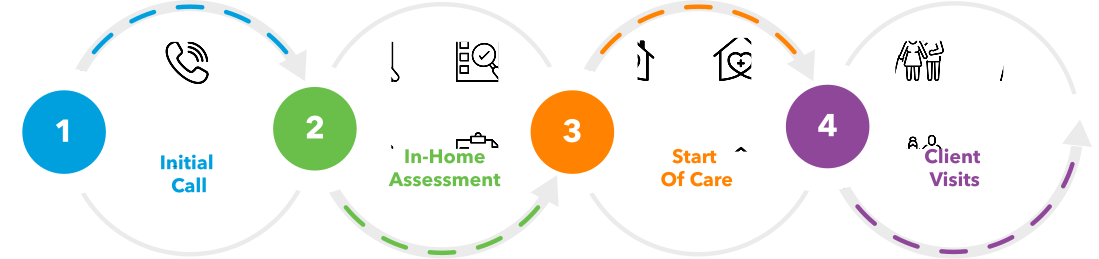
Getting started is easy—simply contact your local Home Helpers location to schedule a free in-home assessment and create a care plan tailored to your needs.