24-Hour Monitoring
Need Home Care?
Contact Us Today
24-Hour Home Care in St. Louis
Choosing between 24/7 shift-based care and extended-stay live-in care
When someone you love needs support throughout the day and night, the most important question is not simply, “Do they need 24-hour care?” It is understanding what type of 24-hour care will provide the right balance of safety, consistency and comfort.
Home Helpers Home Care of St. Louis offers two ways to provide care around the clock: 24/7 care provided through scheduled caregiver shifts and extended-stay or temporary live-in care. Both options allow an older adult to remain at home while receiving help with personal care, meals, mobility, dementia support, household routines and overnight needs. The right choice depends largely on how much assistance is needed during the night, how consistently the client sleeps and whether the home can accommodate a caregiver staying overnight.
Call Home Helpers Home Care of St. Louis at 636-735-3536 to discuss the safest option for your family.
What Is 24/7 Shift-Based Home Care?
With 24/7 shift-based care, caregivers work scheduled hourly shifts so that a caregiver is assigned and responsible for the client at all times. The schedule may include eight-hour, ten-hour or twelve-hour shifts, depending on the client’s needs and caregiver availability. Several caregivers may share the weekly schedule, allowing each caregiver to work a defined shift and then leave the home when the next caregiver arrives.
During an overnight shift, there may be long quiet periods while the client sleeps. The caregiver may read, watch television or lightly doze, but remains on duty, responsible for the client and ready to respond whenever help is needed. This model is generally the better option when nighttime needs are frequent, unpredictable or require an assigned caregiver to remain responsible throughout the night.
24/7 shift-based care may be appropriate when your loved one:
- Wakes frequently during the night
- Needs regular toileting, repositioning or transfer assistance
- Is at risk of falling when getting out of bed
- Wanders or experiences nighttime confusion
- Has an irregular sleep schedule
- Cannot safely be left without an on-duty caregiver
- Needs supervision at unpredictable times
- Has advanced dementia or significant nighttime behaviors
What Is Extended-Stay or Temporary Live-In Care?
Extended-stay live-in care allows a caregiver to remain in the client’s home for an agreed number of days. The caregiver provides substantial support throughout the day, assists with evening and morning routines and remains in the home overnight.
The caregiver receives a private bedroom, appropriate sleeping accommodations and a scheduled overnight sleep period. The caregiver may assist if the client awakens occasionally, but live-in care is not designed for someone who needs frequent or continuous help throughout the night.
This option can offer greater continuity because fewer caregivers are involved in the assignment. It may be especially helpful for someone living with dementia who benefits from a familiar face, a predictable routine and fewer caregiver transitions. Extended-stay care may be arranged for a temporary need, such as a family caregiver’s vacation or recovery following hospitalization, or it may be used as part of a longer-term care plan.
Extended-stay live-in care may be appropriate when your loved one:
- Needs extensive assistance throughout the day
- Generally sleeps for most of the night
- Has only occasional overnight needs
- Benefits from a familiar caregiver and consistent routine
- Is recovering after surgery, hospitalization or rehabilitation
- Needs temporary support while a family caregiver is away
- Has dementia but does not typically wander or remain active overnight
- Can provide a private bedroom and suitable sleeping environment
Comparing 24/7 Shift Care and Extended-Stay Live-In Care
| Consideration | 24/7 Shift-Based Care | Extended-Stay Live-In Care |
| How coverage works | Caregivers rotate through scheduled hourly shifts | A caregiver remains in the home for an agreed number of days |
| Overnight responsibility | The caregiver remains on duty and responsible throughout the paid shift | The caregiver has a scheduled sleep period and assists with occasional needs |
| Nighttime activity | Appropriate for frequent, unpredictable or recurring nighttime assistance | Best when nighttime interruptions are limited |
| Caregiver continuity | Several caregivers may share the weekly schedule | Fewer caregivers may be involved, providing greater consistency |
| Dementia support | Often better for wandering, nighttime confusion or irregular sleep | Often helpful for someone who benefits from routine and generally sleeps at night |
| Private bedroom required | Usually not required | Required |
| Caregiver rest | The caregiver may lightly rest during quiet periods but remains on duty | The caregiver receives a defined overnight sleep period |
| Schedule flexibility | Easier to add, shorten or change individual shifts | Requires careful planning for relief and backup coverage |
| Best fit | Clients who need active or unpredictable assistance around the clock | Clients who need substantial daytime support and overnight reassurance |
| Primary benefit | A caregiver is continuously assigned and responsible | Greater continuity and fewer caregiver transitions |
| Primary limitation | More caregiver changes may occur throughout the week | Not appropriate when the caregiver cannot receive adequate sleep |
Pros and Cons of 24/7 Shift-Based Care
A caregiver is responsible at every hour. There is always an assigned caregiver on duty, including during the overnight shift.
It accommodates frequent nighttime care. This model works well when someone needs toileting, transfers, repositioning, redirection or supervision throughout the night.
Caregivers receive defined working shifts. Each caregiver works a scheduled period and is relieved by the next caregiver, helping reduce fatigue.
The schedule can change as care needs change. Additional coverage can be added if the client’s condition becomes more complex.
Considerations
- More caregivers may be involved because shifts must be covered around the clock.
- There may be more transitions, which can be difficult for someone who becomes confused by new faces or changes in routine.
- The cost reflects continuous paid coverage because the family is paying for an assigned caregiver during every hour of the day and night.
Pros and Cons of Extended-Stay Live-In Care
It offers greater caregiver consistency. Having fewer caregivers can help establish trust and familiarity, especially for someone living with dementia.
It can create a calmer home routine. Morning, daytime and evening routines may be handled by the same caregiver rather than changing at each shift.
It is helpful for temporary family needs. Live-in care may provide reassurance while a family caregiver travels, works through an emergency or needs a period of respite.
It can support recovery at home. A temporary extended-stay arrangement may help someone transition home after hospitalization, surgery or rehabilitation.
Considerations
- The client must generally sleep at night. Live-in care is not appropriate when the caregiver is repeatedly awakened or cannot receive adequate rest.
- The home must provide suitable accommodations, including a private bedroom, appropriate bed, bathroom access and a safe environment.
- Relief coverage must still be arranged because a live-in caregiver cannot remain solely responsible without appropriate rest, breaks and scheduled relief.
- The arrangement may need to change if nighttime needs increase.
How Do We Decide Which Type of 24-Hour Care Is Best?
We begin by looking at the entire day—not just the number of hours requested. During the assessment, we will discuss:
- How often your loved one wakes during the night
- Whether they wander or attempt to leave the home
- Their fall risk and transfer needs
- How much help they need with bathing, dressing and toileting
- Their dementia symptoms and typical daily routine
- Whether they can safely allow a caregiver to sleep
- Whether the home has an appropriate private bedroom
- How much caregiver consistency is important to the family
- Whether care is needed temporarily or on an ongoing basis
A person who sleeps through most of the night and needs extensive help during the day may be a good candidate for extended-stay live-in care. A person who awakens frequently, wanders, requires repeated transfers or needs unpredictable assistance will usually be safer with caregivers working scheduled shifts around the clock.
Care needs can also change. A client may begin with extended-stay care and later move to 24/7 shift coverage, or a family may use shift care temporarily while a longer-term plan is developed.
What Can 24-Hour Home Care Include?
Depending on the personalized care plan, our caregivers may assist with:
| • Bathing, dressing and grooming | • Hydration reminders |
| • Toileting and incontinence care | • Light housekeeping and laundry |
| • Mobility and transfer assistance | • Companionship and meaningful activities |
| • Fall-prevention support | • Transportation and errands |
| • Dementia cueing, reassurance and redirection | • Morning and bedtime routines |
| • Medication reminders | • Overnight assistance |
| • Meal planning and preparation | • Family communication and care coordination |
Our goal is not simply to place a caregiver in the home. We work with the family to create a care plan that supports safety, dignity and a familiar daily routine.
Short-Term and Long-Term 24-Hour Care
Families may need around-the-clock care for many different reasons. Some families need care for only a few days or weeks following a hospital stay. Others need temporary coverage while a spouse or adult child travels. Many families are developing a long-term plan for a loved one with dementia, mobility limitations or increasing safety concerns.
- Short-term recovery care
- Temporary extended-stay care
- Family caregiver respite
- Hospital-to-home transitions
- Dementia and Alzheimer’s care
- Long-term 24/7 home care
- Overnight safety support
- Ongoing aging-in-place assistance
Talk With Our St. Louis Care Team
Choosing between shift-based 24/7 care and extended-stay live-in care can feel overwhelming. You do not need to make the decision alone. We will assess your loved one’s routines, nighttime needs, home environment and safety concerns, then explain which options are appropriate for your family.
CALL 636-735-3536 We are here to help your loved one remain safe, supported and comfortable at home.
Benefits of Senior Monitoring Systems in St. Louis, MO
Providing Peace of Mind for Your Loved One in St. Louis, MO
As our loved ones age, it’s natural to worry about their safety and well-being. That’s where Home Helpers® Home Care in St. Louis, MO comes in.
Through our Direct Link® program, we can set up emergency senior monitoring systems for your loved one. These systems provide 24/7 monitoring and instant access to help in case of an emergency.
With Direct Link®, you can have peace of mind knowing that your loved one is always just a call away from help.
Personal Emergency Response Systems and Remote Monitoring
Our Direct Link® senior monitoring systems go beyond just emergency calls. With personal emergency response systems and remote monitoring, your loved one can always be in direct contact with help. These systems are monitored 24 hours a day, 365 days a year. They feature voice or button activated emergency calls, as well as built-in motion, temperature, and air quality sensors. Through our Circle of Care app, family members can also stay connected with their loved one’s senior monitoring systems and track alerts in real time, check in with them, and even remotely call emergency services if needed. And the best part? No Wifi is required and they are easy to set up – simply plug it in and follow the voice prompts.
Sign Up for a Free In-Home Care Assessment
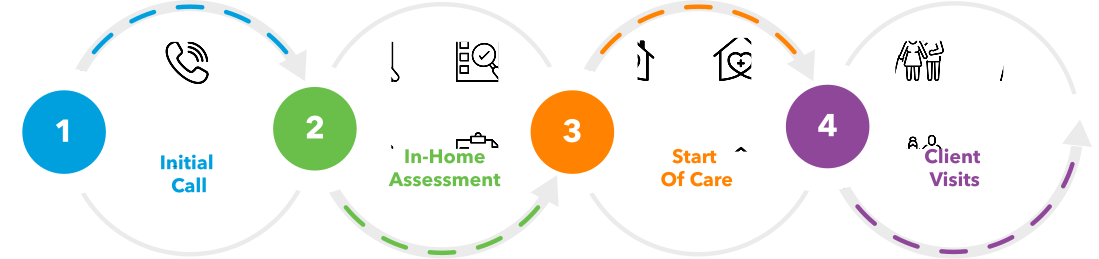
Interested in learning more about our Direct Link® senior monitoring systems? Sign up for a free In-Home Care Assessment with Home Helpers in St. Louis. Our trained and compassionate Caregivers will walk you through the benefits of our senior monitoring systems and our additional services through our Cared-4℠ program. At Home Helpers, we are dedicated to providing peace of mind for you and your loved one through our top-of-the-line senior monitoring systems. Contact us today to schedule your free In-Home Care Assessment.

Your Questions, Answered
Home Helpers Home Care offers a wide range of in-home care services, including personal care, companionship, nutrition support, wellness monitoring, and specialized care for chronic conditions, dementia, and recovery.
Our services are designed for seniors, individuals with disabilities, those recovering from illness or surgery, and anyone who needs extra support to live safely and comfortably at home.
Yes, every care plan is fully personalized based on each client’s unique needs, preferences, and schedule, whether they require a few hours of support or 24/7 care.
Yes, our caregivers are carefully screened, trained, and insured to provide compassionate, high-quality care you can trust.
Getting started is easy—simply contact your local Home Helpers location to schedule a free in-home assessment and create a care plan tailored to your needs.