Who Helps With What? Understanding the Care Community in Martinsburg
When an aging parent, spouse, or loved one begins needing more support at home, families are often introduced to a lot of new names at once.
Home health. Hospice. The VA Medical Center. Family caregivers. In-home care. Discharge planners. Therapists. Community resources.
Each one may have an important role, but it can be hard to understand who does what — especially when your family is trying to make decisions quickly after a fall, hospital stay, new diagnosis, or noticeable change at home.
The most important thing to remember is this:
Your loved one should be at the center of the care plan.
No single provider does everything, and families should not have to carry everything alone. In Martinsburg and across the Eastern Panhandle, care often works best when the right people work together to help an older adult stay safer, more supported, and better cared for at home.
Your Loved One Is at the Center
Aging at home is not just about medical care. It also includes daily routines, meals, transportation, safety, companionship, personal care, medication reminders, family communication, and support during care transitions.
That is a lot for one person to manage.
A spouse may be providing care around the clock. Adult children may be balancing work, children, appointments, and long-distance caregiving. Families may receive instructions after a hospital stay but still feel unsure about what daily life should look like once their loved one returns home.
That is why it helps to understand the care community.
Each person or provider has a different role. Some focus on medical needs. Some focus on comfort. Some help with daily routines. Some help family caregivers stay involved without burning out.
When those roles are clear, families can make better decisions and feel less alone.

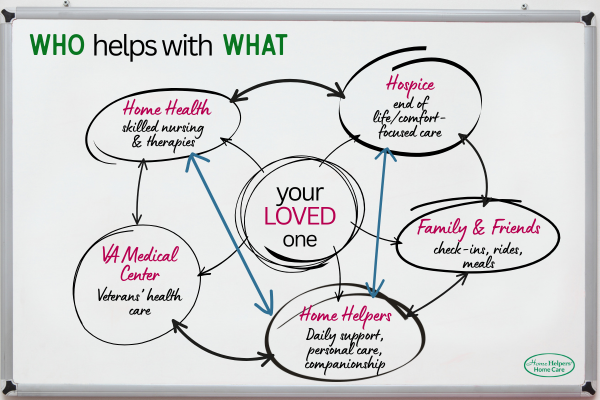
Who Helps With What?
Every care team looks different. Some families need several providers involved. Others may only need a few key supports. Here are some of the roles families in the Martinsburg area may encounter.
Home Health: Skilled Nursing and Therapy
Home health provides skilled medical care at home, often after an illness, surgery, hospitalization, or change in condition.
This may include nursing, physical therapy, occupational therapy, speech therapy, or other clinical services ordered by a medical provider. Home health is often short-term and focused on a specific medical need or recovery goal.
Families in the Eastern Panhandle may encounter local home health providers such as Panhandle Home Health.
Hospice: End-of-Life Comfort-Focused Care
Hospice provides comfort-focused care for people with a life-limiting illness.
Hospice teams may help with symptom management, nursing care, emotional support, spiritual care, family guidance, and quality of life. Hospice does not mean the family is giving up. It means the focus of care has shifted toward comfort, dignity, and support.
In the Martinsburg area, families may hear about Hospice of the Panhandle as part of the local hospice care community.
VA Medical Center: Veterans’ Health Care
For eligible Veterans, the Martinsburg VA Medical Center may be an important part of the care team.
VA care may include medical services, specialty care, caregiver support, and other resources connected to Veterans’ health and well-being. For families caring for a Veteran, the VA may be one of the first places to ask about available services and support.
Family and Friends: Check-Ins, Rides, and Meals
Family members, friends, neighbors, and faith communities often provide the first layer of support.
They may help with rides to appointments, grocery pickup, meals, check-ins, errands, companionship, or emotional encouragement. This kind of help matters, especially when it is organized clearly.
Instead of one person trying to do everything, families can ask:
- Who can handle appointments?
- Who can check in during the week?
- Who can help with meals?
- Who can visit or call regularly?
- Who is the main contact if something changes?
Clear roles help reduce stress and prevent caregiver burnout.
Home Helpers: Daily Support, Personal Care, and Companionship
Home Helpers Home Care of Martinsburg supports the daily-life side of care at home.
This may include personal care, companion care, meal preparation, light housekeeping, transportation, medication reminders, dementia care, respite care for family caregivers, and safety supervision.
Home Helpers does not replace medical care, home health, hospice, the VA, or family caregivers. We help make the care plan work in real life, day by day.
For many families, the hardest part is not understanding what the doctor recommended. It is making sure the daily routine actually happens safely and consistently.
That may mean helping someone bathe, dress, and get ready for the day. It may mean preparing meals, offering reminders, helping with mobility, providing transportation, or keeping someone company so they are not isolated.
It may also mean giving a spouse or adult child time to rest, run errands, go to work, or simply breathe.
How the Care Community Works Together
Care at home often works best when each person understands their role.
After a hospital stay, a discharge planner may explain instructions and follow-up care. Home health may provide skilled nursing or therapy. Family may manage appointments and communication. Home Helpers may assist with meals, bathing, mobility support, reminders, and safety during the transition home.
When hospice is involved, the hospice team manages comfort-focused clinical care and family guidance. Home Helpers may provide companionship, personal care, respite, and help with daily routines between hospice visits.
When a Veteran needs support, the Martinsburg VA Medical Center may be part of the medical care team, while family and in-home care help support daily life at home.
When an adult child lives out of town, local providers and in-home caregivers can help create a stronger support system while keeping the family informed and involved.
When a spouse is the primary caregiver, in-home care can provide relief so the spouse can rest, attend appointments, visit family, or take care of their own health.
Each role is different. Together, they can create a more complete care plan.
Questions Families Should Ask
If you are trying to understand what kind of support your loved one needs, these questions can help:
- Is our loved one safe alone right now?
- Who should we call first if something changes?
- What support is available between medical visits?
- What happens after home health ends?
- Does our loved one need help with bathing, meals, mobility, or reminders?
- Are family caregivers getting enough rest and support?
- Are there local resources we should know about?
- Who is responsible for keeping everyone updated?
You do not have to wait for a crisis to start asking these questions. In many cases, having the right support in place earlier can help families feel more prepared and less alone.
Not sure who should be on your loved one’s care team?
Download The Family Guide to Building a Care Team for a simple worksheet, care team contact list, and questions to help your family organize support before the next appointment, discharge, or care decision.
Building a Care Team Around Your Loved One
Understanding the local care community can make care decisions feel less overwhelming.
Home health, hospice, Veterans’ health care, family and friends, community resources, and in-home care may all have a role to play. The goal is not to involve more people than necessary. The goal is to make sure the right people are involved, with clear roles and your loved one’s safety, dignity, and quality of life at the center.
Not sure who should be on your loved one’s care team? Download The Family Guide to Building a Care Team for a simple worksheet and questions to help organize support.
Need help with the daily-life side of care at home? Home Helpers Home Care of Martinsburg supports families in Martinsburg and across the Eastern Panhandle with personal care, companionship, respite, and flexible in-home support that helps make the care plan work in real life.
The Most Comprehensive Care In The Industry

Physical Wellness
We make daily life easier as needs change, with support for personal care, mobility, medication reminders, and recovery after a hospital stay.
Learn More
Mental Well-Being
Staying active and connected matters. Our caregivers provide companionship and meaningful engagement to support emotional health and independence.
Learn More
Nutrition & Hydration
Healthy meals and proper hydration are essential. We help with planning, shopping, and preparation to support daily wellness and energy.
Learn More
Active Connections
Strong relationships bring comfort and purpose. We help seniors stay connected through social engagement, technology, and regular check-ins.
Learn More