
When you’re noticing changes, clarity matters more than certainty
Author: Home Helpers Martinsburg
If you’ve been seeing memory slips, missed appointments, confusion with everyday routines, or changes in mood, it’s normal to feel torn between two thoughts:
- “Maybe it’s nothing.”
- “But what if it’s something—and I’m missing the window to help?”
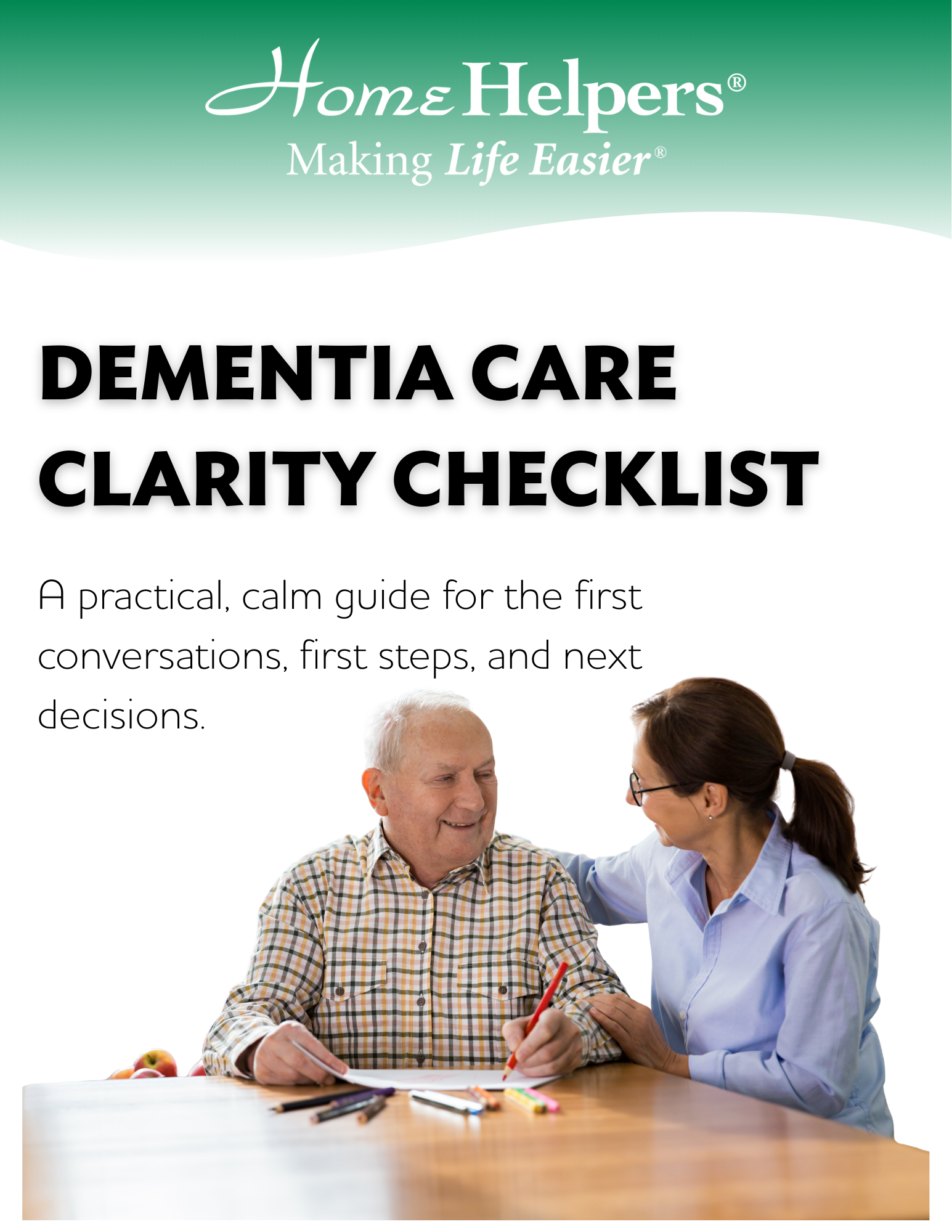
That in-between stage is exactly why we created our Dementia Care Checklist: to give families a calm, practical way to sort what’s happening and decide what to do next—without spiraling into worst-case scenarios.
Download the free Dementia Care Checklist
Our checklist helps you:
- Track common early red flags (memory, safety, routines, nutrition, meds)
- Identify immediate priorities (what to address this week)
- Understand what kind of support can help at home (now vs. later)
- Prepare for more productive conversations with your loved one’s doctor
Download the Dementia Care Checklist: hhmartinsburg.ac-page.com/dementia-checklist-freebie
What the checklist covers
1) Everyday function (not just memory)
Dementia often shows up in day-to-day tasks first: cooking safely, managing medications, getting to appointments, navigating familiar routes, or keeping up with hygiene.
2) Safety at home
The checklist includes quick prompts that help you think through safety risks like wandering, falls, leaving the stove on, driving concerns, or repeat calls/scams—so you can prevent crisis moments.
3) Routine and behavior changes
When routines fall apart, stress rises for everyone. We cover routine cues, evening challenges, sleep changes, agitation triggers, and simple adjustments that can help.
4) The caregiver reality check
Many families don’t realize how quickly caregiving becomes a second job. The checklist includes a quick self-check so caregivers can spot burnout early and build support before they hit a wall.
A simple way to use it (no overwhelm required)
Try this approach:
- Print it out or open it on your phone.
- Spend 10 minutes checking off anything you’ve noticed in the last 30 days.
- Circle the top 2 concerns that feel most urgent (usually safety + meds + routines).
- Use that to decide your next step: doctor visit, family conversation, in-home support, or local resources.
How Home Helpers can support dementia care at home in Martinsburg
Many families assume “getting help” means a big change. It doesn’t. Support can start small and scale with the disease.
Home Helpers can help with:
- Companionship and supervision
- Medication reminders and routine reinforcement
- Meal prep and hydration support
- Transportation to appointments
- Light housekeeping and laundry
- Respite care so family caregivers can rest
If you want to talk through your checklist results, we’re here. Call 304-433-8000 for a free in-home assessment.
Local dementia resources (WV)
- Alzheimer’s Association West Virginia Chapter (support groups, education, local resources) https://www.alz.org/wv
- Alzheimer’s Association 24/7 Helpline: 800-272-3900 https://www.alz.org/help-support/resources/helpline
Download your free checklist here: hhmartinsburg.ac-page.com/dementia-checklist-freebie
Or call us at 304-433-8000 to talk through next steps.