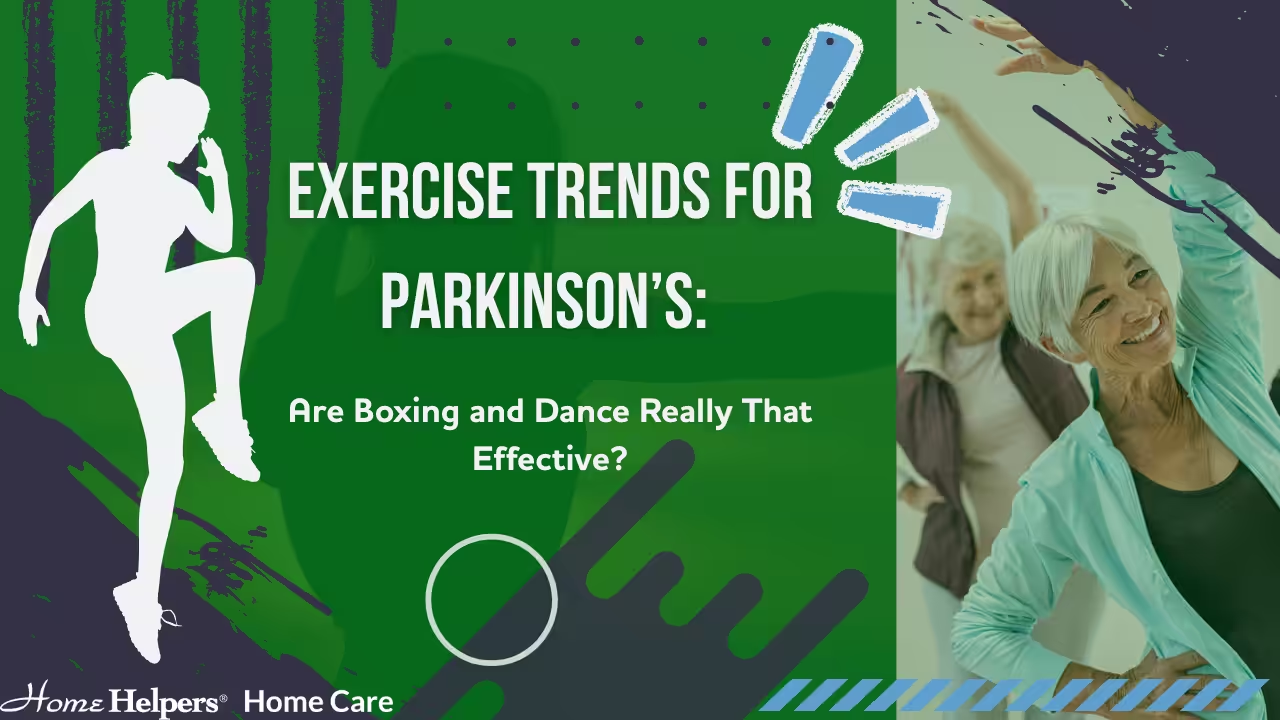
Exercise Trends for Parkinson’s: Are Boxing and Dance Really That Effective?
For families in Martinsburg and across the Eastern Panhandle, Parkinson’s disease is a journey that requires understanding, adaptability, and ongoing support. One of the most powerful tools available today—beyond medication and medical treatment—is exercise. And not just traditional workout routines. In recent years, boxing classes and dance-based movement programs have become two of the most talked-about exercise interventions for Parkinson’s.
They may look unconventional at first glance, but research and local families alike are finding that these activities can make a meaningful difference in mobility, balance, mood, and overall confidence. For many in Martinsburg, they’re more than a trend—they’re an empowering step toward maintaining independence.
Why Exercise Is Critical for Parkinson’s Care
Neurologists now widely agree that regular, intentional movement is essential for slowing the progression of Parkinson’s symptoms. Even modest activity can:
- Strengthen muscles and improve balance
- Support better coordination and posture
- Reduce stiffness and rigidity
- Improve gait and help prevent falls
- Boost energy, emotional health, and self-confidence
- Support cognitive processing and memory
In Martinsburg, more families are discovering that incorporating structured exercise can significantly improve day-to-day functioning, especially when paired with consistent in-home support.
Trend #1: Boxing for Parkinson’s—Strength, Stability, and confidence
Programs modeled after Rock Steady Boxing have become increasingly available throughout West Virginia and nearby metro areas. These classes are non-contact and designed specifically for people with Parkinson’s—focusing on movement patterns, footwork, and brain-body engagement rather than sparring.
Key Benefits of Boxing for Parkinson’s
1. Better Balance and Core Strength
Footwork drills and punch combinations strengthen stabilizer muscles and reinforce upright posture, helping clients feel more stable.
2. Improved Gait and Mobility
Shifting weight, stepping patterns, and coordinated movements help support a smoother, safer walking stride.
3. Cognitive Engagement
Calling out punch sequences, responding to cues, and switching combinations help strengthen executive functioning—an essential area affected by Parkinson’s.
4. Increased Power and Endurance
Boxing routines build muscle tone and cardiovascular capacity, giving clients more energy for everyday tasks.
5. Emotional Empowerment
For many, boxing offers an emotional release and a renewed sense of control over their condition.
Trend #2: Dance-Based Movement—Fluidity, Rhythm, and Joy
Dance classes—including those inspired by the Parkinson’s Foundation’s “Dance for PD®” model—are growing in popularity across the region. These programs blend music, choreography, stretching, and creativity, making them an uplifting addition to a Parkinson’s care plan.
Key Benefits of Dance for Parkinson’s
1. Better Balance and Flexibility
Dance emphasizes smooth transitions, posture, and gentle range-of-motion work that counteracts rigidity.
2. Rhythm-Based Coordination Training
Music naturally supports timing and helps the brain process movement sequences more effectively.
3. Improved Mobility and Fluidity
Dance encourages wider, more expressive motions that reduce stiffness and promote safer movement.
4. Social Connection and Emotional Support
Group classes provide connection and community—both essential for mental health.
5. Creativity and Self-Expression
Even simple dance movements offer an artistic outlet that supports confidence and mood.
Why Boxing and Dance Work—And Why They Work Well Together
Although boxing and dance are very different, they share therapeutic qualities that make them uniquely powerful for Parkinson’s:
- Both train the brain to learn and recall movement patterns
- Both strengthen major muscle groups
- Both rely on rhythm and timing
- Both support dual-task training (moving while processing instructions)
- Both provide emotional and social benefits
Some Martinsburg residents find one form of exercise more enjoyable than the other—while many benefit from alternating between the two for a more complete routine.
What the Research Shows
Across multiple studies, researchers continue to find that:
- High-intensity exercise like boxing can slow motor symptom progression
- Rhythmic movement like dance improves balance and gait
- Exercise reduces fall risk over time
- Movement that engages the brain delays cognitive decline
- Long-term participants report better mood, confidence, and stability
These results align with what many local families observe when a consistent exercise program becomes part of their loved one’s care plan.
How Home Helpers Home Care of Martinsburg Supports Parkinson’s Exercise Routines
At Home Helpers Home Care of Martinsburg, we understand how difficult it can be to maintain an exercise routine, especially as symptoms evolve. That’s why our Caregivers offer support designed around safety, comfort, and consistency.
We can help with:
- Transportation to and from boxing or dance classes in Martinsburg, Inwood, Falling Waters, and surrounding areas
- Motivation and encouragement to stay engaged in exercise
- Hands-on mobility support to prevent falls during transitions
- In-home movement assistance, including stretching and balance support
- Routine reminders and scheduling
- Collaboration with neurologists, PTs, and local exercise programs
Our care plans adapt as abilities change—helping your loved one stay active, confident, and connected to what matters most.
Final Thoughts
Boxing and dance aren’t just “fun alternatives” to standard exercise—they’re meaningful therapeutic tools that research increasingly supports. For families in Martinsburg, adding movement-based programs to a Parkinson’s care plan can foster better mobility, emotional resilience, and day-to-day confidence.
Ready to support your loved one with a personalized Parkinson’s care plan?
Our team at Home Helpers Home Care of Martinsburg is here to help.
Call 304-433-8000 today to schedule a free In-Home Care Assessment and learn how we can support safer mobility, better routines, and greater independence at home.
References
Bloem, B. R., de Vries, N. M., & Ebersbach, G. (2015). Nonpharmacological treatments for patients with Parkinson’s disease. Movement Disorders, 30(11), 1504–1520. https://doi.org/10.1002/mds.26363
Dance for PD®. (n.d.). Research highlights. Mark Morris Dance Group. https://danceforparkinsons.org
Earhart, G. M. (2009). Dance as therapy for individuals with Parkinson disease. European Journal of Physical and Rehabilitation Medicine, 45(2), 231–238.
Goodwin, V. A., Richards, S. H., Taylor, R. S., Taylor, A. H., & Campbell, J. L. (2008). The effectiveness of exercise interventions for people with Parkinson’s disease: A systematic review and meta-analysis. Movement Disorders, 23(5), 631–640. https://doi.org/10.1002/mds.21922
Hackney, M. E., & Earhart, G. M. (2009). Effects of dance on movement control in Parkinson’s disease: A comparison of Argentine tango and American ballroom. Journal of Rehabilitation Medicine, 41(6), 475–481.
National Institute of Neurological Disorders and Stroke. (2023). Parkinson’s disease: Exercise and physical activity. https://www.ninds.nih.gov
Parkinson’s Foundation. (2022). Exercise guidelines for Parkinson’s disease. https://parkinson.org
Rock Steady Boxing. (n.d.). Medical research. https://rocksteadyboxing.org
Schenkman, M., Hall, D. A., Barón, A. E., Schwartz, R. S., Mettler, P., & Kohrt, W. M. (2012). Exercise for people in early- or mid-stage Parkinson disease: A 16-month randomized controlled trial. Physical Therapy, 92(11), 1395–1410. https://doi.org/10.2522/ptj.20110472
The Most Comprehensive Care In The Industry
Physical Wellness
We make daily life easier as needs change, with support for personal care, mobility, medication reminders, and recovery after a hospital stay.
Learn More
Mental Well-Being
Staying active and connected matters. Our caregivers provide companionship and meaningful engagement to support emotional health and independence.
Learn More
Nutrition & Hydration
Healthy meals and proper hydration are essential. We help with planning, shopping, and preparation to support daily wellness and energy.
Learn More
Active Connections
Strong relationships bring comfort and purpose. We help seniors stay connected through social engagement, technology, and regular check-ins.
Learn More