The Link Between Gut Health and Parkinson’s: What Families Should Know in Hagerstown & Frederick
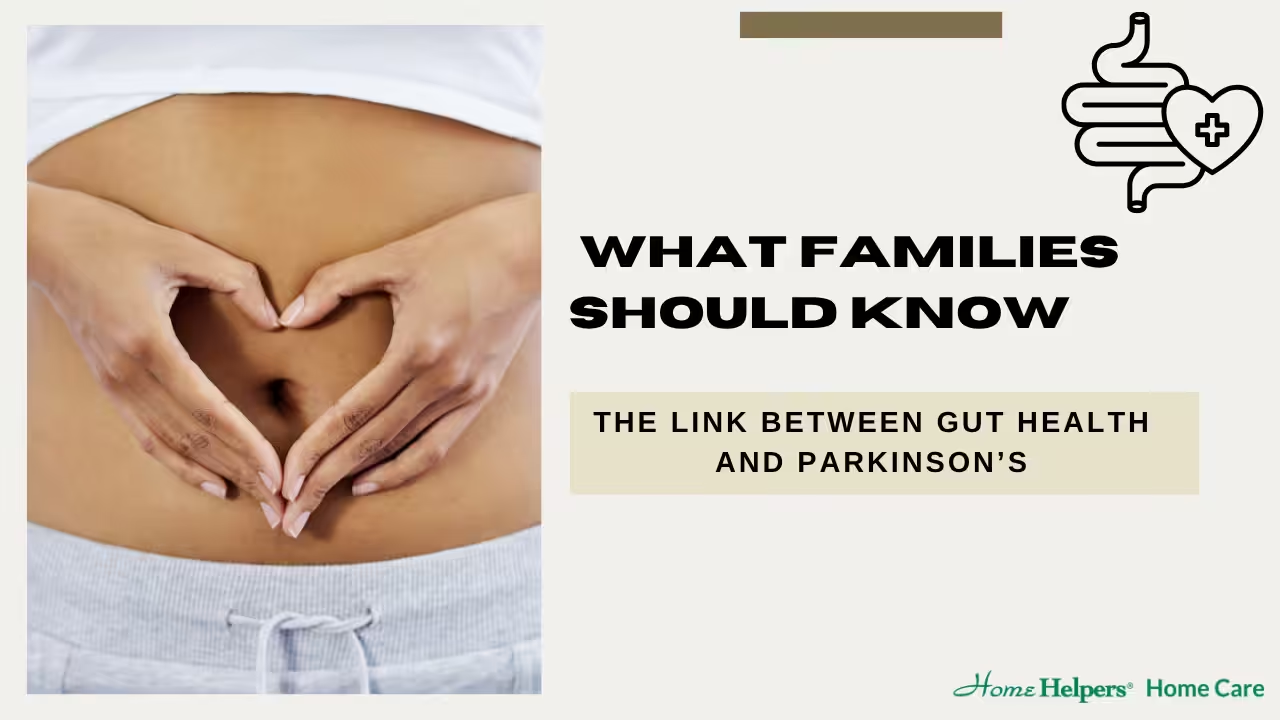
The phrase “you are what you eat” has never been more relevant — especially when it comes to Parkinson’s care. Families in Hagerstown, Frederick, and surrounding communities are increasingly hearing about the connection between gut health and Parkinson’s disease. New research suggests that the gut may not just be affected by Parkinson’s, but could actually play a role in how the disease begins and progresses. Understanding this connection gives local families practical tools to support both gut and brain health at home.
Why the Gut Matters in Parkinson’s
Traditionally, Parkinson’s has been seen as a neurological disease caused by the loss of dopamine-producing neurons. However, researchers now point to the gut-brain axis as a critical factor.
- Gut-Brain Communication
The gut and brain communicate through the vagus nerve, immune system, and gut microbiota. Disruptions in this communication can contribute to Parkinson’s progression (Nyangale et al., 2015). - Microbiome Changes in Parkinson’s
Studies show that people with Parkinson’s often have fewer beneficial bacteria that reduce inflammation and more harmful bacteria that promote it. These imbalances may lead to intestinal permeability (“leaky gut”), inflammation, and protein buildup linked to Parkinson’s (Zhang et al., 2024). - GI Symptoms as Early Warning Signs
Constipation and other digestive symptoms often appear years before movement-related signs of Parkinson’s. This has led some researchers to propose that Parkinson’s could, in some cases, begin in the gut (Yale Medicine, 2023).
What Families in Hagerstown & Frederick Can Do Now
While researchers are still uncovering the details, there are practical steps local families can take to support gut health in their loved ones.
1. Diet That Supports Gut Health
- Fiber-Rich Foods: Beans, vegetables, fruits, and whole grains encourage healthy gut bacteria.
- Limit Ultra-Processed Foods: Highly processed foods may worsen inflammation (Health.com, 2024).
- Polyphenol-Rich Foods: Berries, teas, and leafy greens may support the microbiome and reduce oxidative stress.
2. Explore Probiotics and New Therapies
- Some studies suggest probiotics and prebiotics may improve gut balance (Sun & Shen, 2022).
- Fecal Microbiota Transplants (FMT), though still experimental, have shown early promise in improving motor symptoms (Parkinson’s UK, 2022).
3. Medication Interactions
Certain bacteria can interfere with how well Parkinson’s medications, like Levodopa, work. Treating gut infections, such as Helicobacter pylori, may improve absorption (Maini Rekdal et al., 2019).
4. Lifestyle Support
- Exercise: Improves gut diversity and motility.
- Hydration: Helps prevent constipation.
- Medication Review: Regular doctor visits ensure prescriptions aren’t contributing to gut problems.
Supporting Families in Washington & Frederick Counties
Families in Hagerstown and Frederick often juggle caregiving with full-time work and other responsibilities. In-home care can make this journey easier by:
- Preparing meals that support gut and brain health.
- Monitoring digestive changes and communicating concerns to healthcare providers.
- Encouraging safe, light activity to support both mobility and gut health.
- Providing respite for family caregivers while maintaining consistent routines.
Final Thoughts
Gut health is becoming one of the most exciting areas of Parkinson’s research. While scientists are still uncovering the details, families can take action today with diet, lifestyle, and professional support.
If your loved one in Hagerstown or Frederick is living with Parkinson’s, call Home Helpers Home Care today at (240) 452-4650 to schedule a free consultation.
References
- Nyangale, E. P., Mottram, D. S., & Gibson, G. R. (2015). Gut microbiota interactions with food. Food & Function, 6(3), 659–672. https://pmc.ncbi.nlm.nih.gov/articles/PMC4588083/
- Zhang, J., et al. (2024). Gut microbiome changes in Parkinson’s disease: A systematic review. NPJ Parkinson’s Disease, 10(12), 101–115. https://pmc.ncbi.nlm.nih.gov/articles/PMC11624045/
- Sun, J., & Shen, Y. (2022). Probiotics in Parkinson’s disease: A systematic review. Frontiers in Aging Neuroscience, 14, 926327. https://pmc.ncbi.nlm.nih.gov/articles/PMC9263276/
- Maini Rekdal, V., et al. (2019). Gut bacteria metabolize Parkinson’s drug Levodopa. Science, 364(6445), eaau6323. https://pmc.ncbi.nlm.nih.gov/articles/PMC9532916/
- Yale Medicine. (2023). Does Parkinson’s disease begin in the gut? https://medicine.yale.edu/news-article/does-parkinsons-disease-begin-in-the-gut/
- Parkinson’s UK. (2022). Gut bacteria transplant may improve Parkinson’s movement symptoms. https://www.parkinsons.org.uk/news/gut-bacteria-transplant-may-improve-parkinsons-movement-symptoms
- Health.com. (2024). Ultra-processed foods linked to more severe Parkinson’s symptoms. https://www.health.com/ultra-processed-foods-parkinsons-symptoms-11733780
The Most Comprehensive Care In The Industry

Physical Wellness
We make daily life easier as needs change, with support for personal care, mobility, medication reminders, and recovery after a hospital stay.
Learn More
Mental Well-Being
Staying active and connected matters. Our caregivers provide companionship and meaningful engagement to support emotional health and independence.
Learn More
Nutrition & Hydration
Healthy meals and proper hydration are essential. We help with planning, shopping, and preparation to support daily wellness and energy.
Learn More
Active Connections
Strong relationships bring comfort and purpose. We help seniors stay connected through social engagement, technology, and regular check-ins.
Learn More