
Proactively Watch for Glaucoma to Prevent Vision Loss with Aging
Author: Debbie Humphrey
As I stroll along Clearwater Beach, I recognize the beauty of the Gulf waters, and sometimes, I am lucky to catch a glimpse of dolphins frolicking in their natural habitat. In Tarpon Springs, I also enjoy seeing the manatees that have gathered in the bayou’s warmer seasonal waters this time of year.
The common factor in these experiences is that I was able to look and see them.
Have you ever thought about what it would be like to lose your eyesight? Being able to see is often something we take for granted. However, when you are predisposed to conditions like glaucoma, as I am due to heredity, sight is a sense that can easily diminish with age.
My father was diagnosed with glaucoma when he was in his mid-40’s, and he had prescription eye drops to help control the condition and slow vision loss for as long as possible. Unfortunately, glaucoma negatively impacted his eyesight for the remainder of his life, even with the use of prescription eyedrops.
Glaucoma robbed my father of his vision as he aged, so I am proactive in monitoring my eye health, and I encourage you to do the same. Proactively watch for glaucoma to prevent vision loss with aging.
What is Glaucoma?
Glaucoma is actually a group of diseases that damage the optic nerve in one or both eyes, and seniors over the age of 60 are at greatest risk of developing this troublesome eye condition. Current studies indicate a higher percentage of glaucoma cases in Florida, because we have a larger population of seniors who spend winters in Florida and reside here year-round.
There may be many forms of glaucoma, but the end result of this horrible affliction is the loss of sight. Some types of this disease render a gradual loss of vision, while another type can cause legal blindness very quickly. Regardless of the type of glaucoma someone has, the prognosis remains the same: vision loss.
What are the risk factors for Glaucoma?
According to HealthinAging.org, risk factors include:
- Age older than 60. The older a person is the higher the risk. About 5 percent of people age 65 and older develop glaucoma and 10 percent of those age 80 and older develop it.
- Race and ethnic background. People who are African American, Asian, or Hispanic have a higher risk. Glaucoma is the leading cause of blindness in African Americans.
- Genetics. If glaucoma “runs in your family.”
- Pre-existing eye conditions. People with poor vision, earlier severe eye injury, or other eye problems.
- Other health conditions, such as diabetes, high blood pressure, or heart disease.
- Medication history. Risk is higher when a person uses steroids in or around the eye. Drugs to treat congestion, depression, bladder problems, and certain other conditions also are risky.
What causes Glaucoma?
HealthinAging.org explains, “A healthy inner eye has fluid that drains out. Glaucoma causes this fluid to drain too slowly or not at all. When this happens, the pressure inside the eye increases and damages the optic nerve.”
The two most common types of glaucoma are:
- Open-angle glaucoma – The most common form of glaucoma, especially in older adults, occurs when the eye’s fluid drains too slowly.
- Narrow-angle glaucoma – In this case, drainage of fluid is partly or completely blocked. Fluid pressure in the eye builds up quickly and damages the optic nerve. This is a medical emergency and requires immediate treatment to prevent blindness.
What are the Symptoms of Glaucoma?
The University of Central Florida Health Center reports there may not be any outward symptoms to indicate seniors have glaucoma, which is why regular eye exams are so important.
“The tricky part about glaucoma is that it usually doesn’t have symptoms at first, which can make detection difficult. Signs of the disease worsening include loss of peripheral (side) vision. Some other symptoms of glaucoma include blurred or distorted vision, eye pain, loss of peripheral vision, and headaches,” according to UCF Health.
Does a Cure Exist for Glaucoma?
There is no cure for glaucoma, but if it’s detected early enough, there are therapeutics to help slow or stop the progression of vision loss.
UCF Health explains, “Early detection is the only way to prevent glaucoma from affecting vision. Any vision loss associated with glaucoma can’t be recovered. The Glaucoma Research Foundation reported research from The Eye Diseases Prevalence Research Group that in the U.S., more than 120,000 are blind from the condition. Regular eye exams can make the difference between glaucoma detection and missing a diagnosis.”
How Can a Caregiver Help Someone with Glaucoma?
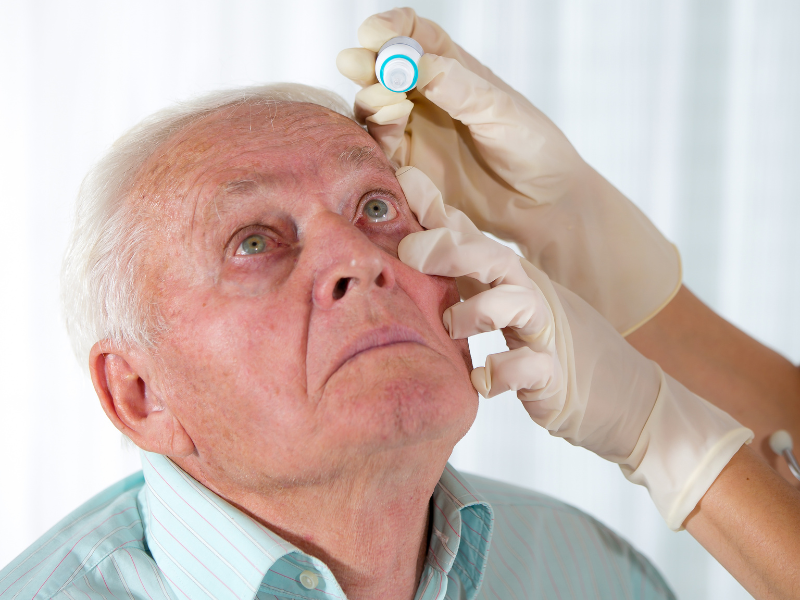
As a Certified Senior Advisor, I am experienced at matching compassionate caregivers to help seniors with glaucoma, macular degeneration, or other types of visual impairment. Professional caregivers help glaucoma patients and the visually impaired who cannot see well enough to perform basic activities of daily living, like reading prescription bottles and taking medications, and applying prescribed eye drops to treat their condition.
In addition, caregivers provide safe transportation assistance for optometry appointments, pharmacy pickups, grocery shopping, and salon/barber shop appointments, just to name a few.
If a Home Helpers® caregiver can help you or a special senior you love who has glaucoma or other visual impairments, we offer wellness calls, healthy meal planning and preparation, personal care, companion care, respite care, 24-hour home care, and more. I am happy to schedule a FREE Consultation at your convenience to discuss specific needs and create a customized care plan to make life easier.
We, at Home Helpers® Clearwater, are honored to have been ranked among the Activated Insights Top 100 Leaders in Experience for home care providers in 2025 and to have received the Best of Home Care® Provider of Choice, the Best of Home Care® Employer of Choice, and the Best of Home Care® Leader in Experience Awards in 2025, along with the Caring Super Star 2026 Award.
Home Helpers Clearwater proudly serves male and female seniors, veterans, and differently abled individuals in Bayonet Point, Clearwater, Clearwater Beach, Dunedin, Gulfport, Holiday, Hudson, Largo, Madeira Beach, New Port Richey, North Redington Beach, Oldsmar, Palm Harbor, Pass A Grille, Pass A Grille Beach, Port Richey, Redington Shores, Safety Harbor, Saint Petersburg, Seminole, South Pasadena, Tarpon Springs, Tierra Verde, Treasure Island, Trinity, and surrounding areas. Home Helpers®…we are Making Life Easier® 727.942.2539