Alzheimer’s & Dementia Care at Home in Cincinnati & Northern Kentucky
Need Home Care?
Contact Us Today
Home Helpers of Cincinnati & NKY provides in-home Alzheimer’s and dementia care across Hamilton, Butler, Boone, Kenton, and Campbell counties — a dedicated Care Manager and caregivers trained in dementia communication, supporting your loved one from diagnosis through the rest of life at home.
By Kristin Worthington, Certified Alzheimer Educator™ and co-owner, Home Helpers Home Care of Greater Cincinnati & Northern Kentucky
When our mother was diagnosed with Alzheimer’s, my brother George and I did our best to care for her and support our dad. That experience is one of the reasons this agency runs the way it does — and it taught me what most families come to learn: the person is still in there. I met a client last spring who couldn’t tell me what she’d had for breakfast but could still sing every word of a Patsy Cline song. Our job is to find that person, on the good days and the hard ones, and to make the hard part easier for the whole family.
For more than twenty years — and as a Certified Alzheimer Educator™ — I’ve helped families across Cincinnati and Northern Kentucky care for someone they love through memory loss, many of them from the first confusing diagnosis all the way through the rest of life, in the home they know best. We’ve walked that whole road, both as a family and as an agency, and we’d be honored to walk it with yours.
A dedicated Care Manager who knows your family by name
The first thing we give you isn’t a caregiver — it’s a person. Every family we serve gets a dedicated Care Manager: one named point of contact who learns your loved one’s history, routines, and the small things that settle a hard moment. Not a call center. Not a rotating cast of voices who don’t know your dad takes his coffee on the back porch. When something changes, you’ll know exactly who to call — and they’ll already know your family.
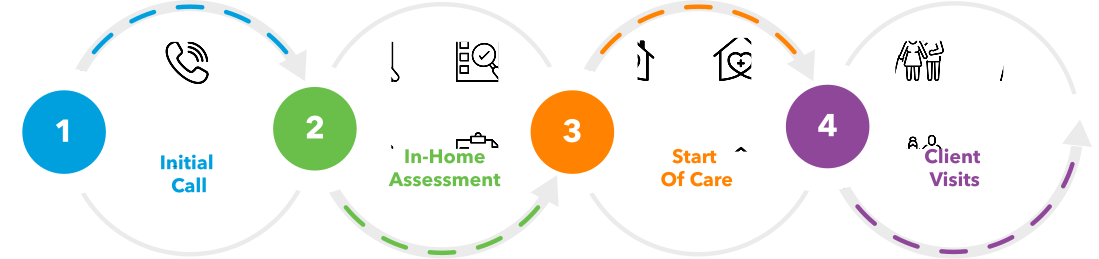
That relationship starts fast and stays close. We check in within the first 24 hours of care, visit again at 14 days and again at 30 days, and keep coming back about every 60 days after that, so the plan keeps pace with the disease instead of falling behind it. And somewhere in those first 30 days, your Care Manager’s job is to find one specific way to bring your loved one a moment of joy — a favorite song, a drive past the old neighborhood, the neighbor’s dog at the door. Around here, hope is part of the care plan.
What we actually do at home
Memory loss rarely shows up the same way twice, so the care has to bend to the person rather than the other way around. When the late afternoon brings restlessness, confusion, and agitation — what families come to know as sundowning — our caregivers ease the light, the noise, and the pace of the room instead of arguing with it. When a loved one begins to wander or grows unsteady on their feet, we quietly reshape the home to make it safer and stay close enough to catch the fall before it happens. When the same question comes around for the tenth time in an hour, we meet it with the same patience as the first, because to your mom it is the first. And when sleep comes apart, or a calm afternoon turns sharp and angry, we stay steady — a familiar, unhurried presence is often the best thing in the house.
The calm behind that work has names, and our caregivers are trained in them. We use validation therapy — meeting your loved one in the reality they’re living in rather than correcting them back into ours. We use redirection to guide gently past a difficult moment without a fight, reminiscence to bring back the music and the stories that still light them up, and environmental modification — changing the room, not the person — so the home itself helps keep them safe and settled.
The people doing the work
Every caregiver we send is our own employee — screened, insured, and backed up by a teammate if they ever can’t make it — not a stranger you’d be left to vet and cover for on your own. Each one is trained in dementia communication and safe transfers before they ever walk into your home, so the help your loved one gets is skilled, not just kind. We’ve been doing this in Greater Cincinnati and Northern Kentucky since 2004, and we’re BBB A+ accredited and Home Care Pulse Certified. Our caregivers carry the everyday load that wears families down, too: meals, medication reminders, bathing and dressing, light housekeeping, and rides to appointments at TriHealth, the Christ Hospital, UC Health, or St. Elizabeth.
Let’s start with a conversation
Tell us your loved one’s story. The more we know, the better we can shape the care around the person instead of the diagnosis. Call (513) 712-0736 or schedule a free in-home assessment, and we’ll show you what making the hard part easier can look like for your family.
Common questions from Cincinnati & NKY families
What is sundowning, and how do you handle it at home?
Sundowning is the restlessness, confusion, and agitation that often arrives in the late afternoon and evening for people with Alzheimer’s or dementia. Rather than argue with it, our caregivers ease the environment — softening light and noise, slowing the pace, and keeping a calm, familiar routine — so the evening settles instead of escalating.
When is it time to consider in-home Alzheimer’s care for a parent in Cincinnati?
Families usually reach out when safety or daily routines start to slip: missed medications, wandering, unsteadiness, trouble with meals or bathing, or an exhausted caregiving spouse. You don’t have to wait for a crisis — we often start with a few hours a week and grow the care as needs change.
Can someone with dementia stay home for the whole disease, or do they eventually need a facility?
Many people can stay home throughout. We have cared for clients from diagnosis through the rest of their lives in the place they call home, adjusting the level of support — up to 24-hour care — as the disease progresses.
Does the VA or insurance help pay for dementia care at home?
We’re a Veteran Affairs Community Care Network (VA CCN) provider, so eligible veterans may receive covered in-home care, and VA Aid & Attendance can help wartime veterans and surviving spouses. Medicare and most private medical insurance don’t cover non-medical home care, but long-term care insurance often does. Your dedicated Care Manager will help you sort out what applies.
Will the same caregiver come each time, or a rotating cast?
You’ll have a dedicated Care Manager who knows your family by name and a consistent caregiver team — not a call center, and not a different stranger every visit. Consistency is part of how we keep someone with memory loss calm and safe.
Cincinnati & Northern Kentucky dementia resources
- Alzheimer’s Association, Greater Cincinnati Chapter — support groups, education, and a free 24/7 Helpline at 800-272-3900 (alz.org/cincinnati).
- University of Cincinnati Memory Disorders Center — diagnosis and ongoing neurological care for memory conditions. Memory Care & Brain Health Center
- The Christ Hospital Health & Aging Center — geriatric assessment and memory evaluation (thechristhospital.com).
- Council on Aging of Southwestern Ohio — local programs, caregiver support, and help understanding benefits. Support for Older Adults & Caregivers | Council on Aging
- Cincinnati VA Medical Center caregiver support — resources for veterans living with dementia and their family caregivers. Caregiver support | VA Cincinnati health care | Veterans Affairs

Your Questions, Answered
Home Helpers Home Care offers a wide range of in-home care services, including personal care, companionship, nutrition support, wellness monitoring, and specialized care for chronic conditions, dementia, and recovery.
Our services are designed for seniors, individuals with disabilities, those recovering from illness or surgery, and anyone who needs extra support to live safely and comfortably at home.
Yes, every care plan is fully personalized based on each client’s unique needs, preferences, and schedule, whether they require a few hours of support or 24/7 care.
Yes, our caregivers are carefully screened, trained, and insured to provide compassionate, high-quality care you can trust.
Getting started is easy—simply contact your local Home Helpers location to schedule a free in-home assessment and create a care plan tailored to your needs.