#7: How to Pay for Home Care in Missouri
THE COMPLETE GUIDE TO AGING IN PLACE IN ST. LOUIS
Helping St. Louis families plan with confidence, dignity, and peace of mind
By Lauren Teschendorf, Chief Growth Officer & CFO | Home Helpers Home Care of St. Louis
Paying for Care Without Losing Peace of Mind
Understanding Your Options Before You Need Them
“One of the greatest financial gifts you can give your family isn’t wealth—it’s a plan.”

For many families, the first question after deciding they want help is surprisingly practical.
“How are we going to pay for this?”
It’s an understandable question.
After all, most of us don’t spend decades researching long-term care.
We buy homeowners insurance.
Auto insurance.
Health insurance.
Life insurance.
But very few families fully understand how home care is paid for until they suddenly need it.
The good news is this:
There are usually more options than people realize.
The even better news is that understanding those options before a crisis occurs gives your family more flexibility and confidence.
Start With One Important Truth
There is no single payment source for home care.
Instead, most families use one or a combination of:
- Private Pay
- Long-Term Care Insurance
- Veterans Benefits
- Certain Home and Community-Based Programs
- Family Support
Understanding which resources are available to your family is one of the most valuable planning conversations you can have.
Private Pay
The Most Common Way Families Begin Care
The majority of home care in America is paid for privately.
Sometimes families assume this means writing one large check every month.
In reality, home care is incredibly flexible.
Some families begin with just a few hours each week.
Others need assistance several days each week.
Still others require daily or around-the-clock care.
One of the greatest advantages of home care is that it can grow as needs change.
Unlike many senior living options, you’re not paying for services you don’t need yet.
You’re paying for the support that fits your life today.
Lauren’s Perspective
One of the biggest misconceptions I hear is that home care has to be an “all or nothing” decision.
It doesn’t.
Many of our clients at Home Helpers Home Care of St. Louis begin with just a few hours of companionship or transportation each week.
That small amount of support often helps someone remain independent for much longer than they expected.
Long-Term Care Insurance
One of the Most Underutilized Resources
If your loved one owns a long-term care insurance policy, it may provide benefits that help pay for care at home.
Unfortunately…
Many families don’t even realize a policy exists until they’re sorting through paperwork during a crisis.
Others assume benefits only apply to nursing homes.
That’s often not the case.
Many policies include benefits for non-medical home care when certain eligibility requirements are met.
Every policy is different.
Coverage depends on the specific contract, elimination periods, daily benefit amounts, inflation riders, and benefit triggers.
The key is understanding the policy before care is urgently needed.
Planning Tip
If you know your family has a long-term care insurance policy, locate it now.
Review it together.
Know where it is.
Understand who to call.
Having those answers before they’re needed can save enormous amounts of stress later.
Veterans Benefits
A Benefit Many Families Don’t Know Exists
One of the greatest privileges we’ve had at Home Helpers Home Care of St. Louis is serving the men and women who served our country.
What surprises many families is that some Veterans—and in certain situations, surviving spouses—may qualify for programs that help support care at home.
Eligibility depends on many factors, including military service, disability status, clinical need, and the specific benefits available through the U.S. Department of Veterans Affairs.
Because these programs can be complex and change over time, I always encourage families to speak directly with their VA care team or work with a knowledgeable provider who understands the process.
For many St. Louis-area Veterans, these benefits make it possible to receive care at home that they didn’t realize was available.
Learn More
We’ve created a dedicated Veterans Resource Guide that explains:
- VA Homemaker/Home Health Aide benefits
- Community Care referrals
- Eligibility basics
- How to begin the conversation with your VA provider
Medicare
One of the Most Common Misunderstandings
This may be one of the biggest misconceptions families have.
Medicare generally does not pay for ongoing non-medical home care such as companionship, meal preparation, housekeeping, or personal assistance over an extended period.
However, Medicare may cover certain short-term skilled services when specific medical criteria are met, such as skilled nursing, physical therapy, occupational therapy, or speech therapy ordered by a physician.
Those services are very different from ongoing personal home care.
Understanding that distinction helps families plan realistically.
Medicaid and Community Programs
Depending on income, assets, and eligibility requirements, some individuals may qualify for Medicaid-funded home and community-based services or other state and local assistance programs.
Because eligibility rules change over time and vary by program, it’s best to work with knowledgeable professionals who can help determine what resources may be available.
For some families, these programs provide valuable support.
For others, they become part of a larger financial plan.
Don’t Forget the Hidden Costs
One thing I encourage families to consider isn’t just the cost of home care.
It’s the cost of not having help.
Adult children reducing work hours.
Family caregivers becoming exhausted.
Repeated emergency room visits.
Falls.
Hospital readmissions.
Premature moves into higher levels of care.
Financial decisions should never be based on hourly rates alone.
They should consider the overall impact on the entire family.
Lauren’s Perspective
I’ve had many conversations with families who initially focused only on cost.
A few months later, they often tell me something very different.
They talk about sleeping through the night again.
Being able to enjoy dinner together instead of worrying.
Watching a spouse become a husband again instead of a full-time caregiver.
Those aren’t line items on a budget.
They’re part of the value families often discover after care begins.
Talk About Money Before Emotions Take Over
Financial conversations are rarely easy.
But they’re much easier around a kitchen table than they are in an emergency department.
Include the people who may eventually be involved.
Adult children.
Parents.
Financial advisors.
Attorneys.
Ask simple questions.
Who understands the finances?
Where are important documents?
What resources exist?
What happens if more care is needed later?
These conversations aren’t about money.
They’re about reducing uncertainty.
Remember What You’re Really Buying
Families sometimes ask,
“How much does home care cost?”
I think a more meaningful question is,
“What are we trying to protect?”
More time together.
Safety.
Independence.
Health.
A spouse’s ability to remain a husband or wife instead of becoming an exhausted caregiver.
The ability to remain in the home you’ve loved for decades.
Those are difficult things to place a price on.
“The purpose of financial planning isn’t simply to protect your money. It’s to protect your choices.”
Your Action Step
Locate one financial document this week.
It might be a long-term care insurance policy.
A Veterans record.
An estate plan.
Or simply a list of monthly accounts.
You don’t have to organize everything.
Just find one important piece.
Small steps today create confidence tomorrow.
Coming Up Next
Money is only one part of the conversation.
The next challenge many families face is often much more emotional.
How do you actually begin talking with someone you love about accepting help?
In the next section, we’ll explore one of the most difficult—and most important—conversations families ever have.
You’ll learn practical strategies for talking with aging parents, navigating resistance, involving siblings, and preserving relationships even when opinions differ.
Jump to a Section
- Planning for the Retirement No One Talks About
- The Three Families™
- The Small Changes That Matter Most
- Building Your Aging in Place Plan
- Understanding Your Care Options
- Creating a Home That Grows With You
- Paying for Care Without Losing Peace of Mind
- Having the Conversations That Matter Most
- Your Aging in Place Roadmap
- The Greatest Gift We Can Give the People We Love

Your Questions, Answered
Home Helpers Home Care offers a wide range of in-home care services, including personal care, companionship, nutrition support, wellness monitoring, and specialized care for chronic conditions, dementia, and recovery.
Our services are designed for seniors, individuals with disabilities, those recovering from illness or surgery, and anyone who needs extra support to live safely and comfortably at home.
Yes, every care plan is fully personalized based on each client’s unique needs, preferences, and schedule, whether they require a few hours of support or 24/7 care.
Yes, our caregivers are carefully screened, trained, and insured to provide compassionate, high-quality care you can trust.
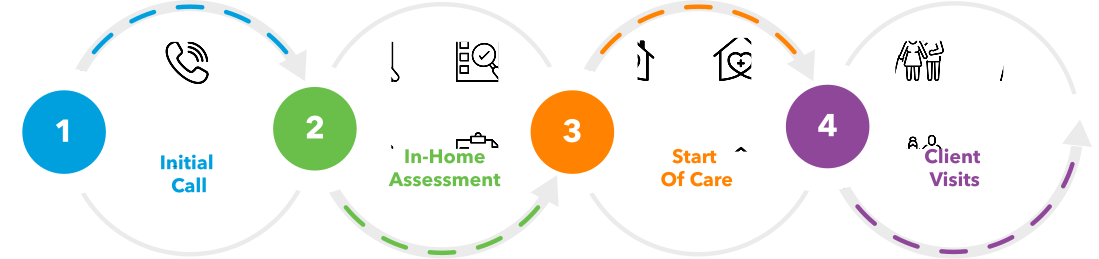
Getting started is easy—simply contact your local Home Helpers location to schedule a free in-home assessment and create a care plan tailored to your needs.