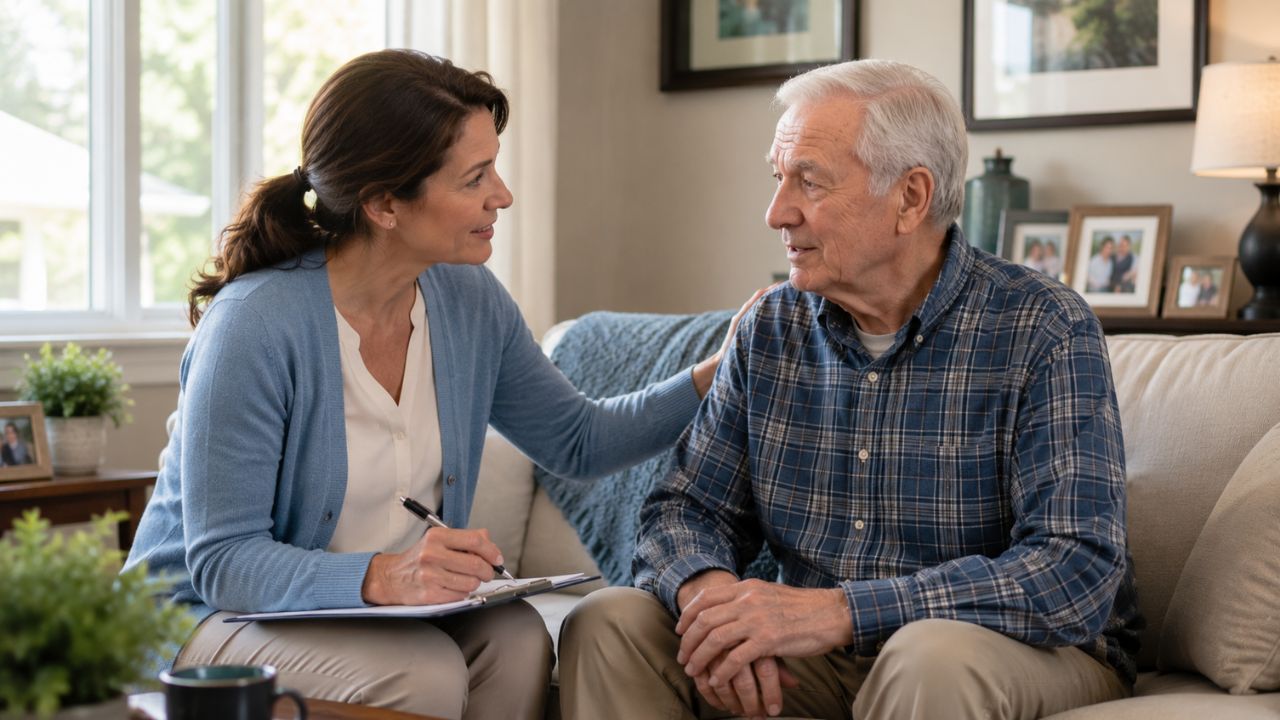
Senior Men’s Health: Why Dads Resist Asking for Help
Need Home Care?
Contact Us Today

You’ve noticed your dad skipping doctor’s appointments, brushing off questions about his health, or insisting he’s “fine” even when the house tells a different story. If that sounds familiar, you’re not alone, and it’s not a coincidence. This month, it’s worth talking about why so many senior men resist help, and what actually works to bring them around.
Why Many Senior Men Resist Asking for Help
For a lot of men, independence and the ability to provide and fix things have been tied to their sense of identity for decades. Admitting they need help with bathing, meals, or driving can feel like losing a piece of who they are, not just adding a service. Men also tend to visit the doctor less often than women and are more likely to downplay symptoms, which means health and safety issues at home often go unspoken until they become serious.
Signs Your Father May Need More Support Than He’s Letting On
Skipped or Mismanaged Medications
Pillboxes that don’t match the calendar, expired prescriptions, or vague answers about whether he’s taking his medication are common early signs.
Unexplained Weight Loss or Skipped Meals
Cooking can become harder to manage alone, especially after the loss of a spouse who used to handle meals.
A Home That’s Slipping
Stacks of unopened mail, neglected yard work, or a noticeably messier house than usual often point to physical or cognitive struggles he hasn’t mentioned.
Reduced Mobility or Avoiding Stairs
Watch for him avoiding certain rooms, gripping furniture while walking, or making excuses to stay seated.
Increasing Isolation
Skipping golf, church, or time with friends can be a sign he’s either struggling physically or feeling embarrassed about changes he doesn’t want to explain.
Health Issues That Deserve Extra Attention
A few conditions are worth watching for in aging fathers and grandfathers, especially because men are often less likely to mention them on their own.
• Heart disease and blood pressure — often called the “silent” condition because symptoms can be subtle.
• Depression — frequently underdiagnosed in older men, who may show irritability or withdrawal rather than sadness.
• Prostate health — regular screenings matter, even when a man feels perfectly fine.
• Falls and mobility changes — men are statistically more likely to suffer fatal falls than women, in part because they’re less likely to ask for help afterward.
If your father is recovering from a recent health scare, a personal care aide in Bradenton can provide the hands-on support he needs without making him feel like he’s lost his independence.
How to Talk to Your Father About Getting Help
Frame It Around Independence, Not Dependence
Most men respond better to “this will help you stay in your own home longer” than “you need help.” Position any support as protecting his independence, not replacing it.
Start Small
A few hours a week of companion care or help with errands feels far less threatening than a conversation about full-time care. Many Bradenton families start here and build from there as needs change.
Bring in a Third Party
Sometimes the message lands better coming from a doctor, a care coordinator, or even a respected friend than from a son or daughter. A free in-home assessment with a neutral care coordinator can open the door without it feeling like a family confrontation.
How a Companion Caregiver Can Make the Conversation Easier
A lot of fathers come around once they realize a caregiver isn’t there to take over, but to help them keep doing the things they want to do, such as staying in their own home, keeping their routine, and having some company. Home Helpers’ companion care in Bradenton focuses on building a relationship first, with practical help like meal prep, errands, and transportation woven in naturally.
Frequently Asked Questions About Caring for a Reluctant Father
Why won’t my dad admit he needs help?
For many men, asking for help feels like giving up independence rather than gaining support. Framing care as a way to stay independent longer, rather than as a loss of control, tends to be far more effective than direct confrontation.
What’s the best way to introduce home care to a reluctant parent?
Starting with a small, specific task such as a few hours of companionship, help running errands, or rides to appointments, is usually an easier first step than proposing full-time care. A free, no-pressure in-home assessment can also help the idea feel less intimidating.
Does my father have to agree to long-term care before we can start?
No. Most Bradenton families start with a few hours of weekly support and adjust the care plan as needs change. There’s no obligation to commit to anything beyond what feels comfortable for your father right now.
How Home Helpers of Bradenton Can Help
Home Helpers Home Care of Bradenton has helped families across Manatee County navigate this exact conversation since 2015. Our caregivers are trained to build trust gradually, which often makes all the difference with a reluctant parent.
Ready to explore your options? Our care coordinators can walk you through what’s available and what makes sense for your father’s situation. Schedule a free in-home assessment or call us at (941) 499-5946.
The Most Comprehensive Care In The Industry

Physical Wellness
We make daily life easier as needs change, with support for personal care, mobility, medication reminders, and recovery after a hospital stay.
Learn More
Mental Well-Being
Staying active and connected matters. Our caregivers provide companionship and meaningful engagement to support emotional health and independence.
Learn More
Nutrition & Hydration
Healthy meals and proper hydration are essential. We help with planning, shopping, and preparation to support daily wellness and energy.
Learn More
Active Connections
Strong relationships bring comfort and purpose. We help seniors stay connected through social engagement, technology, and regular check-ins.
Learn More