
How Much Does In-Home Care Cost in Florida in 2026?

Author: Home Helpers® Home Care
When families first start looking into in-home care, one question almost always comes up:
“How much is this really going to cost?”
If you’re caring for an aging parent or loved one in Florida, that question can feel heavy. You may already be balancing work, family, and concern about safety, and now you’re trying to understand the cost of in-home care in Florida without clear, trustworthy answers.
The truth is: there isn’t one single price for in-home care. Senior home care cost varies depending on care needs, hours, and circumstances. But that doesn’t mean families are left guessing.
This guide explains what families in Florida can realistically expect to pay for in-home care in 2026, what influences those costs, and how to plan with more confidence, without overwhelming you or making promises that don’t hold up.
Average In-Home Care Costs in Florida (2026 Estimates)
In Florida, non-medical in-home care is most often billed hourly. To provide realistic planning guidance, many families and professionals reference the Genworth Cost of Care Survey, now available through CareScout.
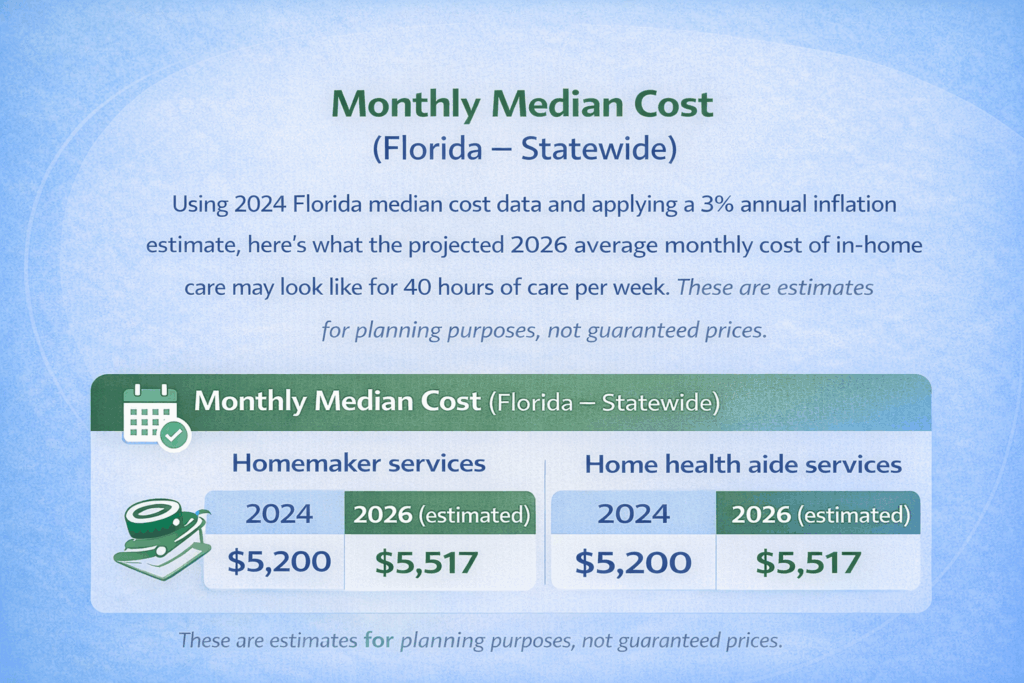
Using 2024 Florida median cost data and applying a 3% annual inflation estimate, here’s what the projected 2026 daily rates, hourly rates, and overall cost of in-home care may look like for 40 hours of care per week.
These are estimates for planning purposes, not guaranteed prices.
Monthly Median Cost (Florida – Statewide)
- Homemaker services
2024: $5,200
2026 (estimated): $5,517
- Home health aide services
2024: $5,200
2026 (estimated): $5,517
Daily Median Cost
- Homemaker services
2024: $172
2026 (estimated): $182
- Home health aide services
2024: $172
2026 (estimated): $182
Hourly Median Cost
- Homemaker services
2024: $30.00
2026 (estimated): $31.83
Home health aide services
2024: $30.00
2026 (estimated): $31.83
These projections are based on data from the Genworth Cost of Care Survey (via CareScout).
Note: Actual costs may vary depending on location, agency, number of hours, and type of services provided.
Why These Numbers Can Vary So Much Between Families
If you’ve seen different figures online, that’s normal. In-home care costs vary because no two care situations or families are the same.
Here are the main factors that influence what families pay.
1. Number of Care Hours Needed
Care hours have the biggest impact on cost.
- Occasional visits cost less overall
- Daily schedules increase the monthly cost
- Around-the-clock care requires multiple caregivers and higher coordination
Needing more hours doesn’t mean something went wrong; It usually means your loved one needs consistent support, often with daily tasks like bathing, dressing, and mobility, to stay safe at home.
2. Type of Care Being Provided
Not all in-home care looks the same.
Some care focuses on:
- Companionship and supervision
- Meal preparation and light household help
- Transportation and errands
Other situations require:
- Hands-on personal care
- Mobility assistance
- Ongoing safety monitoring
As care becomes more hands-on or safety-focused, pricing reflects the level of responsibility and training involved. Which means the type of services provided directly affects pricing, especially when care goes beyond companionship and into daily personal support.
3. Health Conditions and Safety Concerns
Certain situations require closer attention, including:
- Memory-related conditions
- Fall risk or mobility decline
- Post-hospital recovery
- Chronic illness affecting daily routines
While this is not medical care, these conditions can increase the level of supervision and hands-on assistance needed, which influences overall senior home care costs.
These factors don’t always mean full-time care, but they do influence how care is structured and cost.
4. Scheduling and Consistency
Care schedules also affect pricing, such as:
- Overnight care
- Weekend or holiday coverage
- Split shifts or variable schedules
Families who plan early often have more flexibility and fewer surprises as care needs increase, especially when coordinating care among family members.
Why One Agency’s Estimate May Look Higher Than Another’s
Families sometimes notice pricing differences between agencies. That’s often due to what’s included behind the scenes.
Professional home care agencies typically provide:
- Caregiver screening and training
- Backup coverage if a caregiver is unavailable
- Ongoing supervision and care coordination
- Insurance and liability protection
- Consistent communication with families
These safeguards support quality care and help protect your loved one, even if they aren’t always visible during a single visit.
Common Misunderstandings About Paying for In-Home Care
Many families assume:
- Insurance automatically covers the cost of long-term care
- Medicare pays for ongoing daily assistance
- There’s a single standard price
In reality, most non-medical in-home care is privately paid. Some families may explore long-term care insurance or veteran benefits, but coverage options depend on individual circumstances and eligibility.
For a clear, plain-language overview, visit our guide on How to Pay for In-Home Care.
What Families Can Do Next (Without Feeling Overwhelmed)
If you’re early in the decision process, these steps help most families:
- Start with a realistic care assessment
- Focus on current needs, not worst-case scenarios
- Plan early, before care becomes urgent
- Ask questions — there’s no “too soon”
Learning more about Quality Senior Care in Bradenton, FL can also help you understand what level of support fits your family right now.
You Don’t Have to Figure This Out Alone
Cost questions don’t mean you’re failing as a caregiver. They mean you’re trying to make a thoughtful, informed decision for someone you love.
The most accurate way to understand cost is to talk through your specific situation with someone who understands local care options.
Talk with the Home Helpers Home Care of Bradenton team about care options for your family.
A simple conversation can bring clarity, without pressure or obligation.