Helping an Aging Parent Stay Social Without Leaving Home
Need Home Care?
Contact Us Today
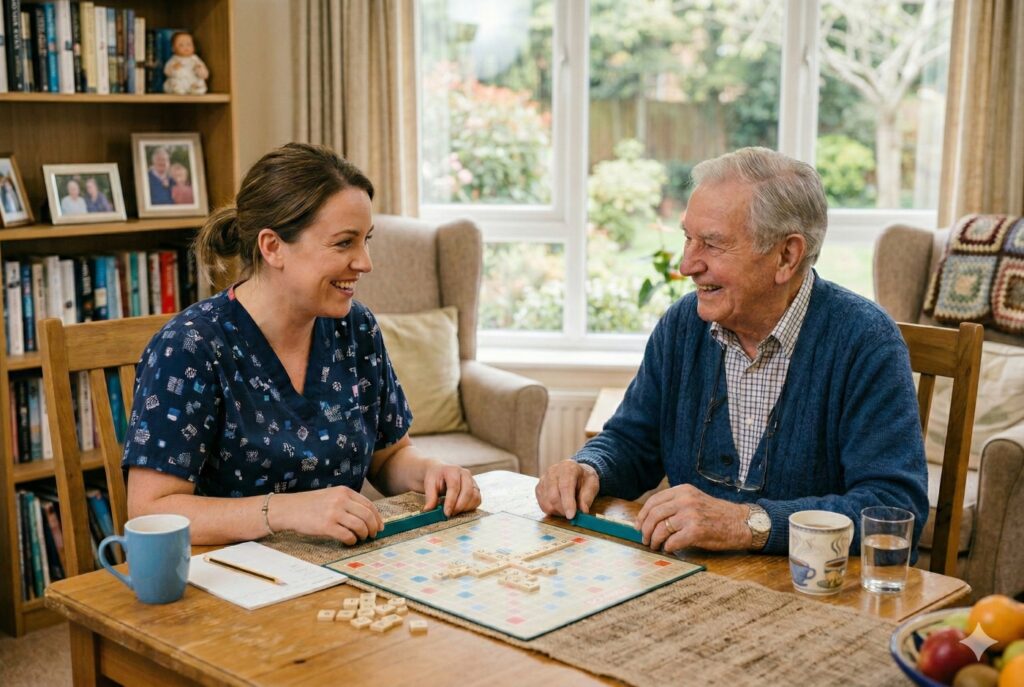
Social connection can become harder when an aging parent no longer gets out as easily as they once did. Limited mobility, giving up driving, fatigue, or other changes may mean Mom spends most days at home. That doesn’t necessarily mean she wants to spend them alone. Companion care at home can bring conversation and shared activities into familiar surroundings, giving older adults more opportunities for social interaction even when outings have become difficult.
For families, the challenge is finding ways to support connection without making an older parent feel pressured to participate in activities they don’t enjoy.
Home Can Still Be a Social Place
When leaving the house becomes difficult, families sometimes assume social opportunities are inevitably going to decline.
They don’t have to.
Your parent’s home already contains many of the things that can spark meaningful interaction: photographs, music, books, hobbies, favorite television programs, family recipes, and decades of memories.
Companionship can build on those familiar interests rather than requiring your parent to go somewhere new.
The key is thinking beyond the idea that being social means attending an event. A conversation at the kitchen table counts. So does playing cards, watching a movie together, or sharing lunch.
Build Connection Around Existing Interests
Your parent is more likely to enjoy companionship when activities reflect what they’ve always liked.
Someone who loves music might enjoy listening to favorite albums and talking about concerts they attended. A parent who once belonged to a book club might enjoy reading and discussing a novel. Dad may want someone to watch baseball with. Mom might enjoy knitting while someone sits nearby and talks.
At-home activities could include:
- Cards, board games, or puzzles
- Music and favorite movies
- Reading aloud or discussing books
- Crafts, knitting, or scrapbooking
- Looking through photographs
- Preparing cards or letters
- Sharing meals and conversation
None of these activities needs to be complicated. Often, another person’s presence is what makes them enjoyable.
Use Technology to Maintain Existing Relationships
Technology can help older adults remain connected with people they can’t see regularly, but devices can also be frustrating.
A video call with grandchildren may be enjoyable once it’s running. Getting the camera, volume, and correct application working may be another matter entirely.
A companion can provide practical help with setting up a call or device so your parent can focus on the conversation itself.
Technology shouldn’t replace in-person companionship, but it can extend your parent’s social world beyond the people who live nearby.
Bring Back the Pleasure of Shared Meals
Meals provide another natural opportunity for connection.
An older adult living alone may eat many meals without company. Even if they’re comfortable with that sometimes, having another person at the table can make lunch or an afternoon snack feel more enjoyable.
With companion care at home, mealtimes can become social occasions again rather than simply another part of the day to get through.
Conversation doesn’t need to be planned. The value is in having someone there to talk with while eating, just as your parent may have done with family for much of their life.
Keep Family Traditions Going
Staying home doesn’t have to mean losing touch with traditions.
If Mom has always sent birthday cards, she may still enjoy choosing cards and preparing them for the mail. If your family exchanges photographs, a companion can spend time looking through them with her. Holiday decorations, family recipes, music, and old albums can all create opportunities for connection.
Some particularly meaningful options include:
- Making or preparing cards for family
- Looking through family albums together
- Setting up calls with distant relatives
- Listening to music associated with family traditions
- Working on a hobby that produces gifts for others
- Talking about upcoming family visits or celebrations
These activities can help your parent remain involved in family life even when participating outside the home has become harder.
Don’t Turn Socialization Into an Assignment
Your parent doesn’t need to be entertained every minute.
Some older adults are naturally outgoing. Others have always preferred quieter company. Respecting that personality is important.
A companion doesn’t have to arrive with a schedule packed with activities. Some of the best visits may involve coffee, a television program, a little conversation, and comfortable quiet.
The goal isn’t to make Mom “more social” according to someone else’s definition. It’s to give her opportunities for connection that fit the person she has always been.
Connection Doesn’t Require Going Far
When an aging parent becomes more homebound, adult children may worry that isolation is inevitable. It isn’t.
Companion care at home can bring another person into your parent’s day to talk, share meals, enjoy hobbies, maintain connections, or simply spend time together.
Your parent may no longer be able to participate in social life exactly as they once did. But meaningful connection doesn’t always require a car ride, a crowded event, or a busy calendar.
Sometimes it happens in the place your parent is most comfortable—sitting at their own kitchen table, sharing a story with someone who has time to listen.
If you or an aging loved one is considering companion care at home in Los Gatos, CA, please contact the caring staff at Home Helpers today (408) 317-4969.

The Most Comprehensive Care In The Industry

Physical Wellness
We make daily life easier as needs change, with support for personal care, mobility, medication reminders, and recovery after a hospital stay.
Learn More
Mental Well-Being
Staying active and connected matters. Our caregivers provide companionship and meaningful engagement to support emotional health and independence.
Learn More
Nutrition & Hydration
Healthy meals and proper hydration are essential. We help with planning, shopping, and preparation to support daily wellness and energy.
Learn More
Active Connections
Strong relationships bring comfort and purpose. We help seniors stay connected through social engagement, technology, and regular check-ins.
Learn More