
Parkinson’s Disease is Progressive and Perplexing
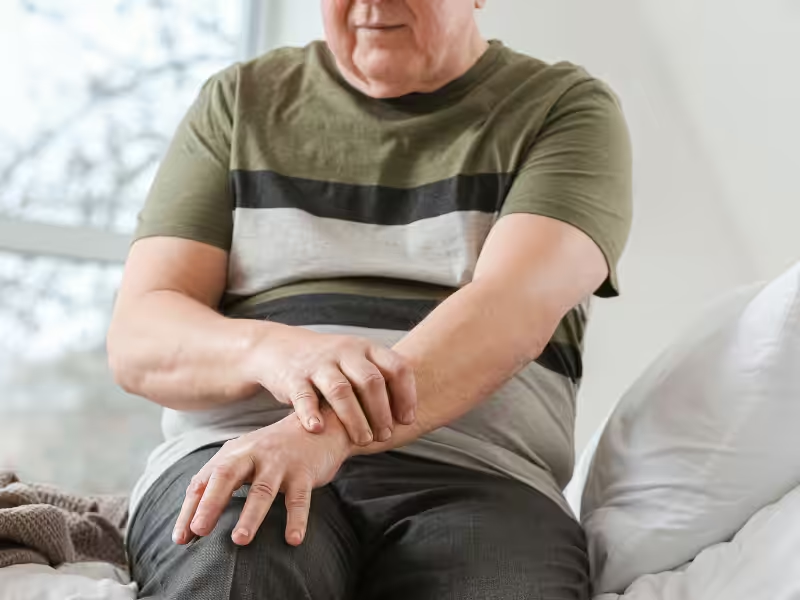
Parkinson’s disease looks different for each individual diagnosed. From the onset through the various stages, aging adults with PD experience specific symptoms and cognitive decline over the course of months and years.
One of our clients at Home Helpers was diagnosed with Parkinson’s disease in 2018. He was able to maintain his weekly routines, which included exercise with his personal trainer, AA meetings, business management, and his grandchildren’s sporting events until late last summer when compression fractures in his back that were caused by falling prevented him from doing so.
Since that time, his condition has progressed, and he has declined in such a way that his friends and family find him relatively unrecognizable in comparison to his former active, astute and articulate self.
April is Parkinson’s Disease Awareness Month, so Damey and I have chosen to share more information about this progressive and perplexing disorder.
“Parkinson’s disease (PD) is the 2nd most common neurodegenerative disorder in the United States after Alzheimer’s disease,” according to the Ohio Department of Health. “A neurodegenerative disorder is a type of disease in which cells of the central nervous system stop working or die. PD is a type of movement disorder that happens when nerve cells in the brain do not produce enough dopamine. The precise cause of PD is unknown, but some cases are hereditary while others are thought to occur from a combination of genetics and environmental factors.”
In Ohio, there are an estimated 30,000 aging adults living with PD, and that exceeds the number of cases of multiple sclerosis, muscular dystrophy, and Lou Gehrig’s disease combined. Based on a national study by the Parkinson’s Foundation, nearly 90,000 people in the U.S. are diagnosed with PD each year.
Ohio State University Wexler Medical Center identifies the most common symptoms of PD as:
- Tremors
- Involuntary twisting in the torso, arms, legs, or face, also known as dyskinesia
- Rigidity or stiffness in the neck, arms, or legs
- Slowness of movement, also known as bradykinesia
- Poor balance and coordination
Every case of PD is different and presents differently. Other symptoms of PD may include:
- Trouble chewing or swallowing
- Weakening of the voice with an inability to increase volume or reflect emotion
- Cognitive changes like difficulty thinking, finding words, and decision-making
- Depression and anxiety
- A loss of smell or reduced sensitivity to odors
- Vision problems
- Fatigue
- Lightheadedness
- Hallucinations and/or delusions
- Changes in sex drive or impotency
- Sleep problems – difficulty falling or staying asleep and having vivid dreams
- Excessive sweating, drooling
- Urinary issues with frequency, urgency, or problems emptying the bladder
- Constipation
Unfortunately, there is currently no cure for PD. However, treatment protocols are available that may slow the progression of the disease and help some of the symptoms related to each individual’s case. Medications are typically the first line of treatment.
Medications generally include:
- Levodopa: A cornerstone medication that helps replenish dopamine, a neurotransmitter deficient in Parkinson’s, improving motor function.
- Dopamine Agonists: Stimulate dopamine receptors, offering an alternative or adjunct to levodopa, especially in the early stages.
- MAO-B Inhibitors: Help break down dopamine, extending its effects and reducing symptoms.
- Amantadine: Can help manage dyskinesia (uncontrolled movements) that can occur with long-term levodopa use.
- Catechol-O-Methyltransferase (COMT) Inhibitors: Help to extend the effects of levodopa.
Recommended therapies include:
- Physical Therapy: Improves gait, balance, and mobility.
- Occupational Therapy: Helps maintain fine motor skills and independence in daily activities.
- Speech Therapy: Addresses speech and swallowing difficulties.
- Exercise: Regular physical activity can improve symptoms and potentially slow disease progression.
Surgical interventions include:
- Deep Brain Stimulation (DBS): Involves implanting electrodes in the brain to regulate brain activity and reduce motor symptoms.
Additional considerations include:
- Lifestyle Changes: A healthy diet and staying active can contribute to overall well-being.
- Support Groups: Connecting with others who have Parkinson’s can provide valuable support and information.
- Interdisciplinary Care: A team of specialists (neurologists, therapists, etc.) can provide comprehensive care.
- Experimental Treatments: Research into stem cell transplants, gene therapies, and other approaches is ongoing.
“Ohio State’s Center for Parkinson’s Disease and Related Movement Disorders gives you access to the latest treatments and resources to help you achieve your best possible quality of life. This includes medical care, advanced surgery, education, rehabilitation, and social services.”
The compassionate and skillfully trained caregivers at Home Helpers provide Parkinson’s care services, such as safe transportation assistance to and from activities, support group meetings and doctor appointments, healthy meal planning and preparation, personal hygiene, light housekeeping, 24-hour care, and respite for family caregivers.
Damey and I welcome the opportunity to schedule a FREE consultation at your convenience to assess how Home Helpers can help make life easier for you or a loved one with PD.
Home Helpers® Canton, OH, is Veteran-owned and operated. We are honored to have received the Home Care Pulse – Best of Home Care® Provider of Choice Award, the Shooting Star Award (2011), and multiple Platinum awards for the exceptional care we provide. We are Certified Senior Advisors and members of the Home Care Association of America, Alzheimer’s Association, and the International Franchise Association. In addition, we were ranked in the Top 500 Franchises by Entrepreneur Magazine in 2019.
Home Helpers® Canton proudly serves male and female seniors and Veterans in Stark County, Portage County, and portions of Summit County including the communities of Akron, Alliance, Aurora, Brimfield, Canton, East Sparta, Hartville, Jackson, Louisville, Massillon, Minerva, Navarre, North Canton, Randolph, and surrounding areas. 330.892.9329
Sources:
The Most Comprehensive Care In The Industry

Physical Wellness
We make daily life easier as needs change, with support for personal care, mobility, medication reminders, and recovery after a hospital stay.
Learn More
Mental Well-Being
Staying active and connected matters. Our caregivers provide companionship and meaningful engagement to support emotional health and independence.
Learn More
Nutrition & Hydration
Healthy meals and proper hydration are essential. We help with planning, shopping, and preparation to support daily wellness and energy.
Learn More
Active Connections
Strong relationships bring comfort and purpose. We help seniors stay connected through social engagement, technology, and regular check-ins.
Learn More