How Much Does Home Care Cost
Need Home Care?
Contact Us Today

For families considering in-home care, cost is often one of the first questions: How much does a caregiver cost in San Diego?
Professional non-medical home care in San Diego commonly costs from the high $30s into the $40s per hour, although rates vary by agency, schedule, length of shift and care needs.
At Home Helpers Home Care of Mission Valley, most private-pay care arrangements of four hours or longer typically range from $36–$40 per hour. Rates can vary based on care needs, schedule and the overall care arrangement, so some situations may fall outside this range. Shorter visits are also available at a higher hourly rate.
Understanding the hourly rate is only part of the picture. For most families, the more useful question is:
How many hours of help does my family actually need?
What Does Home Helpers Home Care of Mission Valley Charge?
For most private-pay care arrangements of four hours or longer, rates typically range from $36–$40 per hour. Lower rates may apply to companionship-focused care, while care involving more hands-on assistance or additional needs may be priced higher.
Pricing can vary based on factors such as:
- The person’s care needs
- The number and length of visits
- The overall schedule
- Whether care is being provided for more than one person in the household
- Transportation or other care-related needs
- Specialized or extended care arrangements
Shorter two- and three-hour visits are available but generally have a higher hourly rate.
Home Helpers Home Care of Mission Valley does not require a weekly minimum number of care hours. This allows families to build a schedule around the assistance they actually need.
Before care begins, we explain the applicable rate and proposed schedule so families understand the expected cost.
Why Do Short Home Care Visits Cost More Per Hour?
Short visits may involve fewer total hours, but they can be considerably more difficult for a home care agency to staff consistently.
A caregiver still needs to travel to and from the client’s home, and a short assignment can prevent that caregiver from accepting a longer shift during the same part of the day.
For this reason, many home care agencies establish minimum shift lengths.
Home Helpers Home Care of Mission Valley takes a more flexible approach. We can provide shorter visits when appropriate, but those visits generally have a higher hourly rate.
For families who can use four or more hours of care at a time, longer visits typically provide a lower hourly cost.
What Does Home Care Cost Per Week or Month?
The total cost of home care depends primarily on how many hours of assistance are needed.
Using $40 per hour as a simple planning example, estimated costs would be:
8 hours per week: approximately $320 per week or $1,386 per month
12 hours per week: approximately $480 per week or $2,078 per month
20 hours per week: approximately $800 per week or $3,464 per month
30 hours per week: approximately $1,200 per week or $5,196 per month
40 hours per week: approximately $1,600 per week or $6,928 per month
Monthly examples use approximately 4.33 weeks per month. The $40 hourly rate is used only as a simple planning example and is not a quote. Actual rates and costs depend on the care arrangement and hours provided.
This illustrates why identifying the right amount of care can be just as important as comparing hourly prices.
Someone may not need a caregiver eight hours every day. In some situations, strategically scheduled visits several times per week can address the periods when assistance is most important while keeping costs manageable.
What Is Included in the Cost of Professional Home Care?
Non-medical home care can provide assistance with everyday activities that have become difficult, exhausting or unsafe.
Depending on the care plan, support may include:
- Bathing, dressing and grooming
- Mobility and transfer assistance
- Companionship and supervision
- Meal preparation and hydration support
- Medication reminders
- Light housekeeping
- Laundry
- Grocery shopping and errands
- Transportation and accompaniment
- Dementia and Alzheimer’s support
- Respite for family caregivers
- Support following a hospital or rehabilitation stay
Care is personalized around the individual’s needs rather than limited to one specific task.
Why Can an Agency Cost More Than Hiring a Caregiver Privately?
Families sometimes find independent caregivers advertising hourly rates below those charged by licensed home care agencies.
The hourly prices are not necessarily an apples-to-apples comparison.
California licenses Home Care Organizations and maintains a registry for Home Care Aides who have completed applicable registration and background-check requirements.
At Home Helpers Home Care of Mission Valley, caregivers are employees rather than independent contractors. The agency manages important responsibilities including caregiver screening, employment, payroll, workers’ compensation coverage, scheduling, caregiver matching and backup staffing when available.
Families comparing an agency with hiring someone independently should therefore consider not only the hourly rate, but also who assumes the responsibility for managing the care arrangement.
What Factors Affect the Cost of Home Care?
Several factors can affect the final cost.
Number of Hours
The total number of hours usually has the greatest effect on the family’s weekly and monthly cost.
Length of Each Visit
Short visits generally have higher hourly rates because they can be more difficult to staff.
Frequency and Schedule
The number of visits, days of the week, timing of care and overall consistency of the schedule can affect the care arrangement and applicable rate.
Number of People Receiving Care
If a caregiver is providing care for two people in the same household, pricing may be higher than care for one person because the caregiver is responsible for the needs and safety of both individuals.
Care Needs
The amount and type of assistance required can influence the appropriate caregiver, schedule and overall care arrangement.
Transportation
When caregiver transportation or client-related driving is needed, mileage or other transportation charges may apply.
Extended or Specialized Schedules
Overnight, holiday, extended-hour and continuous-care arrangements may be priced differently from standard daytime care.
Is Home Care Cheaper Than Assisted Living?
It depends largely on how much care the person needs.
Home care can be financially attractive when someone only needs assistance during certain parts of the week because the family purchases care for those periods while the person continues living at home.
As the number of required caregiving hours increases toward full-time or around-the-clock support, home care becomes substantially more expensive. At that point, families may want to compare the financial and practical differences between remaining at home and moving to assisted living or another residential setting.
Cost is only one consideration. Remaining at home can allow someone to maintain familiar surroundings, routines, relationships and individualized support.
The right choice depends on the person’s care needs, finances, home environment and preferences.
Does Medicare Pay for Home Care?
Original Medicare generally does not pay for ongoing custodial care when personal care is the only assistance someone needs.
That means Medicare should not generally be expected to pay indefinitely for a caregiver simply because someone needs help with activities such as bathing, dressing, meals or other daily routines.
However, there are important exceptions and related programs that families should investigate.
For example, eligible people living with dementia may receive caregiver support and, for qualifying participants, respite services through Medicare’s GUIDE Model.
Some Medicare Advantage plans may separately offer supplemental in-home benefits.
These programs have their own eligibility and authorization requirements, so families should not assume that having Medicare automatically means ongoing non-medical home care will be covered.
What Other Programs May Help Pay for Home Care?
Depending on the person’s eligibility, insurance and circumstances, families may want to investigate:
- Medicare GUIDE dementia respite benefits
- Long-term care insurance
- Certain VA benefits
- Medicare Advantage supplemental benefits
- PACE programs
- Other qualifying public or community programs
- Personal income, retirement savings or family resources
Benefits and eligibility vary considerably.
Home Helpers Home Care of Mission Valley can help families understand which payment pathways may be worth exploring, but the insurance carrier, government program or participating organization ultimately determines eligibility and coverage.
Is There a Minimum Number of Home Care Hours?
Home Helpers Home Care of Mission Valley does not require a weekly minimum number of care hours.
We can also accommodate visits shorter than four hours when appropriate.
Shorter visits generally carry a higher hourly rate than visits of four hours or longer. Families who can schedule care in longer blocks may therefore receive a lower hourly cost and may also have greater caregiver scheduling flexibility.
How Many Hours of Home Care Do I Actually Need?
There is no single schedule that works for everyone.
Someone who mainly needs transportation, meal preparation and companionship may need only a few visits each week.
A person experiencing dementia, mobility limitations, frequent falls or significant difficulty with activities of daily living may require considerably more support.
Rather than beginning with a predetermined number of hours, it can be useful to look at the person’s typical week and identify when assistance would make the greatest difference.
Questions to consider include:
- Is bathing becoming difficult or unsafe?
- Is the person eating regular meals?
- Are medications being remembered?
- Is someone available during periods of greater fall risk?
- Can the person safely remain alone?
- Are family caregivers becoming overwhelmed?
- Does the person need transportation or help with errands?
- Are mornings or evenings particularly difficult?
- Is memory loss creating new safety concerns?
These answers can help determine whether care is needed occasionally, several days per week or more frequently.
Frequently Asked Questions About Home Care Costs in San Diego
How much does a caregiver cost per hour in San Diego?
Professional agency-based non-medical home care in San Diego commonly costs from the high $30s into the $40s per hour, although pricing varies by provider and care arrangement.
At Home Helpers Home Care of Mission Valley, most private-pay care arrangements of four hours or longer typically range from $36–$40 per hour.
Why isn’t there one fixed hourly rate?
Home care arrangements vary. The person’s care needs, schedule, length and frequency of visits, number of people receiving care and other factors can affect pricing.
Home Helpers explains the applicable rate before care begins.
How much would 20 hours of home care per week cost?
At an example rate of $40 per hour, 20 hours of home care would cost approximately $800 per week or $3,464 per month using an average of 4.33 weeks per month.
This is a planning example rather than a quote.
Does Home Helpers require a four-hour minimum?
No. Home Helpers Home Care of Mission Valley can provide shorter visits when appropriate. Shorter visits generally have a higher hourly rate than visits of four hours or longer.
Is there a weekly minimum?
No. Families are not required to purchase a minimum number of hours each week.
Does it cost more to care for two people in the same home?
Generally, yes. Providing care for two people involves additional responsibility and care needs, so the applicable rate may be higher than care for one person. The specific rate is determined based on the care arrangement.
Is home care covered by health insurance?
Original Medicare and traditional health insurance generally should not be expected to cover ongoing non-medical custodial care simply because someone needs assistance with daily activities.
Some families may have benefits available through long-term care insurance, qualifying Medicare Advantage benefits, Medicare GUIDE, VA programs, PACE or other programs.
Is a private caregiver cheaper than a home care agency?
An independent caregiver may advertise a lower hourly rate. Families should also consider who is responsible for screening, employment, payroll, insurance, workers’ compensation, scheduling and finding replacement coverage when comparing the overall cost and responsibility.
Can our care schedule change later?
Yes. Home care needs frequently change. A care schedule can be adjusted as the person’s needs and family circumstances change.
Get a Personalized Home Care Cost Estimate
The best way to determine what home care would cost for your family is to identify what help is needed, when it is needed and how many hours would realistically make a difference.
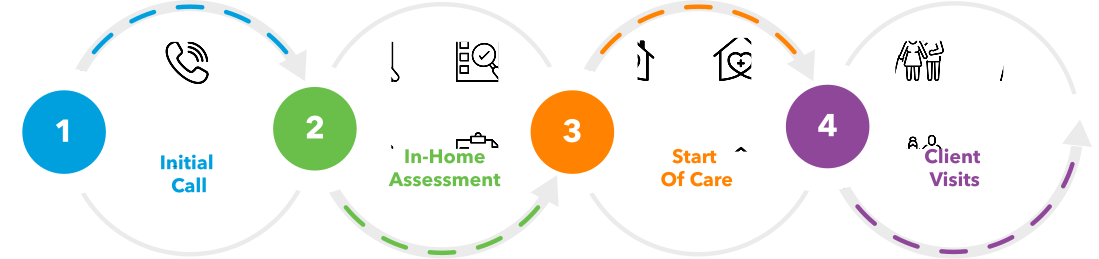
Home Helpers Home Care of Mission Valley offers a free in-home assessment to learn about the person’s routines, safety concerns, care needs and existing family support.
We can then recommend a care schedule and explain the applicable rate before you make a decision.
Call Home Helpers Home Care of Mission Valley at 619-292-8001 to discuss your care needs and receive a personalized estimate.
Reviewed and updated: August 2026
Sources: California Department of Social Services, Home Care Services; Centers for Medicare & Medicaid Services; CareScout Cost of Care Survey.
California Department of Social Services — Home Care Services
Medicare — Home Health Services
Call 619-292-8001 | Schedule a Free In-Home Assessment | Read What Families Say

Your Questions, Answered
Home Helpers Home Care offers a wide range of in-home care services, including personal care, companionship, nutrition support, wellness monitoring, and specialized care for chronic conditions, dementia, and recovery.
Our services are designed for seniors, individuals with disabilities, those recovering from illness or surgery, and anyone who needs extra support to live safely and comfortably at home.
Yes, every care plan is fully personalized based on each client’s unique needs, preferences, and schedule, whether they require a few hours of support or 24/7 care.
Yes, our caregivers are carefully screened, trained, and insured to provide compassionate, high-quality care you can trust.
Getting started is easy—simply contact your local Home Helpers location to schedule a free in-home assessment and create a care plan tailored to your needs.