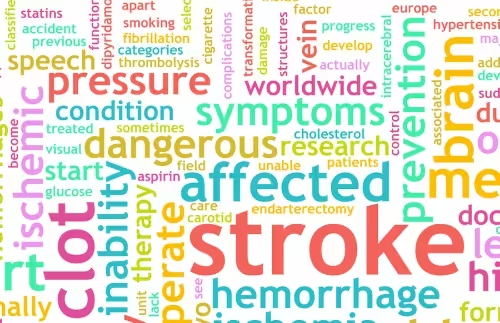
Stroke is the fifth most common cause of death for men, but the third most common for women. According to the National Stroke Association, 55,000 more women than men suffer stroke during a year. Yet, a 2015 survey of 1,000 women showed that only about one of every ten women was aware of the symptoms of stroke that are unique to women. If you’re a family caregiver for an older adult woman, understanding how stroke is different for women could help you manage risks and spot symptoms.
The Greater Impact of Stroke on Women
In general, women have a longer lifespan than men. This means that they are more likely to be living alone when stroke strikes. Because they often live alone, women also more commonly end up in a long-term care facility after stroke. Sadly, they also don’t recover from stroke as well as men do.
Unique Symptoms for Women
Women do experience the same common stroke symptoms as men, but they also have some unique symptoms. You should be familiar with both. Common stroke symptoms are sudden and include:
- Feeling numb or weak on one side of the body, such as in an arm, leg, or one side of the face.
- Difficulty speaking or understanding the speech of others, or general confusion.
- Vision problems in one eye or in both.
- Problems walking, dizziness, or lack of balance or coordination.
- Severe headache for no apparent reason.
In addition to the common symptoms, women may also have these symptoms:
- Fainting.
- A general feeling of weakness.
- Trouble breathing.
- Agitation.
- Hallucinations.
- Behavioral changes.
- Disorientation.
- Pain.
- Seizure.
- Hiccups.
- Nausea or vomiting.
Preventing Stroke
The Centers for Disease Control and Prevention (CDC) says that women can prevent stroke by knowing their ABCs for a healthy heart:
- Aspirin: Some people can reduce their risk of stroke by taking aspirin. However, check with your aging relative’s doctor before starting her on aspirin since it can raise worsen certain types of stroke.
- Blood Pressure: Have her blood pressure checked regularly and take steps to keep it under control.
- Cholesterol: Know the senior’s cholesterol levels and follow the doctor’s advice for lowering bad cholesterol, if needed.
- Smoking: If the senior smokes, encourage her to quit.
Home care can help the senior to follow the ABCs. A home care provider can remind the older adult to take aspirin as well as other medications prescribed by the doctor. Home care providers can also drive seniors to medical appointments, including for regular blood pressure checks. If your aging relative smokes, having a home care provider present can distract them from the urge to smoke.
Sources
http://www.stroke.org/understand-stroke/impact-stroke/women-and-stroke
https://www.cdc.gov/stroke/docs/women_stroke_factsheet.pdf
https://www.webmd.com/women/news/20150506/many-women-unaware-of-female-specific-stroke-symptoms#1
If you or an aging loved one are considering hiring home care in Saratoga, CA, please contact the caring staff at Home Helpers today (408) 259-5930.